
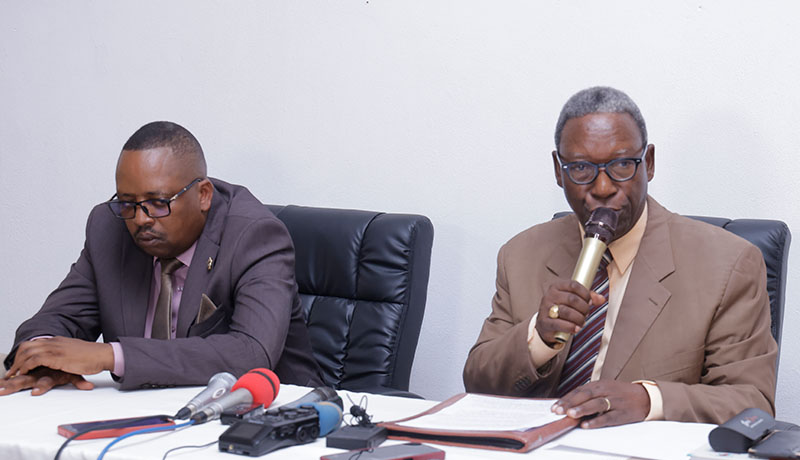
Burundi CVR: Systemic Discrimination Findings Link to Arusha Agreement
Summary
- Burundi's Commission Vérité et Réconciliation (CVR) has exposed systemic discrimination mechanisms from the colonial era until 2008.
- These exclusionary practices deeply fractured Burundi's social, educational, and institutional fabric.
- The CVR's findings provide context for the ongoing debate about maintaining ethnic quotas, which were institutionalized by the Arusha Accord of 2000.
- Many stakeholders advocate for the continuation of these ethnic quotas in Burundi.
- The revelations highlight the profound impact of post-colonial discrimination and its relevance to contemporary national reconciliation efforts.
Unveiling Systemic Discrimination in Burundi
The CVR's work aims to comprehensively document and understand these historical injustices that have fractured Burundian society over many decades.
The Commission Vérité et Réconciliation (CVR) in Burundi has recently brought to light extensive mechanisms of exclusion that profoundly impacted the nation's social, educational, and institutional structures. These findings, which span from the colonial era up to the year 2008, reveal a deep-seated history of systemic discrimination. The CVR's work aims to comprehensively document and understand these historical injustices that have fractured Burundian society over many decades.
Specifically, the Commission Vérité Réconciliation Burundi has been investigating the roots and manifestations of this discrimination, shedding light on how it permeated various aspects of life. The revelations underscore a period where exclusionary practices were not isolated incidents but rather ingrained within the fabric of the state and society, leading to significant societal divisions and inequalities. The focus on the Région Centre, including Gitega, highlights specific areas where these discrimination findings are particularly pertinent or have been a subject of detailed examination.
The Arusha Agreement and Ethnic Quotas
In the wake of this historical analysis by the CVR, the ongoing debate surrounding ethnic quotas in Burundi has gained renewed prominence. Many voices within the country advocate for the continued implementation of these quotas, which were formally institutionalized by the Arusha Accord of 2000. This agreement, a cornerstone for peace and power-sharing, introduced mechanisms designed to ensure representation and prevent the recurrence of conflict, including specific provisions for ethnic balance in various institutions.
The Arusha Agreement 2000 Burundi sought to address the deep divisions exacerbated by post-colonial discrimination by establishing frameworks like these ethnic quotas. The CVR's work on systemic discrimination from the colonial period through 2008 provides crucial context for understanding the historical necessity and the current relevance of these provisions. The discussion now revolves around whether these institutionalized quotas, intended as a corrective measure, should remain a permanent feature of Burundi's governance structure, especially as the nation grapples with its past.
Why These Revelations Matter
The findings by the Burundi CVR on systemic discrimination are not merely historical accounts; they carry significant implications for the country's present and future. By exposing the mechanisms of exclusion that fractured the social, educational, and institutional fabric for decades, the Commission provides a critical foundation for national reconciliation and justice. Understanding the depth and breadth of this historical discrimination is essential for informing policies aimed at fostering genuine inclusivity and preventing future injustices.
This ongoing process, including the Gitega discrimination findings, underscores the complex interplay between historical grievances and contemporary political structures, such as the ethnic quotas Burundi established through the Arusha Agreement. The CVR's comprehensive examination of the past serves as a vital resource for policymakers, legal professionals, and civil society, offering insights into the challenges that still need to be addressed to build a more equitable and stable Burundian society. The revelations necessitate a careful consideration of how historical wrongs can be acknowledged and rectified, ensuring that the lessons from decades of exclusion are integrated into the nation's path forward.
Practical Implications
Lawyers advising clients in Burundi, particularly those in public administration, human rights, or employment law, should monitor the CVR's findings on historical systemic discrimination and the ongoing debate surrounding ethnic quotas from the Arusha Agreement. These issues could inform future policy changes, litigation related to historical injustices, or compliance requirements regarding diversity and inclusion.
Source
How does this affect you?
Get an AI analysis of this article grounded in your jurisdictions, practice areas, and any policy documents you've uploaded to Wansom.
Finish Reading the Full Story and the Expert Analysis.
Get the latest legal & regulatory intelligence in Burundi
Wansom is AI and can make mistakes.