
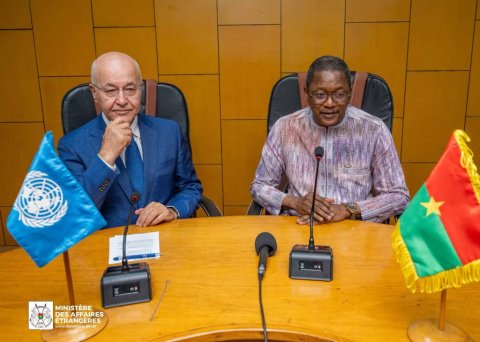
Burkina Faso: IDP Return UNHCR Meeting Addresses Displacement Crisis
Summary
- A high-level meeting took place in Ouagadougou on September 16, 2026, between Burkinabè government ministers and a UNHCR delegation.
- The UNHCR delegation, led by High Commissioner Dr. Barham Salih, aimed to understand Burkina Faso's realities and efforts.
- The Burkinabè government expressed appreciation for the visit, which occurred amidst the reported return of over 1.4 million internally displaced persons.
- Key government officials from foreign affairs, territorial administration, and solidarity participated in the working session.
High-Level Dialogue in Ouagadougou
The recent high-level discussions between Burkina Faso and the UNHCR signal a potentially pivotal moment in the nation's response to its protracted security crisis and the resulting internal displacement.
On September 16, 2026, a significant diplomatic engagement unfolded in Ouagadougou, Burkina Faso, bringing together senior government officials and a delegation from the United Nations High Commissioner for Refugees (UNHCR). The Burkinabè government was represented by key ministers, including those overseeing foreign affairs, territorial administration, and national solidarity, highlighting the broad governmental interest in the discussions. This crucial working session saw the UNHCR delegation led by its High Commissioner, Dr. Barham Salih, engaging directly with national authorities.
The Burkinabè government conveyed its appreciation for the UNHCR's visit, emphasizing its importance for fostering a deeper understanding of the country's current realities. Officials underscored that the engagement would allow the international body to gain firsthand insight into the efforts being undertaken by Burkina Faso in addressing its complex challenges. This direct interaction is considered vital for effective collaboration and support in the ongoing humanitarian context, particularly concerning the large number of internally displaced persons.
Context of Internal Displacement and Returns
This high-level Burkina Faso IDP return UNHCR meeting occurred amidst a complex and evolving humanitarian landscape in the nation, marked by significant internal displacement. The discussions implicitly acknowledged the considerable challenges faced by the country, particularly concerning the large number of individuals who have been displaced from their homes due to ongoing security concerns. The context of this dialogue is further underscored by the reported return of over 1.4 million internally displaced persons (IDPs) within Burkina Faso, a figure that highlights both the scale of the crisis and the potential for progress in reintegration efforts.
The visit by the Haut-commissariat Nations unies réfugiés delegation, led by Dr. Salih, aimed to provide the international body with a comprehensive understanding of the situation on the ground. This direct engagement is critical for the UNHCR Burkina Faso cooperation, allowing the organization to assess the effectiveness of current strategies and identify areas where further support is most needed. The government's appreciation for the visit signals a shared commitment to addressing the Burkina Faso humanitarian situation, particularly as it pertains to the welfare and future of its displaced populations.
Legal and Operational Implications
The recent high-level discussions between Burkina Faso and the UNHCR signal a potentially pivotal moment in the nation's response to its protracted security crisis and the resulting internal displacement. For legal practitioners and human rights advocates, this development carries significant implications, particularly concerning the legal frameworks governing the return and reintegration of populations. Issues surrounding property law, including land tenure and restitution for those returning to their homes, will likely become increasingly prominent. Ensuring equitable and lawful processes for these returns is paramount to preventing future disputes and upholding the rights of all citizens.
Furthermore, the focus on the return of `déplacés internes Burkina Faso` necessitates a close examination of human rights protections during the reintegration process. Lawyers will need to monitor how the government and international partners address issues such as access to justice, protection from discrimination, and the provision of essential services for returnees. Compliance officers within non-governmental organizations and international bodies operating in the region must also assess how these evolving dynamics impact their operational risks and reporting obligations, particularly concerning funding, program implementation, and accountability for humanitarian aid. The ongoing UNHCR Burkina Faso cooperation will be crucial in shaping these outcomes, influencing both policy and practical interventions on the ground.
Practical Implications
This development signals a potential shift in the humanitarian and security landscape in Burkina Faso, which lawyers should monitor for implications on property law, human rights, and the legal frameworks governing reintegration programs for returning populations. Compliance officers for NGOs or international organizations operating in the region should assess how this impacts their operational risks and reporting obligations.
Source
How does this affect you?
Get an AI analysis of this article grounded in your jurisdictions, practice areas, and any policy documents you've uploaded to Wansom.
Finish Reading the Full Story and the Expert Analysis.
Get the latest legal & regulatory intelligence in Burkina Faso
Wansom is AI and can make mistakes.