
Niger FDS: BSR-COS Military Equipment Seized at Niamey Base 101
Summary
- Elements of Niger's Bataillon Spécial de Reconnaissance du Commandement des Opérations Spéciales (BSR-COS) were involved in a security incident at Niamey's Air Base 101 on August 28-29, 2026.
- The Forces de Défense et de Sécurité (FDS) disarmed these soldiers, who were accused of holding comrades hostage and attacking strategic sites in the capital.
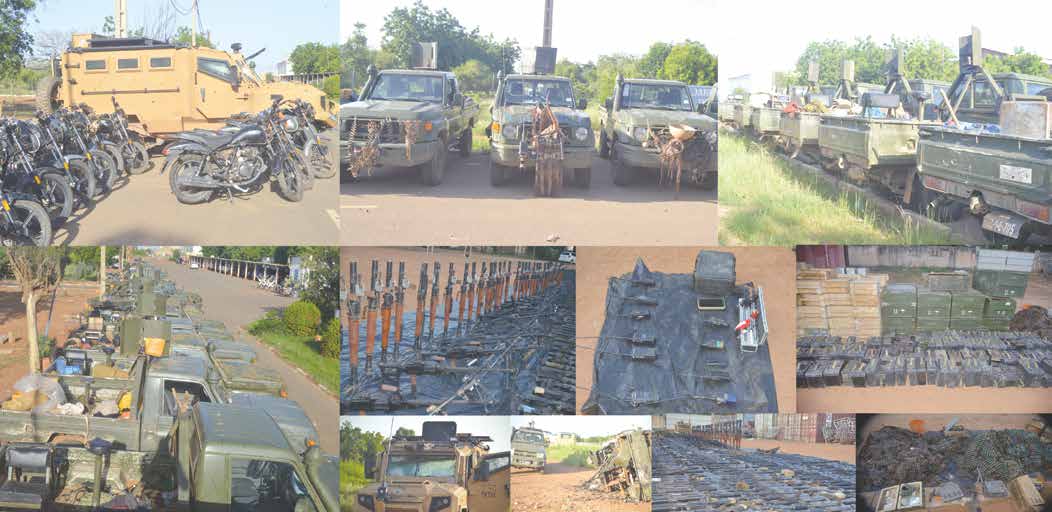
- A substantial cache of military equipment was seized, including 34 armed Toyota pick-up trucks, two light armored vehicles, 382 AK 47s, 36 RPG7s, and four Dragunov sniper rifles.
- The FDS publicly presented the confiscated arsenal through state media, highlighting the scale of the recovered weaponry.
- This incident signals potential political instability and significant security risks for foreign investments and personnel operating in Niger.
The Niamey Base 101 Incident
This Niger military uprising August 2026 event signals potential political instability and heightened security risks within Niger, which could have far-reaching implications for foreign investments, existing contractual obligations, and the safety of personnel for clients operating in the region.
On the night of August 28-29, 2026, a significant security incident unfolded at Air Base 101 in Niamey, involving elements of the Bataillon Spécial de Reconnaissance du Commandement des Opérations Spéciales (BSR-COS). This event, characterized by what authorities described as a "mouvement d’humeur" or discontent among the specialized unit, led to a swift response from Niger's Forces de Défense et de Sécurité (FDS). Following the operation, the FDS publicly showcased a substantial cache of BSR-COS military equipment seized at Niamey Base 101, presenting it through state media channels.
The FDS reported that the seizure occurred after disarming soldiers who were deemed to be in breach of military regulations. These individuals were accused of holding their comrades hostage and launching attacks on strategic sites within the capital city. The extensive inventory of confiscated items underscores the gravity of the situation, revealing a well-equipped group. Among the seized assets were 34 Toyota pick-up trucks, each fitted with mounted weapons, alongside two Light Armored Vehicles (VBLs), one of which sustained damage and was destroyed. The FDS also recovered dozens of motorcycles, indicating significant mobility capabilities.
The arsenal further included a large quantity of firearms and specialized weaponry. Specifically, 382 AK 47 assault rifles were secured, along with 36 RPG7 rocket-propelled grenade launchers and 30 PKM machine guns. More specialized armaments comprised six "12.7" caliber weapons, four "14.5S" caliber weapons, and four Dragunov sniper rifles, typically reserved for elite marksmen. A single 82mm mortar was also part of the haul, alongside 17 automatic pistols. Additionally, multiple crates of ammunition, dozens of magazines, and various communication devices were confiscated, painting a picture of a well-prepared and organized faction within the military. This comprehensive Bataillon Spécial de Reconnaissance arms seizure highlights a serious Niamey Base 101 security incident.
Legal and Military Implications
The actions described by the FDS, involving soldiers holding comrades hostage and attacking strategic capital sites, represent a severe breach of military discipline and potentially constitute acts of mutiny or insurrection. The public display of the Niger FDS seized military hardware serves not only as evidence of the operation's success but also as a clear message regarding the state's resolve to maintain order and enforce military law. Such incidents, particularly when involving specialized units like the Commandement des Opérations Spéciales equipment, raise profound questions about command and control within the armed forces and the loyalty of specific elements.
From a legal standpoint, the FDS's characterization of the individuals as "soldiers in breach of military regulations" implies that they will likely face charges under military justice codes, which typically carry severe penalties for insubordination, desertion, or acts against the state. The public presentation via state media also functions as a form of legal and political justification for the FDS's intervention, aiming to reassure the populace and international observers that the government is in control and addressing internal threats decisively. This transparency, albeit controlled, is crucial in managing perceptions of stability following a significant internal security challenge.
Broader Ramifications and Risk Assessment
This Niger military uprising August 2026 event signals potential political instability and heightened security risks within Niger, which could have far-reaching implications for foreign investments, existing contractual obligations, and the safety of personnel for clients operating in the region. The involvement of a specialized reconnaissance unit, typically trained for sensitive and critical operations, suggests a deeper level of discontent or factionalism than a typical disciplinary issue. The sheer volume and sophistication of the BSR-COS military equipment seized Niamey Base 101 — including armored vehicles, sniper rifles, and heavy machine guns — indicate that the dissenting elements posed a substantial threat to national security and stability.
For international businesses and organizations with interests in Niger, such developments necessitate a thorough re-evaluation of risk assessments. Legal counsel should closely monitor the evolving political and security landscape, as internal military unrest can directly impact the enforceability of contracts, the security of supply chains, and the overall operational environment. The incident underscores the importance of robust contingency planning and due diligence concerning political risk, particularly in regions prone to internal conflicts or coups. The stability of the government and the reliability of security forces are paramount considerations for any entity engaged in commercial or humanitarian activities within the country.
Practical Implications
This event signals potential political instability and security risks in Niger, which could impact foreign investments, contractual obligations, and the safety of personnel for clients operating in the region. Lawyers should monitor such developments for their implications on business operations and risk assessments.
Source
How does this affect you?
Get an AI analysis of this article grounded in your jurisdictions, practice areas, and any policy documents you've uploaded to Wansom.
Finish Reading the Full Story and the Expert Analysis.
Wansom is AI and can make mistakes.