
BRVM: UEMOA State Financing Dominates, Private Sector Funding Wanes
Summary
- The Bourse Régionale des Valeurs Mobilières (BRVM) primarily serves as a critical financing tool for states within the UEMOA region, particularly through its active public bond market.
- Senegal exemplifies this reliance, having mobilized over 1,000 billion CFA francs in the first quarter, a nearly 200% increase, amidst difficult international market access and concerns about its over-indebtedness.
- Countries of the Alliance des États du Sahel (AES) also heavily utilize the BRVM, collectively raising over 3,000 billion CFA francs in 2025, with an analyst calling the market a "lifeline" for their financing needs.
- Despite the success in state financing, a key future challenge for the BRVM is to attract more private companies to develop its equity market, which currently remains limited by the low number of listed entities.
The BRVM's Central Role in UEMOA State Financing
A significant challenge identified for the coming years is the need to attract a greater number of private companies to the Bourse Régionale des Valeurs Mobilières.
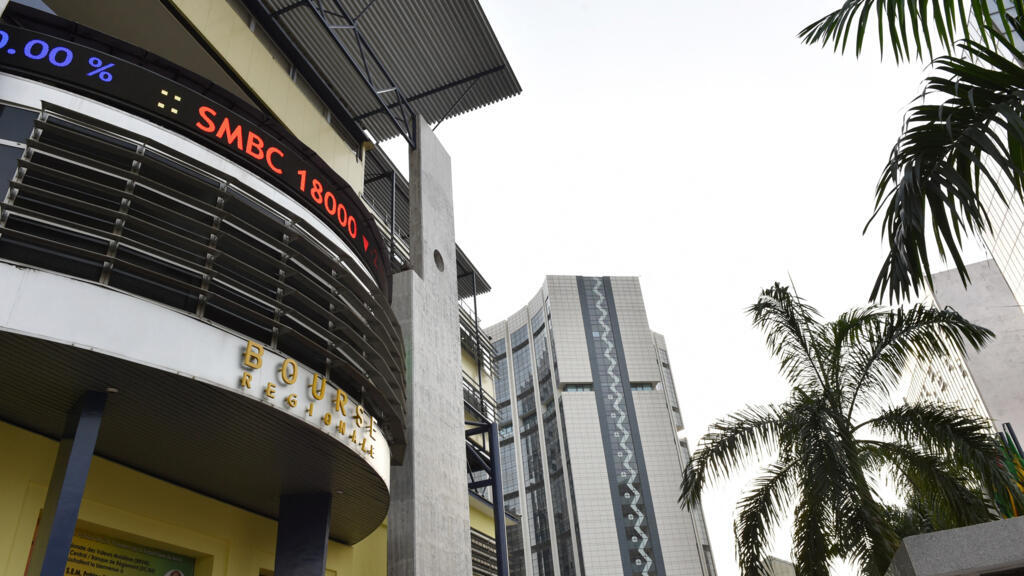
The Bourse Régionale des Valeurs Mobilières (BRVM) operates as a shared financial market, serving eight countries within the West African Economic and Monetary Union (UEMOA). While around 48 companies are currently listed on this regional exchange, its primary function has distinctly evolved towards the financing of member states, rather than the private sector.
The bond compartment, particularly the highly active public securities market, forms the core of this financial mechanism. This segment plays a crucial role in enabling UEMOA states to finance their budget deficits, solidifying the BRVM's position as a vital instrument for public debt issuance and a major tool for state financing across the region.
Surging Public Debt Issuance on the West African Financial Market
Senegal exemplifies the growing reliance on regional financial resources. Faced with challenging access to international markets, Dakar has increasingly turned to the BRVM. During the first quarter alone, Senegal successfully mobilized over 1,000 billion CFA francs through the market, marking a substantial increase of nearly 200% compared to the previous year. This significant BRVM state financing comes as economist Moubarak Lô has characterized the country as over-indebted, suggesting the necessity of debt reduction or restructuring.
Senegal's successful debt raising efforts on the regional market are not new. In December 2025, the state secured 454 billion CFA francs, surpassing its initial target of 300 billion. Further demonstrating this trend, an adjudication on the UEMOA public securities market in April 2026 allowed Senegal to collect 68 billion CFA francs, exceeding the targeted 65 billion.
Beyond Senegal, the Alliance des États du Sahel (AES) countries—Burkina Faso, Mali, and Niger—also continue to leverage this financial infrastructure, even after their withdrawal from the political structure of ECOWAS. In 2025, these three nations collectively raised more than 3,000 billion CFA francs, an amount estimated by Sika Finance analyst Ange Ponou to be approximately 5 billion euros. Ponou, in an analysis relayed by RFI Afrique, described the West African financial market as a "lifeline" for these countries, asserting that their access to financing would be considerably more difficult without this common space.
The Imperative for Private Sector Growth
While the solidarity in public debt issuance provides critical support for UEMOA states, it has also prompted questions and concerns within several countries across the region. A significant challenge identified for the coming years is the need to attract a greater number of private companies to the Bourse Régionale des Valeurs Mobilières.
The BRVM equity market development remains constrained by the relatively low number of listed private entities. Expanding this segment is crucial for diversifying the market, fostering broader economic growth, and potentially alleviating some of the pressure from the heavy reliance on BRVM public debt issuance for state financing, thereby balancing BRVM state financing with the private sector's needs.
Source
How does this affect you?
Get an AI analysis of this article grounded in your jurisdictions, practice areas, and any policy documents you've uploaded to Wansom.
Finish Reading the Full Story and the Expert Analysis.
Wansom is AI and can make mistakes.