
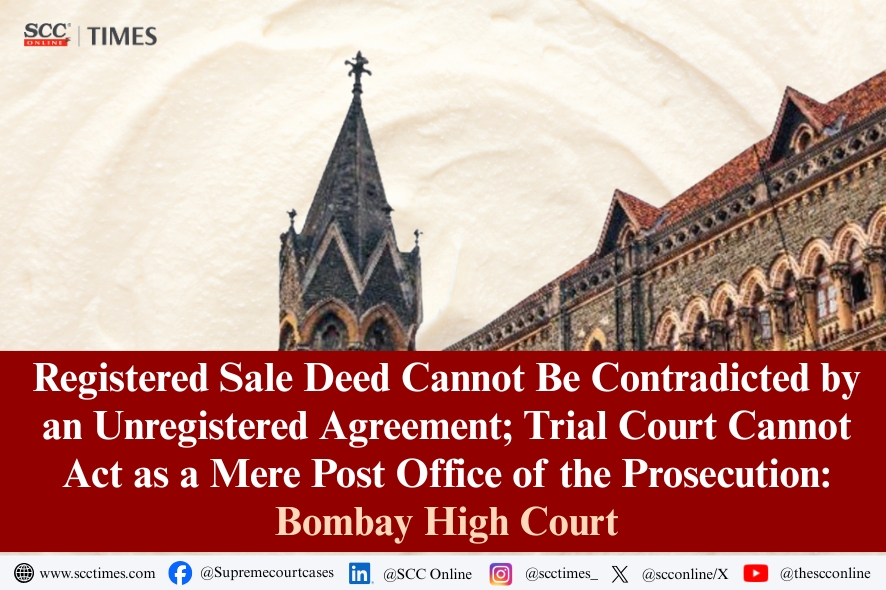
Bombay High Court: Registered Sale Deed Takes Precedence Over Unregistered Agreement
Summary
- The Bombay High Court ruled that a registered sale deed cannot be contradicted by an unregistered agreement.
- The court held that the absence of dishonest intention from inception is necessary for a valid contract, and no offence of cheating under Section 318(4) of the Bharatiya Nyaya Sanhita (formerly Section 420 IPC) is made out in such cases.
- This ruling has significant implications for contract law in India, particularly with regards to the use of registered sale deeds versus unregistered agreements.
- Lawyers should note that this decision may impact their advice to clients on contract disputes involving registered sale deeds and unregistered agreements.
What Happened
The court held that a registered sale deed supported by receipt of consideration and transfer of title cannot be contradicted by an unregistered agreement, and in the absence of dishonest intention from inception, no offence of cheating under Section 318(4) of the Bharatiya Nyaya Sanhita (formerly Section 420 IPC) is made out.
In a significant ruling, the Bombay High Court has clarified that a registered sale deed cannot be contradicted by an unregistered agreement. The court's decision was handed down in response to a case where an individual had entered into an unregistered agreement with another party, which contradicted the terms of a previously executed registered sale deed. The court held that the registered sale deed, supported by receipt of consideration and transfer of title, takes precedence over the unregistered agreement.
Legal Context
The court's ruling has implications for contract law in India, particularly with regards to the use of registered sale deeds versus unregistered agreements. Under Indian law, a registered sale deed is considered a more reliable and binding document compared to an unregistered agreement. The court's decision reinforces this principle by holding that a registered sale deed cannot be contradicted by an unregistered agreement unless there is evidence of dishonest intention from the inception. This ruling also highlights the importance of ensuring that all agreements are properly registered to avoid potential disputes.
Why It Matters
The Bombay High Court's decision has significant implications for lawyers advising clients on contract disputes, particularly where a registered sale deed is involved and an unregistered agreement is used to contradict it. The ruling underscores the importance of carefully reviewing all agreements and ensuring that they are properly registered to avoid potential disputes. Lawyers should take note of this ruling and consider its impact on their advice to clients in similar situations.
Practical Implications
Lawyers should note that this ruling may impact the way they advise clients on contract disputes, particularly where a registered sale deed is involved and an unregistered agreement is used to contradict it.
Source
Source: Original reporting via SCC Times
How does this affect your business?
Get an AI analysis of this article grounded in your jurisdictions, practice areas, and any policy documents you've uploaded to Wansom.
Wansom is AI and can make mistakes.