
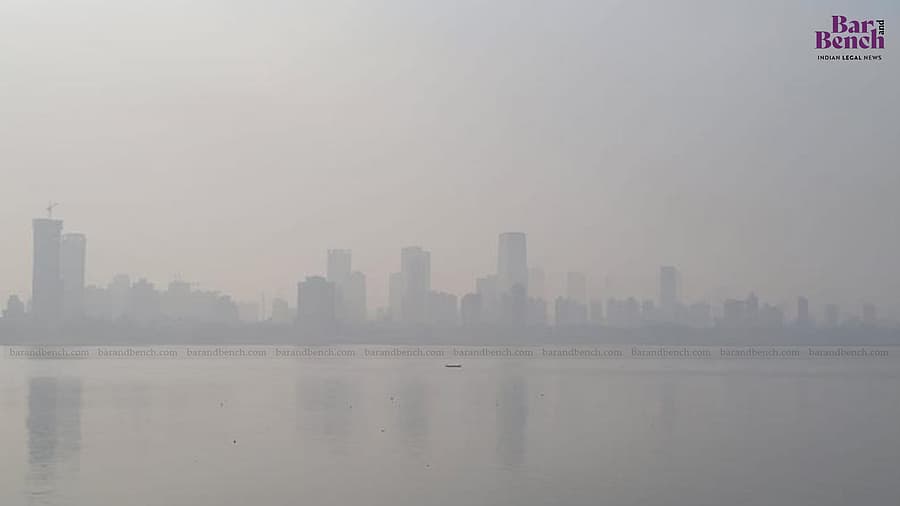
Bombay High Court Raps BMC, State Over Selective Clean-Up
Summary
- The Bombay High Court criticized the Maharashtra government and BMC for selective clean-up drives in the city.
- These drives were observed only during visits by high-profile dignitaries, rather than as a holistic approach to pollution.
- Justices GS Kulkarni and Neela Gokhale urged authorities to ensure a permanent standard of cleanliness across all city wards for ordinary citizens.
- The court cited the transformation of Ballard Estate for Prince William and Princess Katherine's visit as proof of administrative capability.
- The judges emphasized that authorities must act for the common man, who is the city's permanent resident.
Judicial Scrutiny of Civic Neglect
They firmly asserted that the primary duty of these authorities is to act for the common man, who constitutes the permanent resident of the city.
The Bombay High Court recently issued a stern rebuke to both the Maharashtra state government and the Brihanmumbai Municipal Corporation (BMC), criticizing their approach to urban cleanliness. The court specifically condemned the practice of initiating superficial clean-up drives exclusively in anticipation of visits from high-profile dignitaries. This selective action, the bench observed, falls short of addressing the fundamental issue of pollution in a comprehensive and sustained manner.
Presiding over the case of Kannamwar Nagar Co-op. Housing Society v. State of Maharashtra & Ors., Justices GS Kulkarni and Neela Gokhale underscored the disparity between the administration's potential and its actual performance. They highlighted that such temporary measures, often lasting only a couple of days, do not constitute a genuine effort to improve the city's environment for its permanent residents. The court's intervention signals a demand for accountability and a shift towards more consistent public service.
Evidence of Administrative Capability
During the proceedings, the judicial panel pointed to specific instances demonstrating the authorities' capacity for swift and thorough action. Justices Kulkarni and Gokhale cited the remarkable transformation of areas such as Ballard Estate in south Mumbai. This particular district had recently undergone extensive cleaning and beautification efforts, coinciding with a visit by Britain's Prince William and Princess Katherine.
The judges noted that the administration's ability to achieve such a polished and pristine environment, including painting and washing streets with water, proved that resources and will were available when deemed necessary. This observation served as a critical piece of evidence, suggesting that the lack of widespread, continuous cleanliness was not due to an absence of capability, but rather a matter of misplaced priorities and selective application of effort. The court implied that if such a high standard could be met for VIPs, it could and should be maintained for all citizens.
A Call for Enduring Public Service
The core message from the Bombay High Court was a clear directive for a "permanent show" of cleanliness across all wards of the city, rather than the current "temporary show" orchestrated for special occasions. The bench emphatically urged the authorities to extend the same level of diligence and care demonstrated during VIP visits to the everyday lives of ordinary citizens. This means ensuring that every possible ward benefits from consistent maintenance and environmental upkeep.
The judges posed a pointed question to the civic and state bodies, asking if their responsiveness was solely contingent on the presence of important personalities. They firmly asserted that the primary duty of these authorities is to act for the common man, who constitutes the permanent resident of the city. This judicial pronouncement serves as a powerful reminder of the administration's fundamental obligation to serve the public consistently and equitably, rather than engaging in episodic, event-driven clean-up operations.
Source
How does this affect you?
Get an AI analysis of this article grounded in your jurisdictions, practice areas, and any policy documents you've uploaded to Wansom.
Finish Reading the Full Story and the Expert Analysis.
Get the latest legal & regulatory intelligence in India
Wansom is AI and can make mistakes.