
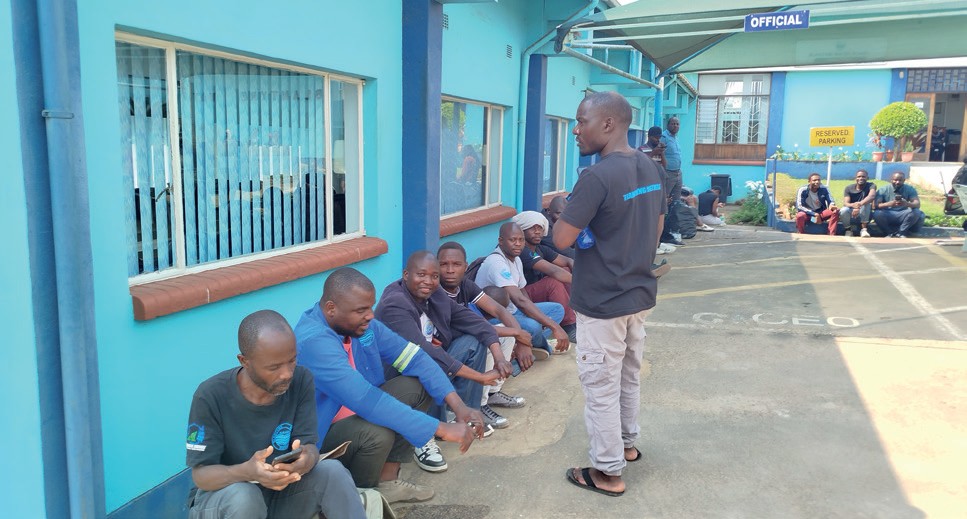
Blantyre Water Board Staff Demand CEO, Board Chair Removal
In Malawi, employees of the Blantyre Water Board (BWB), operating under the banner of the BWB Employees Trade Union, resolved yesterday to petition President Peter Mutharika to remove Chief Executive Officer Yeremiah Chihana and Board Chairperson Stanley Chirwa to restore stability at the utility.
This development signifies a significant internal governance crisis within a key public utility and carries substantial legal significance for practitioners. It highlights the complex interplay between employment law, corporate governance in parastatal organizations, and the powers of the appointing authority. For attorneys advising public sector entities, it underscores the importance of robust internal dispute resolution mechanisms and adherence to good governance principles to prevent such escalations. For trade unions, it demonstrates their power to influence leadership changes and advocate for employee interests, but also necessitates careful adherence to legal procedures for such actions. The potential for disruption to essential services, like water supply, also raises broader public interest concerns.
The legal context for this situation involves several layers of Malawian law. The governance of parastatal organizations like the Blantyre Water Board is typically established by specific Acts of Parliament, which define their mandate, structure, and the powers of their board and management. The President of Malawi, as the appointing authority for senior positions in many parastatals, often holds the power to dismiss such officials, usually based on recommendations or established procedures outlined in the relevant legislation or articles of association. The Labour Relations Act and other employment laws govern the relationship between the BWB and its employees, including the rights and functions of trade unions, such as the BWB Employees Trade Union, to raise grievances and take collective action. The resolution by the union indicates a formal grievance process, potentially escalating to the highest office. The key parties involved are the Blantyre Water Board (BWB), the BWB Employees Trade Union, President Peter Mutharika, CEO Yeremiah Chihana, and Board Chairperson Stanley Chirwa. The outcome of this matter is not yet reported.
Attorneys advising parastatal boards, management, or trade unions in Malawi should be acutely aware of the legal frameworks governing corporate governance, employment relations, and the powers of the appointing authority. For management, understanding the legal avenues for addressing employee grievances, the implications of union resolutions, and the procedures for disciplinary action or dismissal is crucial. For unions, ensuring their actions comply with labour laws, effectively articulating their demands within the legal framework, and understanding the President's discretionary powers are key. Legal professionals should also advise on potential implications for stability, service delivery, and investor confidence arising from such high-profile internal disputes, emphasizing the need for transparent and legally sound resolution processes.
This situation underscores the critical need for clear lines of authority, accountability, and effective communication within public institutions to prevent internal conflicts from escalating to a national level and potentially impacting essential services. All parties must navigate this dispute with careful consideration of their legal rights and obligations.
How does this affect you?
Get an AI analysis of this article grounded in your jurisdictions, practice areas, and any policy documents you've uploaded to Wansom.
Finish Reading the Full Story and the Expert Analysis.
Wansom is AI and can make mistakes.