
Beyond China: India's LOHUM, Hong Kong Capital and Karo Platinum Widen Zimbabwe's Critical-Minerals Investor Base
Summary
India's LOHUM: on 9 September dispatched its first tranche of lithium ore from 10 spodumene blocks (about 1,100 ha, 30–40 million tonnes of ore, about US$7 billion gross in-situ value), with preferred rights over up to 90 more blocks. It targets about 30,000 tonnes of lithium carbonate a year within two to three years, with initial processing in Zimbabwe and refining in India.
Fact check: raw lithium ore exports have been banned since 2022. The shipment's volume, grade and destination were not disclosed, and it was most likely moved for processing within Zimbabwe, not exported.
Hong Kong: ZIDA and InvestHK signed a non-binding MoU, publicised around 9 September, to refer Asian investors into sectors including mining and beneficiation. No investment commitments were announced.
Karo Platinum: on 24 August signed a 25-year special mining lease over 23,903 ha on the Great Dyke. The state holds a 15% free carry with an option on a further 11%. Tharisa raised US$300 million for the project, targeting first ore in late 2027.
Chinese incumbents: Bikita (Sinomine) says it will have invested more than US$900 million in beneficiation by the end of 2027.
The legal frame: newcomers face the same beneficiation rules, quotas and state-participation expectations as incumbents. Karo shows that negotiated special mining leases are the route to fiscal certainty for large projects.
The Baseline: A China-Dominated Lithium Sector
Scale. Chinese companies have invested about US$2 billion in Zimbabwe's lithium sector since 2021. They dominate the industry: Zhejiang Huayou Cobalt (Prospect Lithium Zimbabwe, Arcadia), Sinomine (Bikita), Sichuan Yahua (Kamativi), Chengxin Lithium and Tsingshan. Until now, most Zimbabwean lithium concentrate has been shipped to China for refining.
Processing is Chinese-led too. The only operating lithium sulphate plant, at Arcadia, belongs to Huayou. Sinomine's Bikita says it will have invested more than US$900 million in direct beneficiation by the end of 2027, including about US$383 million by the end of 2026. That spending covers a lithium sulphate plant, tantalite extraction and an expansion of its spodumene flotation capacity from 2 to 3.3 million tonnes, due in the second quarter of 2027.
Why diversification matters. Concentration on one country's buyers and investors carries risks:
Price risk: Zimbabwe's lithium earnings track Chinese demand and Chinese processing margins.
Leverage: with few alternative buyers, Harare has less bargaining power over terms, processing commitments and transfer pricing.
Geopolitics: Western and Indian battery supply chains are seeking non-Chinese sources, which creates both opportunity and scrutiny for Zimbabwean assets.
September 2026 brought the first real signs of a broader investor base: an Indian lithium entrant, a new channel to capital through Hong Kong, and a large platinum project led by JSE- and LSE-listed Tharisa with a long-term state lease.
India Arrives: LOHUM's First Lithium Dispatch
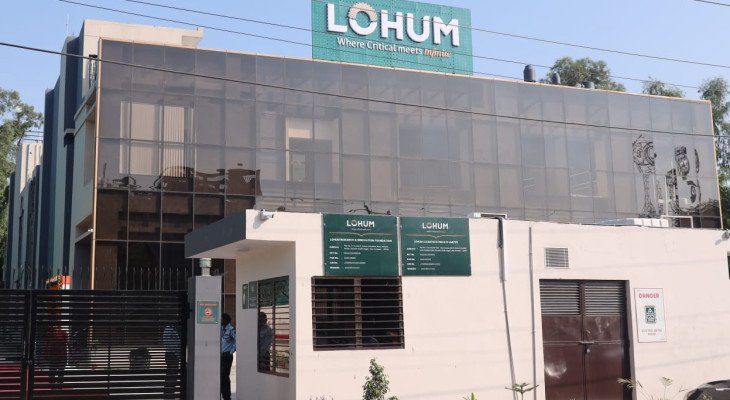
The milestone. On 9 September 2026, Indian critical-minerals company LOHUM announced it had dispatched the first tranche of lithium ore from its mining assets in Matabeleland South Province. It called this the start of its lithium operations in Zimbabwe and said it made LOHUM the first Indian company to produce lithium from overseas assets. LOHUM was previously focused on battery recycling, refining and materials manufacturing in India.
The asset:
Feature | Detail (company figures) |
|---|---|
Mining rights | 10 spodumene-bearing lithium blocks, about 1,100 hectares |
Estimated deposits | 30–40 million tonnes of spodumene ore, at lithium oxide grades reported at 1–3% |
Expansion option | Preferred rights over up to 90 adjacent blocks |
Gross in-situ value | About US$7 billion at prevailing lithium carbonate prices, which LOHUM stresses is not a project valuation or a forecast of returns |
Lifetime potential | About 300,000 tonnes of lithium carbonate equivalent, according to reports on the project |
Production target | About 30,000 tonnes of lithium carbonate a year within two to three years |
The business model. LOHUM plans to mine and carry out initial processing in Zimbabwe, then refine the material into lithium carbonate at a dedicated refinery in India, whose location has not been disclosed. It also says it intends to develop local processing capacity in Zimbabwe ahead of the January 2027 ban on concentrate exports. Founder and chief executive Rajat Verma said the assets let LOHUM take lithium "from the ground through refining to the cathode" and recover it at end-of-life, "within a chain India now has a stake in".
What the "dispatch" was, and was not. Reports, including from Reuters, described the shipment as "lithium ore". Zimbabwe has banned exports of raw lithium ore since December 2022, and LOHUM's own plan is to process in Zimbabwe first. The company has not disclosed the shipment's volume, grade or destination. The most plausible reading is that the first ore was moved from the mine to a processing point in Zimbabwe, not exported. Readers should not treat it as an export of raw ore unless LOHUM confirms otherwise.
What is not yet public. LOHUM has not published the size of its investment in Zimbabwe. It is also not yet clear whether LOHUM holds, or will seek, a lithium export quota under Zimbabwe's 2026 regime.
Hong Kong: A New Channel to Asian Capital
The agreement. The Zimbabwe Investment and Development Agency (ZIDA) and Invest Hong Kong (InvestHK), the investment promotion agency of the Hong Kong Special Administrative Region, signed a non-binding memorandum of understanding to deepen investment cooperation. It was publicised around 9 September 2026, in connection with the Belt and Road Summit in Hong Kong; one report dates the signing to 30 August.
What it covers:
Element | Detail |
|---|---|
Nature | Non-binding cooperation framework between two investment-promotion agencies |
Activities | Exchanging priority investment opportunities and market information; identifying and referring potential investors; business missions; targeted engagements |
Priority sectors | Mining and mineral beneficiation, manufacturing, energy, agriculture and agro-processing, infrastructure and services |
Commitments | No specific investments or financing commitments announced |
The message. ZIDA Chief Legal Officer Theresa Muchinguri said the goal is to create stronger pathways between international investors and viable opportunities in Zimbabwe. InvestHK's Alpha Lau described Hong Kong as a gateway linking Africa with Asia through its financial markets, professional services and proximity to mainland China.
What it means in practice. The MoU does not bring new money by itself. Its value lies in giving Zimbabwean projects, especially in mineral beneficiation, access to Hong Kong's capital markets, banks and advisers. For lithium processors racing to meet the January 2027 deadline, and for platinum and other projects seeking development finance, an additional referral channel to Asian investors beyond mainland China is useful. Because Hong Kong is closely tied to mainland Chinese capital, it may broaden the range of financing sources more than it changes the nationality of the money.
Platinum: Karo's 25-Year Special Mining Lease
The lease. On 24 August 2026, at State House in Harare and with President Emmerson Mnangagwa attending, Karo Platinum signed a Special Mining Lease Agreement with the Government of Zimbabwe. Karo Platinum is controlled by JSE- and LSE-listed Tharisa plc.
Element | Detail |
|---|---|
Legal basis | Special mining lease under the Mines and Minerals Act |
Term | Initial 25 years |
Area | 23,903 hectares on the Great Dyke |
Fiscal terms | Agreed between the parties, providing tenure and fiscal certainty |
Ownership | 85% Karo Mining Holdings (78.81% owned by Tharisa); 15% Government of Zimbabwe through Generation Minerals, on an unencumbered free-carry basis |
State option | Option for the government to acquire a further 11%, potentially taking its stake to 26% |
Resource | 2.1 million oz open-pit reserve; 11.2 million oz resource |
Phase 1 | About 226,000 oz of PGMs a year once ramped up |
Investment | More than US$240 million spent so far; development cost of about US$545 million; first phase close to US$1 billion |
Financing | US$300 million senior secured bond raised in September 2026 |
Offtake | Five-year concentrate purchase agreement with a subsidiary of Valterra Platinum |
First ore | Targeted for late 2027 |
Jobs | More than 3,000 during development; more than 1,000 permanent jobs at steady state |
The government's pitch. Finance Minister Mthuli Ncube presented Karo as a model for attracting large-scale mining capital: long-term mining rights, targeted tax incentives and greater policy certainty, combined with a retained state stake in long-term returns.
Why a special mining lease matters. A special mining lease is a negotiated instrument for large, capital-intensive projects. It sets out an agreed fiscal and operational framework for the project, giving investors greater certainty than an ordinary mining title alone. Tharisa described it as providing the tenure and fiscal certainty needed to advance the project to production.
The free carry. A free-carried interest gives the state equity without requiring it to fund its share of development costs. Investors bear the full capital cost, while the state shares in dividends. At 15%, with an option to reach 26%, Karo shows the model Zimbabwe is applying to major new projects, and it aligns with the state participation the Mines and Minerals Bill would require for strategic minerals.
The Trade and Investment Law Analysis

1. New entrants face the same beneficiation rules
LOHUM enters Zimbabwe just as the rules tighten. Raw lithium ore exports have been banned since 2022, concentrate exports will be banned from 1 January 2027, and exports in the meantime depend on producer-specific quotas and written commitments to processing timelines. A new entrant must either build processing capacity in Zimbabwe, which LOHUM says it intends to do, or rely on tolling at plants that are already full or not yet built. Its model of initial processing in Zimbabwe and refining in India will only work if the intermediate product it ships qualifies as beneficiated under Zimbabwe's rules from 2027.
2. Investment protection and bilateral frameworks
The strength of protection depends on the investor's home state. Zimbabwe's investment treaty network and bilateral relationships differ for China, India and other partners. Investors should confirm which treaty, if any, covers their structure, and whether investing through intermediate holding companies (including in Hong Kong) changes the protection available. Government-to-government agreements, such as the India–Zimbabwe cooperation now being watched for, can add political backing, but they do not replace legally enforceable protections.
3. Special mining leases as a stability tool
Karo's lease shows how Zimbabwe offers negotiated certainty to large projects: an agreed fiscal framework, long tenure and state equity. That stands in contrast to the policy-by-notice approach affecting smaller operators. The key legal question for investors is how far a special mining lease protects them against later changes, such as new export taxes, beneficiation rules or the strategic-minerals regime in the pending Mines and Minerals Bill. That depends on the lease's own terms, which are not public.
4. State free carry as standard practice
A 15% free carry with an option to reach 26% is consistent with the state-participation model in Zimbabwe's draft mining bill, which would allow the state to require equity in strategic-mineral projects. New entrants in lithium, PGMs and other minerals should expect to negotiate state participation, and to model its effect on returns.
5. Diversification and trade alignment
Indian investment in Zimbabwean lithium fits India's push for critical-mineral security under its National Critical Mineral Mission, and diversifies Zimbabwe's buyers away from a single market. It also means Zimbabwean lithium may increasingly flow into supply chains seeking non-Chinese sources, where traceability, responsible-sourcing and origin documentation will be scrutinised.
What It Means for Each Stakeholder
Indian investors and battery-materials companies
The opportunity: LOHUM shows that non-Chinese companies can secure lithium assets in Zimbabwe, with preferred rights over a much larger area. What to watch: whether LOHUM builds processing capacity in Zimbabwe in time, obtains an export quota, and whether the intermediate product it plans to ship to India satisfies Zimbabwe's beneficiation rules from 2027.
Chinese incumbents
New entrants increase competition for deposits, tolling capacity, skilled labour and government attention. Incumbents with operating or near-complete plants, such as Huayou and Sinomine, remain best placed to meet the 2027 deadline, but may face pressure to offer tolling capacity to newcomers.
Hong Kong and Asian investors
The ZIDA–InvestHK MoU provides a formal referral channel into Zimbabwean projects, especially in mineral beneficiation. It carries no commitments, so value will depend on concrete deals referred through it.
PGM investors and lenders
Karo's lease, bond financing and offtake show that large PGM projects can secure long-term tenure, agreed fiscal terms and finance in Zimbabwe, provided the state receives a free-carried stake. Lenders will focus on the enforceability of the lease's fiscal terms and the project's path to first ore in late 2027.
The Zimbabwean government
Diversifying beyond China strengthens Harare's bargaining position and broadens access to capital and markets. The challenge is applying rules consistently: offering negotiated certainty to large projects like Karo while the broader mining law remains stalled and smaller operators face policy by notice.
Communities and workers
New projects bring jobs, with Karo alone expected to create more than 1,000 permanent roles, but also land-use and environmental pressures, especially in lithium areas such as Matabeleland South. Community agreements and compensation standards will matter as new operators arrive.
Lawyers and advisers
The work includes structuring entry for non-Chinese investors, treaty and holding-company planning, negotiating special mining leases and state carried interests, compliance with beneficiation and quota rules, and offtake and financing documentation.
Key Dates
Date | Event |
|---|---|
December 2022 | Zimbabwe bans raw lithium ore exports |
24 August 2026 | Karo Platinum signs a 25-year Special Mining Lease Agreement; the state holds a 15% free carry |
Late August to 9 September 2026 | ZIDA and InvestHK sign and publicise a non-binding investment MoU |
9 September 2026 | LOHUM dispatches its first tranche of lithium ore in Matabeleland South |
11 September 2026 | Tharisa raises a US$300 million bond for Karo |
25 September 2026 | Bikita says it will have invested more than US$900 million in beneficiation by the end of 2027 |
1 January 2027 | Lithium concentrate export ban takes effect |
Late 2027 | Karo's first ore targeted |
What to Watch
Milestone | Why it matters |
|---|---|
LOHUM's processing plans in Zimbabwe | Whether it builds local capacity before or after the January 2027 ban |
Export quotas for LOHUM | Whether it receives an allocation under the 2026 regime |
An India–Zimbabwe government-level agreement | Political backing for Indian critical-mineral investment |
Deals referred through ZIDA–InvestHK | Whether the MoU produces concrete investment |
Karo construction progress | Path to first ore in late 2027 |
Further special mining leases | Whether Karo's model is extended to lithium and other minerals |
Frequently Asked Questions
What did LOHUM do in Zimbabwe? On 9 September 2026, the Indian company dispatched its first tranche of lithium ore from 10 spodumene blocks in Matabeleland South, starting its first overseas mining operation. It plans initial processing in Zimbabwe and refining into lithium carbonate in India.
Did LOHUM export raw lithium ore? Not as far as the public record shows. Zimbabwe has banned raw ore exports since 2022, and LOHUM plans to process in Zimbabwe. The shipment's volume, grade and destination were not disclosed.
What is the ZIDA–InvestHK agreement? A non-binding memorandum of understanding between Zimbabwe's investment agency and Hong Kong's investment promotion agency, covering investor referrals, business missions and information exchange, including for mining and mineral beneficiation.
What are the terms of Karo Platinum's lease? A 25-year special mining lease over 23,903 hectares on the Great Dyke, signed on 24 August 2026, with agreed fiscal terms. The government holds a 15% free-carried interest and an option to acquire a further 11%.
How much have Chinese firms invested in Zimbabwe's lithium? About US$2 billion since 2021.
Citations
- 1.• LOHUM Dispatches First Tranche Of Lithium Ore From Zimbabwe Mining Assets, Outlook Business / PTI (9 September 2026)
- 2.• Lohum dispatches first Zimbabwe lithium ore, Mining.com.au (10 September 2026)
- 3.• India's LOHUM ships Zimbabwe lithium ore valued at $7bn (11 September 2026)
- 4.• Zimbabwe Turns to Hong Kong to Broaden Mining Investment Pipeline, Mining Zimbabwe
- 5.• ZIDA, InvestHK seal deal to boost Zimbabwe-Hong Kong investment flows, NewsDay
- 6.• Zimbabwe turns to Hong Kong to open new investment channels, The Besana Mail (2 September 2026)
- 7.• Karo signs Special Mining Lease Agreement, Tharisa plc RNS (24 August 2026)
- 8.• Karo Platinum secures 25-year mining deal in Zimbabwe, Miningmx (24 August 2026)
- 9.• Zimbabwe's Karo Deal Signals New Pitch for Mining Capital, Mining Zimbabwe (26 August 2026)
- 10.• Tharisa Secures $300 Million to Bring Zimbabwe's Karo Platinum Mine Into Production, Ecofin Agency (11 September 2026)
- 11.• Tharisa Secures Five-Year Offtake for Karo Platinum Project, Mining Zimbabwe
- 12.• Bikita Targets US$900 Million in Beneficiation Investment by 2027, Mining Zimbabwe (25 September 2026)
- 13.• Sinomine secures additional Zimbabwe lithium export quota, Reuters via Mining Weekly (25 August 2026)
Finish Reading the Full Story and Expert Analysis.
Get the latest legal & regulatory intelligence in Zimbabwe
Wansom is AI and can make mistakes.