
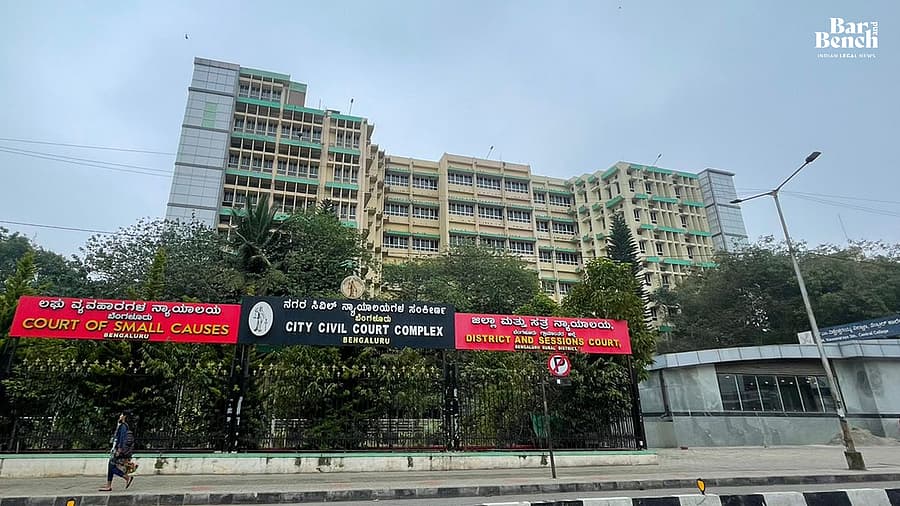
Bengaluru Commercial Court: Sets Aside DSERT Puthur Infotech Arbitral Award
Summary
- A Bengaluru commercial court set aside an arbitral award of over ₹9 crore against the Karnataka Department of State Education Research and Training (DSERT).
- The award, in favor of Puthur Infotech, stemmed from a dispute over maintenance services for 4,396 schools.
- The court ruled that the arbitrator committed patent illegality by failing to consider the State government's objection that the claims were time-barred.
- The original contract, valued at ₹7.19 crore, was for services provided between April 2014 and April 2015.
- The dispute was referred to arbitration by the MSME Council after conciliation efforts failed.
The Court's Decision
The court's observation underscored that the absence of a finding on the issue of limitation represents a "fundamental defect which goes to the root of the matter."
A commercial court in Bengaluru recently invalidated an arbitral award that had mandated the Karnataka Department of State Education Research and Training (DSERT) to disburse more than ₹9 crore to Puthur Infotech. This significant ruling, delivered by Judge Vijaya Kumar Rai, centered on a dispute concerning maintenance services provided by the company to 4,396 schools across the state of Karnataka. The court's decision to set aside the DSERT Puthur Infotech arbitral award highlights critical procedural requirements in arbitration.
The genesis of this disagreement traces back to a 2013 tender floated by DSERT. The tender sought services for the upkeep of UPS systems, printers, and LCD projectors across 1,763 government high schools and an additional 2,633 aided high schools throughout Karnataka. Puthur Infotech successfully secured this contract, valued at ₹7.19 crore, for a service period spanning from April 2014 to April 2015. While the government remitted ₹5.07 crore, Puthur Infotech contended that the remaining payments were withheld despite the satisfactory fulfillment of its contractual duties.
Following the alleged non-payment, Puthur Infotech initially sought recourse through the MSME Council. After conciliation efforts proved unsuccessful, the MSME Council arbitration referral led to the dispute being escalated to arbitration. In May 2023, the sole arbitrator, L Narayana Swamy, who is currently a Judicial Member of the Lokpal of India and a former Chief Justice of the Himachal Pradesh High Court, issued an award in favor of Puthur Infotech. This award stipulated a payment of ₹7.75 crore, inclusive of interest, along with an additional ₹1.27 crore, also with interest, bringing the total to just over ₹9 crore.
Grounds for Setting Aside
The Bengaluru commercial court's decision to set aside the arbitral award was predicated on the finding of patent illegality arbitration India. Judge Vijaya Kumar Rai determined that the arbitrator had committed a fundamental error by failing to adequately consider a crucial objection raised by the State government. This objection asserted that Puthur Infotech's claims were barred by the applicable limitation period. The court emphasized that the arbitrator's omission to address this defense constituted a significant flaw in the arbitral process.
The court's observation underscored that the absence of a finding on the issue of limitation represents a "fundamental defect which goes to the root of the matter." Such an oversight, according to the court, renders the award patently illegal because it demonstrates a clear non-consideration of a substantive defense presented by the respondent. This ruling provides a clear precedent regarding the Section 34 Arbitration Act grounds for challenging an award, specifically when an arbitrator overlooks a critical legal defense like limitation. The Karnataka Education Department arbitration faced this challenge due to the arbitrator's failure to engage with the limitation argument.
Implications for Arbitration Practice
This judgment from the Bengaluru commercial court carries substantial weight for arbitration practice, particularly in India. It reinforces the principle that arbitrators are obligated to thoroughly examine and rule upon all fundamental defenses presented by parties, including the arbitration limitation period challenge. The failure to do so can lead to an award being overturned on grounds of patent illegality, as demonstrated in the DSERT Puthur Infotech case.
The ruling serves as a vital reminder for both arbitrators and legal practitioners involved in arbitration proceedings. It highlights that procedural fairness and the consideration of all material defenses are not mere formalities but are integral to the validity of an arbitral award. Parties defending against claims must ensure their limitation arguments are robustly presented, and arbitrators must explicitly address them in their awards to avoid potential challenges under Section 34 of the Arbitration and Conciliation Act.
Practical Implications
This ruling underscores that an arbitrator's failure to address a fundamental defense like limitation constitutes patent illegality, providing a strong ground for challenging and setting aside arbitral awards under Section 34 of the Arbitration and Conciliation Act. Lawyers should ensure all procedural and substantive defenses, especially limitation, are thoroughly presented and considered in arbitration proceedings to avoid such outcomes.
Source
How does this affect you?
Get an AI analysis of this article grounded in your jurisdictions, practice areas, and any policy documents you've uploaded to Wansom.
Finish Reading the Full Story and the Expert Analysis.
Wansom is AI and can make mistakes.