
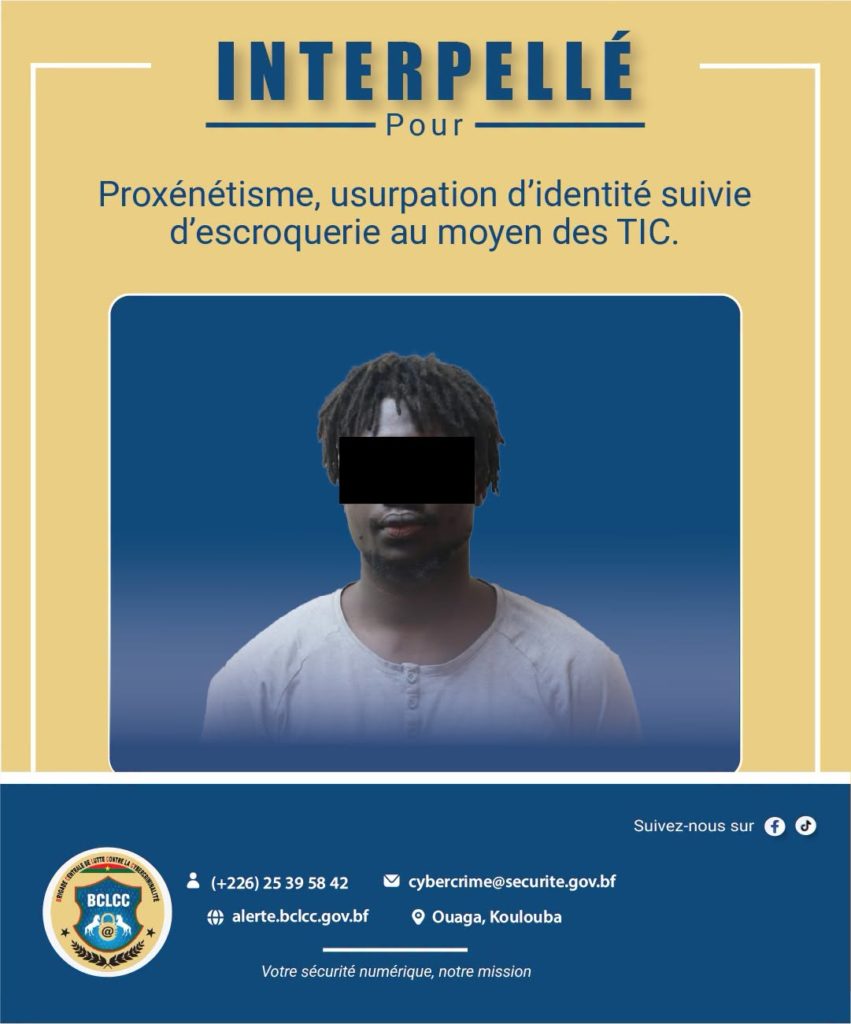
BCLCC Arrests Cyber-Pimp In Burkina Faso For WhatsApp Scams
Summary
- The Brigade Centrale de Lutte Contre la Cybercriminalité (BCLCC) arrested S.T., a 28-year-old commerce employee from Ouagadougou.
- S.T. is accused of pimping, identity theft, and fraud, allegedly conducted via WhatsApp.
- The suspect reportedly operated through a specific online channel to facilitate these criminal activities.
- Following the arrest, S.T. was referred to the Prosecutor of Faso at the Ouaga I High Court.
- This arrest highlights the BCLCC's active enforcement against cyber-enabled crimes in Burkina Faso.
- The case underscores the challenges posed by the misuse of digital platforms for illicit purposes.
Arrest Made in Ouagadougou Cybercrime Probe
The BCLCC, tasked with combating cybercrime across the country, initiated the operation that led to the suspect's detention.
The Brigade Centrale de Lutte Contre la Cybercriminalité (BCLCC) in Burkina Faso has announced the apprehension of an individual identified as S.T., a 28-year-old commerce employee residing in Ouagadougou. Following the arrest, S.T. was referred to the Prosecutor of Faso at the Ouaga I High Court to answer for his actions, marking a significant step in the nation's efforts to combat digital illicit operations.
S.T. faces serious allegations including pimping (proxénétisme), identity theft (usurpation d’identité), and fraud (escroquerie). These offenses were reportedly carried out primarily through the popular messaging application WhatsApp, utilizing a specific online channel to facilitate the alleged criminal enterprise. The BCLCC, tasked with combating cybercrime across the country, initiated the operation that led to the suspect's detention.
BCLCC's Active Enforcement Against Digital Crimes
This recent arrest underscores the active role of the Brigade Centrale de Lutte Contre la Cybercriminalité (BCLCC) in enforcing cybercrime laws within Burkina Faso. The BCLCC's mandate specifically targets the growing threat of digital criminality, which often leverages widely used communication platforms to perpetrate various forms of fraud and exploitation. The case of S.T. highlights the agency's focus on individuals who exploit online channels for illicit gain.
The nature of the alleged crimes—pimping, identity theft, and fraud—demonstrates the complex and multifaceted challenges posed by cybercriminals. The use of WhatsApp as a primary tool for these activities further illustrates how readily available digital communication services can be co-opted for illegal purposes, necessitating vigilant monitoring and robust enforcement by specialized units like the BCLCC. The agency's intervention signals a clear intent to disrupt such networks and bring perpetrators to justice.
Implications for Online Safety and Digital Platforms
The apprehension of S.T. serves as a critical reminder of the pervasive nature of cybercrime and the continuous need for vigilance on digital platforms. For residents and businesses in Burkina Faso, this incident reinforces the importance of exercising caution when interacting online, particularly concerning unsolicited messages or suspicious activities on platforms like WhatsApp. The BCLCC's actions aim to create a safer digital environment by actively prosecuting those who exploit these spaces for criminal ends.
This development also carries broader implications for the regulatory landscape surrounding digital communication services. As law enforcement agencies like the BCLCC intensify their efforts, there is an increasing spotlight on how these platforms are used and the measures in place to prevent their misuse. The ongoing fight against cyber-enabled offenses, such as those involving identity theft and online scams, remains a priority for authorities in Burkina Faso, signaling a commitment to protecting citizens from digital exploitation.
Practical Implications
This signals active enforcement by the BCLCC against cyber-enabled crimes in Burkina Faso, particularly those involving identity theft and online scams via platforms like WhatsApp. Lawyers should advise clients on compliance with cybercrime laws and the risks associated with digital platforms, while compliance officers should review policies regarding employee conduct and digital security.
Source
How does this affect you?
Get an AI analysis of this article grounded in your jurisdictions, practice areas, and any policy documents you've uploaded to Wansom.
Finish Reading the Full Story and the Expert Analysis.
Get the latest legal & regulatory intelligence in Burkina Faso
Wansom is AI and can make mistakes.