
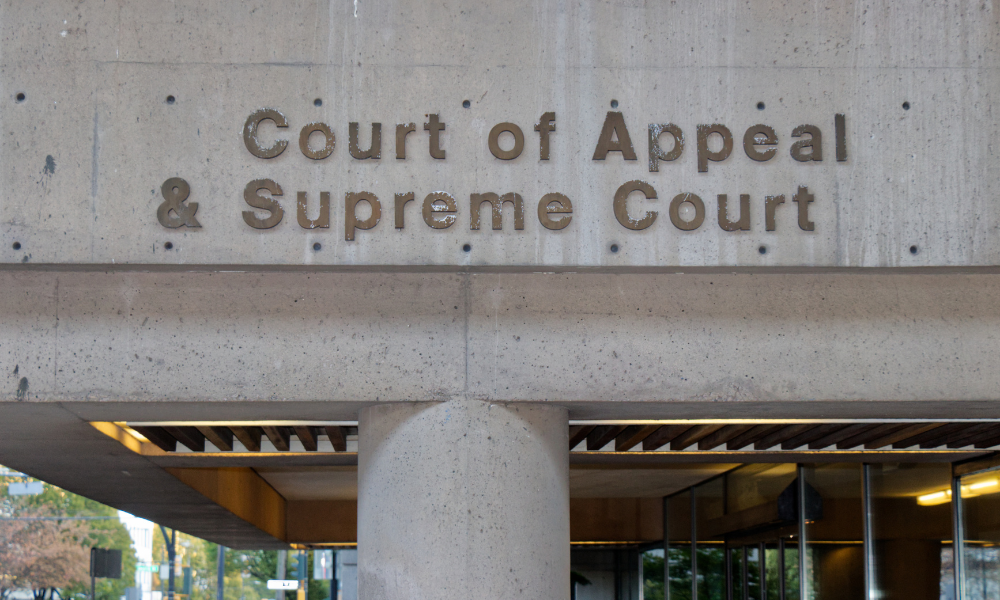
BC Court of Appeal: Awards Costs to Habitat for Humanity in Occupancy Dispute
Arbitrator said Residential Tenancy Branch lacked jurisdiction as there was no intent to rent After setting aside the British Columbia Supreme Court’s decision staying Habitat for Humanity Victoria’s petition for vacant possession against an occupant, the British Columbia Court of Appeal awarded the charity costs in the appeal and in the court below. Habitat, the appellant in this case, was a registered charitable organization. Through a homeownership program, Habitat constructed and offered affordable housing at below-market cost to eligible working families who would not qualify for mortgages from the usual lending institutions. In April 2020, the program accepted the respondent, with the following conditions: Under an early occupancy agreement (EOA), the respondent gained early occupancy of a recently built home in November 2020, before she had met all the program requirements. The EOA terms included: Despite Habitat’s accommodation and extension of the expiry date to May 23, 2024, the respondent ultimately could not remain financially eligible under the program. Habitat provided 30 days’ notice to vacate the property, eventually extended to Aug. 30, 2024. However, the respondent did not vacate. Habitat thus petitioned for vacant occupancy. Before the Residential Tenancy Branch (RTB), the respondent brought an application alleging that her occupancy was a tenancy under the RTA. An RTB arbitrator determined that the RTA did not apply because the parties did not mean for the respondent to rent the home, and that the RTB thus lacked jurisdiction to hear and determine her application. On judicial review, a judge of the Supreme Court of British Columbia set aside the arbitral decision for being patently unreasonable, remitted the matter to the RTB for a redetermination, and stayed Habitat’s vacant occupancy petition. Habitat appealed. On Jan. 12, in Habitat for Humanity v. Booth, 2026 BCCA 8, the BC Court of Appeal allowed the appeal , set aside the reviewing judge’s ruling staying Habitat’s vacant possession petition, and reinstated the RTB arbitrator’s decision. According to the appeal court, the judge conducted a disguised correctness review and erred in applying the review standard for patent unreasonableness. Upon reading the arbitrator’s reasons, the appeal court ruled that the arbitrator carefully considered the parties’ intention in executing the agreements for the respondent’s occupancy. The appeal court did not deem the arbitral ruling “irrational” or “evidently not in accordance with reason.” Given its success on appeal, Habitat asked for its appeal costs and its costs in the court below. The respondent countered that the parties should bear their own costs in the circumstances. In supplementary reasons released on Sept. 4, in Habitat for Humanity v. Booth, 2026 BCCA 368, the BC Court of Appeal granted Habitat’s application and confirmed Habitat’s entitlement to its requested costs. The BC Court of Appeal did not see enough basis to depart from the usual rule under s. 44 of BC’s Court of Appeal Act, 2002, which entitled successful parties to their costs. The appeal court acknowledged that Habitat failed to respond to the respondent’s argument that they had mutually contemplated the jurisdictional issue. However, the appeal court noted that: The appeal court accepted that a costs order against the respondent at both court levels would be a financial burden on her. However, given the well-known cost rules and their well-established purposes, the appeal court did not consider the costs order an unfair financial penalty. Here are some other recent BC Court of Appeal decisions involving arbitration. On Jan. 30, the appeal court ruled that an arbitrator erred by conflating the distinct tests for “extenuating circumstances” and “exceptional circumstances” in her analysis of whether the lan
How does this affect you?
Get an AI analysis of this article grounded in your jurisdictions, practice areas, and any policy documents you've uploaded to Wansom.
Finish Reading the Full Story and the Expert Analysis.
Get the latest legal & regulatory intelligence in Canada
Wansom is AI and can make mistakes.