
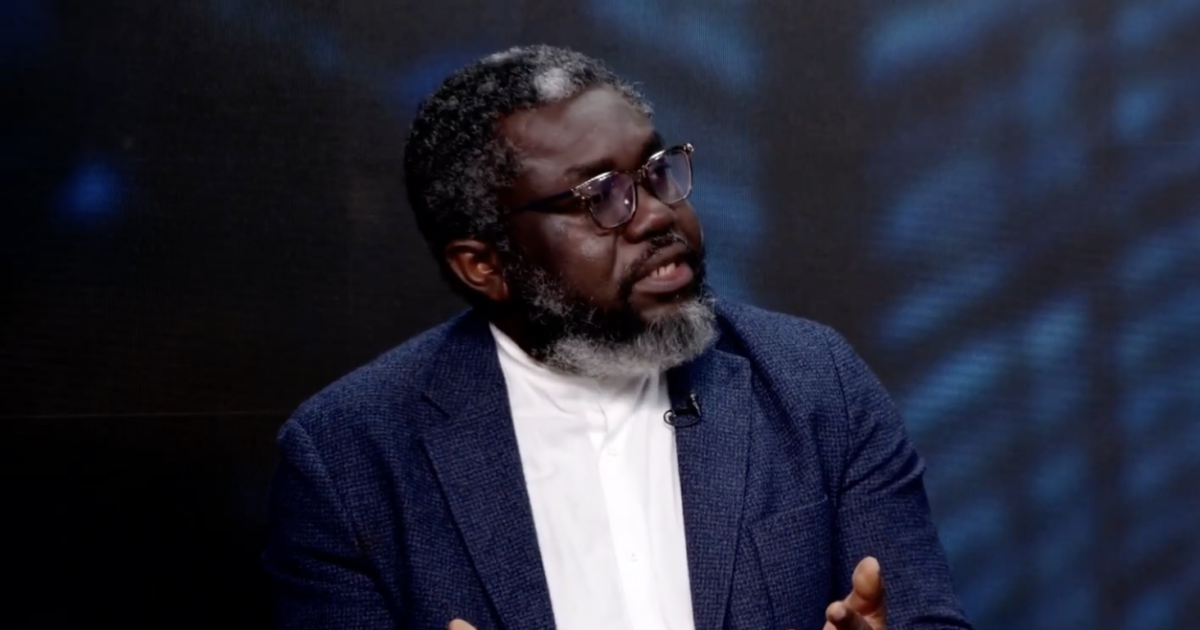
Oliver Barker-Vormawor: Ghana CRIC Mandate Is Technical, Not Policy
Summary
- Oliver Barker-Vormawor, recently appointed as Secretary and a member of Ghana's Constitution Review Implementation Committee (CRIC), clarified that the committee has a technical, not policy-making, mandate.
- The CRIC's role is to translate politically agreed-upon decisions into legal instruments, not to determine their content.
- Constitutional reform in Ghana requires broad political consensus, constant dialogue, and compromises among all stakeholders due to high thresholds.
- Parliament and political parties ultimately provide the political direction for the CRIC's work on Ghana constitutional amendment bills.
- Barker-Vormawor likened the CRIC's function to a midwife, facilitating a process without dictating its outcome.
Defining the CRIC's Mandate
The committee's responsibility is to deliver the process handed to it by the political system, rather than to dictate its outcome.
Lawyer, activist, and academic Oliver Barker-Vormawor, who was recently appointed as Secretary and a member of Ghana's Constitution Review Implementation Committee (CRIC), clarified the precise mandate of the committee, emphasizing its role as a technical body rather than a policy-making entity. Speaking on Joy News’ PM Express on a Tuesday, Mr. Barker-Vormawor underscored that the committee is not tasked with determining which proposed constitutional changes should ultimately become law. Instead, the primary function of the Constitution Review Implementation Committee is to translate decisions that have already been reached through the political process into concrete legal instruments.
He explicitly stated that the CRIC operates under a clear directive: it is not intended to be "another post-Prempeh committee" that formulates policy positions. This distinction is crucial, as it positions the committee as a technical facilitator designed to advance the outcomes settled by the broader political landscape. The committee's responsibility, therefore, is to meticulously convert these politically agreed-upon reforms into the necessary legal frameworks, ensuring they align with the consensus achieved through the political process. This clarification is vital for understanding the Barker-Vormawor Ghana CRIC mandate.
Navigating Political Consensus and Reform
The Ghana constitutional reform process, according to Mr. Barker-Vormawor, necessitates broad agreement and cannot be unilaterally imposed. He highlighted that constitutional amendments require significant parliamentary and referendum thresholds, making a "bulldoze through" approach unfeasible. Consequently, the process demands continuous dialogue, mutual understanding, and compromises among various stakeholders. He stressed that this is not a "one-party project" but rather an undertaking that requires all involved parties to concur on the reform plan.
In this context, the Constitution Review Implementation Committee plays a facilitative role. While not setting policy, it monitors the perspectives of different stakeholders and relays this feedback to the government. Should a political consensus emerge, the committee's drafting instructions would then be adjusted to reflect this new agreement, enabling them to translate the updated understanding into legal texts. This dynamic interaction ensures that the CRIC's technical work remains responsive to the evolving political landscape and the collective will of the nation.
The Technical vs. Policy Role in Constitutional Amendments
Mr. Barker-Vormawor was unequivocal that the ultimate authority for deciding which proposals are incorporated into Ghana constitutional amendment bills lies outside the CRIC's purview. He plainly stated that such key decision-making is "beyond our pay grade," indicating that the committee does not possess the power to determine the final content of legislative proposals. Instead, the political direction for the committee's technical work is provided by elected members of Parliament and political parties, who are entrusted with seeking and executing public mandates.
He vividly illustrated the CRIC's function by likening it to an Electoral Commission or a midwife. Just as a midwife facilitates a birth without determining the baby's characteristics, the committee's responsibility is to deliver the process handed to it by the political system, rather than to dictate its outcome. The committee, he explained, acts as "essentially clay in their hands," shaping the legal instruments based on the political decisions it receives.
This reinforces the understanding that the CRIC technical vs policy role is strictly confined to implementation, following the government’s broader efforts in reviewing and implementing constitutional reform recommendations. The CRIC was established to help translate agreed constitutional reform proposals into concrete legal and institutional changes, a task it performs by converting political decisions into the necessary legal and institutional frameworks.
Practical Implications
Lawyers advising on Ghanaian constitutional reform should understand that the Constitution Review Implementation Committee acts as a technical drafting body, not a policy-making one. This clarifies that the substance of any proposed constitutional amendments will be driven by political consensus and parliamentary direction, requiring practitioners to monitor political developments rather than lobbying the CRIC for specific policy outcomes.
Source
How does this affect you?
Get an AI analysis of this article grounded in your jurisdictions, practice areas, and any policy documents you've uploaded to Wansom.
Finish Reading the Full Story and the Expert Analysis.
Wansom is AI and can make mistakes.