
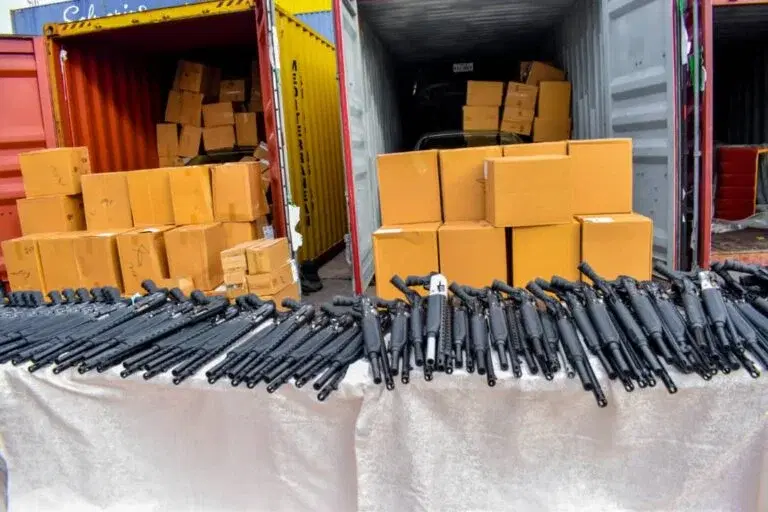
Nigeria Customs: Seizure of 399 Rifles at Tin Can Port
Summary
- The Nigeria Customs Service (NCS) seized 399 rifles at the Tin Can port in Lagos.
- Additional rifle parts, including frames, heat shields, and trigger pins, were also recovered.
- The discovery highlights potential non-compliance with Nigeria's firearms regulations and underscores the need for strict compliance among importers and exporters.
What Happened
According to Adeniyi, the additional rifle parts recovered include various components such as frames, heat shields, trigger pins, pistons, locking lugs, and charging handles.
A significant discovery was made at the Tin Can port in Nigeria when officials from the Nigeria Customs Service (NCS) uncovered a large shipment containing 399 rifles. The seizure is a major blow to potential gun traffickers, highlighting the efforts of the NCS in enforcing regulations and preventing illicit activities.
According to Adeniyi, the additional rifle parts recovered include various components such as frames, heat shields, trigger pins, pistons, locking lugs, and charging handles. These findings suggest that the shipment was intended for assembly or re-export, rather than being a legitimate import.
Legal Context
Nigeria's firearms regulations are designed to prevent the unauthorized importation and distribution of guns, which can exacerbate security concerns in the country. The NCS has been working tirelessly to enforce these regulations and prevent gun trafficking. This seizure is a testament to their efforts and highlights the importance of strict compliance with regulatory requirements.
The discovery also raises questions about the potential for non-compliance with Nigeria's firearms regulations, particularly among importers and exporters who may not be aware of or are deliberately ignoring these regulations. Lawyers and compliance officers should take note of this development and review their clients' procedures to ensure they are in line with regulatory requirements.
Why It Matters
The seizure of 399 rifles at the Tin Can port is a significant event that underscores the need for vigilance in enforcing regulations related to firearms importation. The discovery highlights potential vulnerabilities in the system and emphasizes the importance of strict compliance with regulatory requirements.
This development has far-reaching implications, not only for the NCS but also for businesses operating in Nigeria's import/export sector. It serves as a reminder that non-compliance can have severe consequences, including reputational damage, financial penalties, and even legal action.
Practical Implications
Lawyers and compliance officers should be aware that the seizure highlights potential non-compliance with Nigeria's firearms regulations, and may indicate a need for clients to review their import/export procedures.
Source
How does this affect you?
Get an AI analysis of this article grounded in your jurisdictions, practice areas, and any policy documents you've uploaded to Wansom.
Wansom is AI and can make mistakes.