
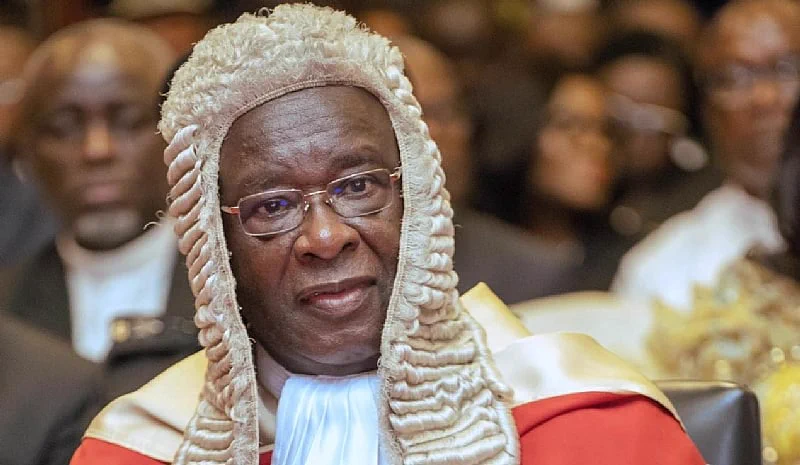
Baffoe-Bonnie: Ghana Judicial Humanity Amid Public Debate
Summary
- Chief Justice Paul Baffoe-Bonnie faced criticism for recent remarks concerning the performance of state-owned enterprises.
- He responded by stating that judges must not abandon their humanity due to the demands of their judicial office.
- The Chief Justice acknowledged the inherent difficulty in balancing professional duties with personal relationships and social responsibilities.
- His initial comments specifically addressed SOEs operating under the current National Democratic administration.
Recent Judicial Commentary Sparks Debate
Justice Paul Baffoe-Bonnie has articulated a nuanced perspective, emphasizing that the rigorous demands of judicial office should not compel judges to relinquish their fundamental humanity.
Ghana's Chief Justice, Paul Baffoe-Bonnie, has recently found himself at the center of public discussion following comments he made regarding the operational efficiency of certain state-owned enterprises (SOEs). These remarks, which touched upon the performance of these entities under the current National Democratic administration, drew considerable public scrutiny and criticism.
The Chief Justice's initial statements prompted a broader conversation about the appropriate boundaries for judicial commentary on matters of public administration and policy. In response to the ensuing debate, Justice Baffoe-Bonnie offered a reflective perspective on the role of judges in society.
Upholding Humanity in Judicial Office
Addressing the criticism, Justice Paul Baffoe-Bonnie articulated a nuanced perspective, emphasizing that the rigorous demands of judicial office should not compel judges to relinquish their fundamental humanity. He underscored the inherent challenge in reconciling the stringent requirements of their professional roles with their personal connections and broader societal obligations. This stance highlights a critical aspect of Baffoe-Bonnie's judicial humanity philosophy in Ghana, suggesting that judges, despite their elevated positions, remain individuals with social responsibilities.
His comments acknowledge the delicate balance required of those serving in the judiciary: maintaining impartiality and the dignity of their office while also navigating the complexities of personal relationships and civic engagement. The Chief Justice's view suggests that a complete detachment from societal concerns is neither feasible nor desirable for members of the bench, advocating instead for an approach that integrates their human experience with their professional duties.
Context of the SOE Performance Remarks
The specific remarks that ignited the controversy centered on the performance of several state-owned enterprises. Justice Baffoe-Bonnie's observations were directed at these SOEs, which are currently operating under the oversight of the National Democratic administration. The nature of these comments, touching on the efficiency and management of public sector entities, positioned them within the realm of public policy and governance.
This particular commentary from a high-ranking judicial figure on executive branch performance naturally attracted attention and subsequently, criticism, prompting the Chief Justice to elaborate on his broader philosophy regarding judicial conduct and personal expression.
Implications for Judicial Conduct in Ghana
The Chief Justice's statements contribute significantly to the ongoing discourse surrounding Ghana judicial ethics and the appropriate scope of judicial public commentary. His assertion that judges must not abandon their humanity due to their positions provides valuable insight into the current thinking at the highest levels of the judiciary regarding judicial conduct in Ghana. This perspective suggests a recognition of the human element within the judicial role, potentially influencing how future instances of judicial expression are perceived and evaluated.
This incident underscores the continuous challenge of balancing judicial office humanity with the need for perceived impartiality and independence. It prompts legal professionals and the public alike to consider the evolving expectations for judges in a democratic society, where their roles extend beyond the courtroom into the broader public sphere, albeit with careful consideration of their ethical obligations.
Practical Implications
This article offers insight into the Chief Justice's current stance on judicial ethics and the appropriate balance between judicial office and personal expression in Ghana. Lawyers should be aware of this perspective as it shapes expectations for judicial conduct and could be relevant when assessing judicial temperament or public perception of the courts.
Source
How does this affect you?
Get an AI analysis of this article grounded in your jurisdictions, practice areas, and any policy documents you've uploaded to Wansom.
Finish Reading the Full Story and the Expert Analysis.
Get the latest legal & regulatory intelligence in Ghana
Wansom is AI and can make mistakes.