
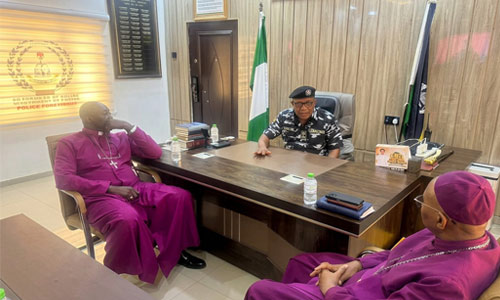
Anambra Police: Awka Anglican Crisis Police Intervention, Cautions Factions
Summary
- The Anambra State Police Command intervened in a leadership crisis within the Anglican Diocese of Awka.
- Police convened a meeting with involved parties to address escalating tensions and prevent further disruption.
- Authorities warned against inflammatory statements or actions that could undermine ongoing resolution efforts.
- The police explicitly urged all stakeholders to respect the ongoing court process in the Anglican crisis.
- This intervention highlights the state's emphasis on legal frameworks in resolving internal church disputes.
What Happened
The command's insistence on respecting the court process serves as a crucial reminder that religious bodies, like any other organization operating within the nation, are ultimately subject to the country's overarching legal framework.
The Anambra State Police Command recently intervened in a significant leadership dispute affecting the Anglican Diocese of Awka, signaling a direct state engagement in internal church affairs. This intervention saw law enforcement officials convene a crucial meeting with the various factions embroiled in the protracted internal conflict within the diocese. The primary objective of this gathering was to address the escalating tensions and prevent any further deterioration of the situation.
During the meeting, police authorities issued a stern and unequivocal caution to all parties involved in the religious leadership dispute Awka. They specifically warned against making any inflammatory statements or engaging in actions that could potentially disrupt or sabotage the existing efforts aimed at resolving the crisis. This direct involvement by the police underscores the seriousness with which the state views the ongoing disagreement within the Anglican Church, particularly when it threatens public order or legal processes.
Legal Context and Police Stance
A pivotal aspect of the Awka Anglican crisis police intervention was the clear directive issued by authorities emphasizing strict adherence to established legal procedures. Police officials explicitly urged all stakeholders to respect the ongoing court process Anglican crisis Nigeria, indicating that judicial avenues are already being actively pursued to address the internal conflict within the Church of Nigeria Awka Diocese dispute. This firm stance by the Anambra State Police Command underscores a fundamental commitment to upholding the rule of law, even in sensitive matters pertaining to ecclesiastical governance and leadership.
The command's insistence on respecting the court process serves as a crucial reminder that religious bodies, like any other organization operating within the nation, are ultimately subject to the country's overarching legal framework. By warning against actions that could undermine resolution efforts, the police are effectively reinforcing the authority and legitimacy of the judiciary in mediating such complex internal disagreements. This approach aims to ensure that the dispute is resolved through legitimate, recognized, and peaceful legal channels, rather than through confrontational or disruptive means that could further destabilize the community.
Why It Matters
The involvement of the Anambra State Police in the Anglican Diocese of Awka's leadership struggle carries significant implications for how internal church disputes are managed and perceived across Nigeria. It unequivocally signals that when such conflicts escalate to a point of potential public disorder, or when they threaten to undermine ongoing legal processes, state security apparatus may and will intervene to maintain peace and order. This particular Anambra State Police Anglican crisis intervention thus sets a notable precedent for how civil authorities might engage with religious institutions facing deep-seated disagreements, especially those that spill beyond the confines of the church.
Furthermore, the police's strong emphasis on respecting the court process highlights the increasing integration of formal legal frameworks into the resolution of religious leadership disputes within the country. For religious bodies across Nigeria, this incident underscores the critical necessity of engaging with and adhering to judicial decisions, even when internal mechanisms for conflict resolution might traditionally be preferred. It reinforces the idea that while churches operate under their own doctrines and internal rules, their organizational and leadership structures are ultimately subject to the broader legal system of the country, particularly when disputes become contentious and require external arbitration.
Practical Implications
Lawyers advising religious bodies or involved in dispute resolution in Nigeria should note the police's emphasis on respecting ongoing court processes in internal church conflicts, underscoring the importance of adhering to legal frameworks even in ecclesiastical matters to avoid further state intervention.
Source
How does this affect you?
Get an AI analysis of this article grounded in your jurisdictions, practice areas, and any policy documents you've uploaded to Wansom.
Finish Reading the Full Story and the Expert Analysis.
Get the latest legal & regulatory intelligence in Nigeria
Wansom is AI and can make mistakes.