
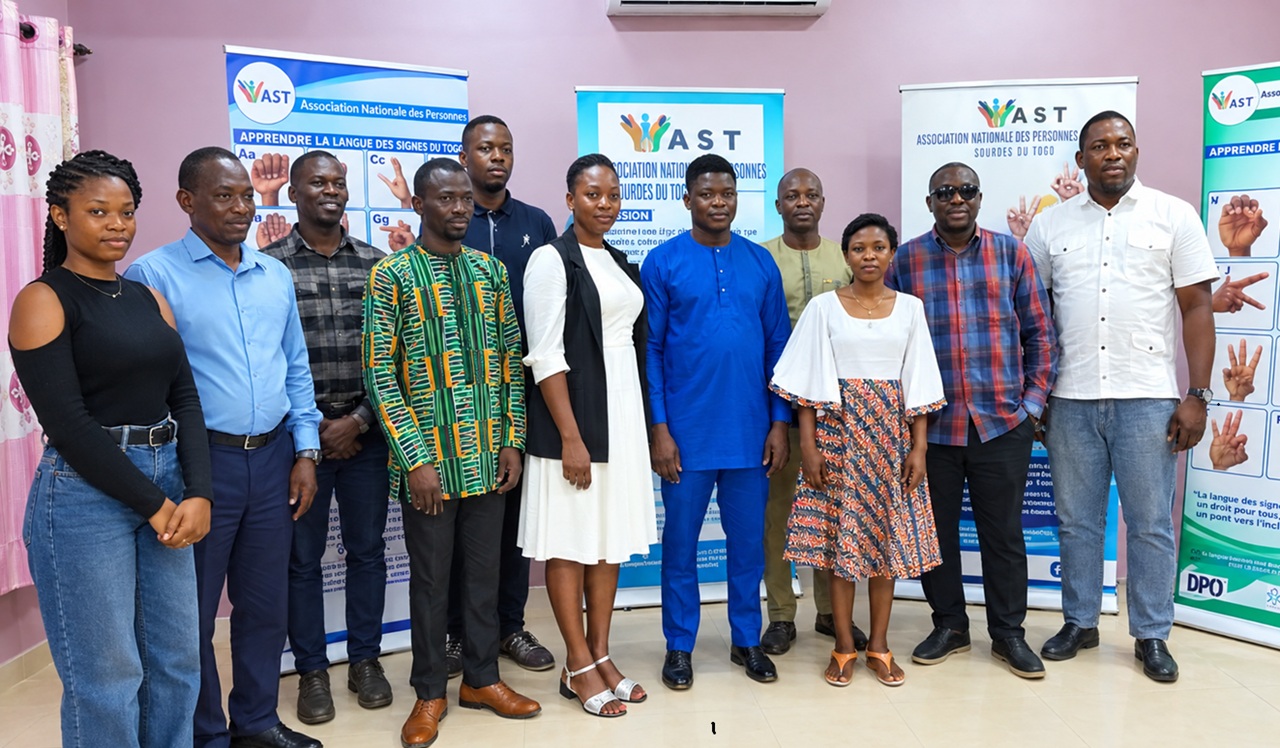
AST Togo: Boosts Deaf Rights Advocacy for LST Recognition
Summary
- The Association des personnes Sourdes du Togo (AST) held a press conference on September 25, 2026, advocating for enhanced rights for deaf individuals.
- Key demands include legal recognition of Togolese Sign Language (LST) and professional LST interpreters in public services like hospitals, courts, and schools.
- The AST emphasizes that interpretation is a specialized profession requiring precision and confidentiality, not a task for general educators.
- The advocacy also calls for media accessibility, the right to work, and full citizen participation for deaf persons.
- These efforts coincide with the 50th anniversary of LST's introduction in Togo in October 1976, with a celebratory event planned for October 16, 2026.
AST's Urgent Call for Accessible Rights
Lawyers and compliance officers in Togo should closely monitor these legislative developments concerning disability rights and accessibility for deaf persons.
The Association des personnes Sourdes du Togo (AST) recently intensified its advocacy for the rights of deaf persons in Togo, holding a press conference in Lomé on Friday, September 25, 2026. This event, coinciding with the World Week of Deaf Persons, served as a platform for the AST to underscore the critical need for improved consideration of the deaf community's requirements within essential public services. The organization firmly believes that achieving genuine access to rights for deaf persons in Togo hinges on the official recognition and widespread use of Togolese Sign Language (LST).
Elevating Togolese Sign Language and Professional Interpretation
Central to the AST's advocacy is the push for the formal reconnaissance Langue des Signes Togolaise as a foundational step towards ensuring accessible rights for deaf persons in Togo. The organization specifically calls for the government to grant LST legal status, which would pave the way for its broader integration into public life. This recognition is seen as essential for fostering inclusion personnes sourdes Togo and empowering the deaf community.
Beyond legal recognition, the AST emphasizes the critical need for professional interprètes LST services publics Togo. They advocate for these interpreters to be systematically available in key public institutions, including hospitals, courts, and police stations, to ensure effective communication access. The association highlights that interpretation is a specialized profession demanding specific skills, including precision and confidentiality, and clarifies that a general educator is not equipped to serve as an interpreter. This distinction underscores the importance of qualified personnel in facilitating meaningful interaction for deaf individuals within these sensitive environments.
Broader Inclusion and Historical Context
The AST's vision extends beyond language recognition and interpretation services, encompassing a broader commitment to the inclusion personnes sourdes Togo. The organization champions the right to work for deaf individuals and advocates for their full participation in civic life, guided by the principle, "Nothing about us without us." This philosophy ensures that deaf persons are actively involved in decisions and initiatives directly affecting their community. The AST also targets media accessibility, calling for consistent professional LST interpretation windows in television news broadcasts and during significant public events, alongside rapid and accessible information dissemination during emergencies or crises.
This period of heightened AST Togo deaf rights advocacy holds particular significance as it coincides with the 50th anniversary of the introduction of sign language in Togo, which occurred in October 1976. For the Association des personnes Sourdes du Togo, this milestone serves as both a moment for celebration and a powerful reminder that inclusion must transition from a mere principle to a tangible reality in daily life. A major event marking this dual celebration is scheduled for October 16, 2026, at the Agora Senghor in Lomé, symbolizing the ongoing commitment to advancing the rights of deaf persons.
Legal and Compliance Implications
The robust advocacy by the Association des personnes Sourdes du Togo carries significant implications for legal and compliance frameworks within the nation. Should the government move to grant reconnaissance Langue des Signes Togolaise and mandate the provision of interprètes LST services publics Togo, this would necessitate substantial adjustments across various sectors. Lawyers and compliance officers in Togo should closely monitor these legislative developments concerning disability rights and accessibility for deaf persons.
New regulations stemming from the AST's demands could introduce fresh compliance obligations for public service providers, private businesses, and legal proceedings. For instance, the requirement for professional interpreters in courts and police stations would directly impact judicial processes and law enforcement interactions. Similarly, educational institutions would need to adapt curricula and staffing to provide quality early childhood education in LST. These potential changes underscore a growing need for entities to proactively assess and prepare for enhanced accessibility standards and to understand their evolving responsibilities under Togo disability rights legislation.
Practical Implications
Lawyers and compliance officers in Togo should monitor legislative developments concerning disability rights and accessibility for deaf persons, as the AST's advocacy for legal recognition of Togolese Sign Language and mandatory interpreters could lead to new compliance obligations for public services, businesses, and legal proceedings.
Source
How does this affect you?
Get an AI analysis of this article grounded in your jurisdictions, practice areas, and any policy documents you've uploaded to Wansom.
Finish Reading the Full Story and the Expert Analysis.
Get the latest legal & regulatory intelligence in Togo
Wansom is AI and can make mistakes.