
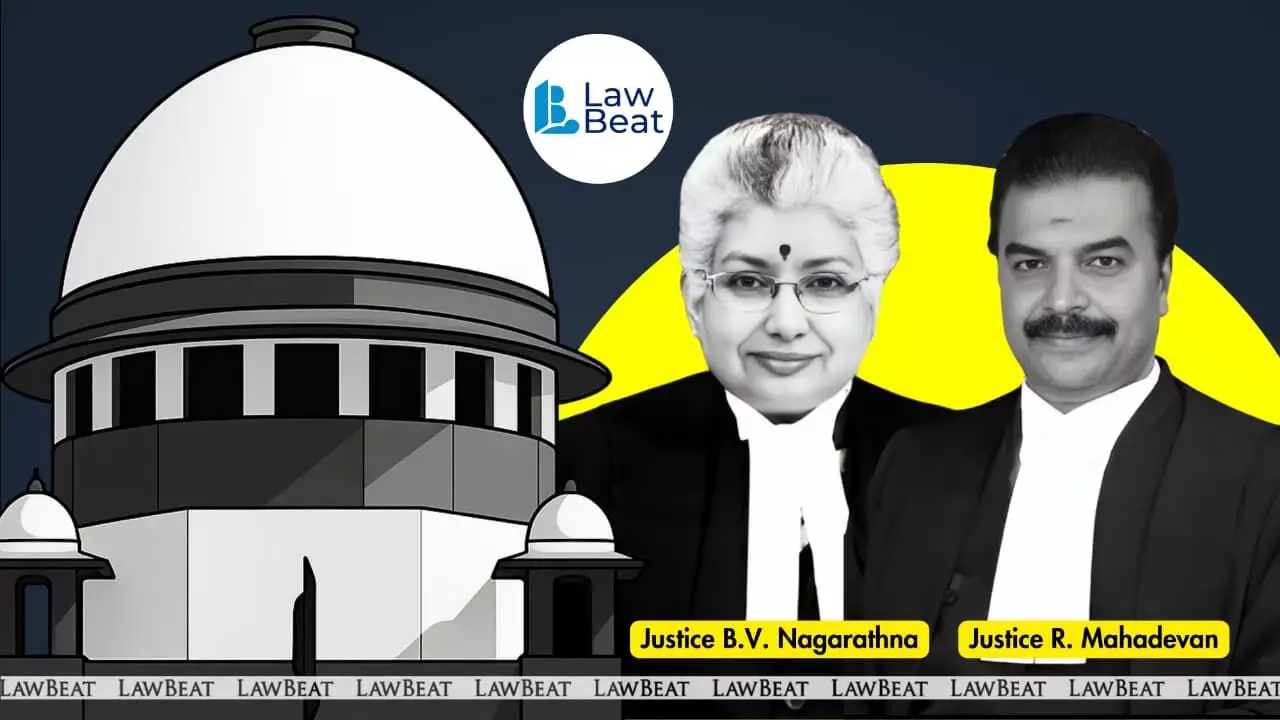
Article 142 Can Be Invoked In Post-Conviction Matters If No Express Statutory Bar: Supreme Court
What Happened
Home / Top Stories / Supreme Court Judgments Article 142 Can Be Invoked In Post-Conviction Matters If No Express Statutory Bar: Supreme Court X Supreme Court exercises Article 142 powers in POCSO case. Supreme Court holds Article 142 powers can extend to quashing convictions during pending appeals, including exceptional POCSO cases involving subsequent marriage between the accused and victim. The Supreme Court has observed that its powers under Article 142 of the Constitution to do complete justice are wide and can be exercised to do complete justice even in post-conviction matters where an appeal is pending, provided it does not directly conflict with express statutory prohibitions. Applying this principle, a Bench of Justices B V Nagarathna and R Mahadevan held that in exceptional circumstances, where the accused and the victim have married during the pendency of criminal proceedings and continue to live together, the Court may exercise its plenary powers to quash the conviction and sentence if doing so is necessary to secure complete justice and prevent further bitterness and uncertainty in their matrimonial life. Court made it clear that such powers must be exercised sparingly, particularly in cases involving serious offences against children and women. The Bench made these observations while exercising its powers under Article 142 to quash the conviction and sentence of one Prashant Thakur in a POCSO case, noting that he and the victim had married and were living together as husband and wife. It held that continuing the criminal proceedings would impede their matrimonial life and perpetuate uncertainty. The appellant had challenged the Madhya Pradesh High Court's October 29, 2025 order dismissing his application seeking suspension of sentence. According to the prosecution, on May 22, 2020, at around 10 pm, the appellant visited the victim's house on the pretext of returning money that he had previously extorted. He allegedly entered her room and took her uncle's ATM card along with a slip containing its password. He then allegedly lured the victim out of the house on the pretext of handing over the money and forcibly took her on a motorcycle to Mandla. On the way, he stopped at an ATM and withdrew Rs 10,000 using the stolen ATM card. Thereafter, he allegedly took the victim to a secluded area behind the Government College, where he raped her. He later dropped her home after threatening to kill her if she disclosed the incident to anyone. An FIR was registered on September 8, 2020, at Maharajpur police station, Mandla district, against the appellant under Sections 384 (Section 308(2) , BNS), 363 (Section 137(2) , BNS), 366 (Section 87 , BNS), 366A (Section 96 , BNS), 376(3) (Section 64(2) , BNS) and 506 (Section 351(2) , BNS) of the Indian Penal Code (IPC), along with Sections 3 and 4 of the Protection of Children from Sexual Offences (POCSO) Act, 2012. He was arrested on September 9, 2020. The Special Judge (POCSO Act), Mandla, convicted him on May 30, 2024, under Sections 384 and 366 of the IPC and Section 3 read with Section 4(ii) of the POCSO Act. He was sentenced to 20 years of rigorous imprisonment for the POCSO offence, along with separate sentences of three years and five years for the offences under Sections 384 and 366 of the IPC, respectively. The appellant challenged the conviction before the Madhya Pradesh High Court and sought suspension of his sentence. On October 29, 2025, the high court declined to suspend the sentence. It took note of his submission that he had married the victim and that there was no one to look after her. However, the high court observed that the power under Article 142 of the Constitution was vested exclusively in the Supreme Court and could not be exercised by it. It further noted that sufficient material established that the victim was a minor at the time of the incident. The subsequent developments, though potentially a cause for sympathy, could not substitute the legal appreciation
Source
Source: Original reporting via LawBeat
How does this affect you?
Get an AI analysis of this article grounded in your jurisdictions, practice areas, and any policy documents you've uploaded to Wansom.
Finish Reading the Full Story and the Expert Analysis.
Get the latest legal & regulatory intelligence in India
Wansom is AI and can make mistakes.