
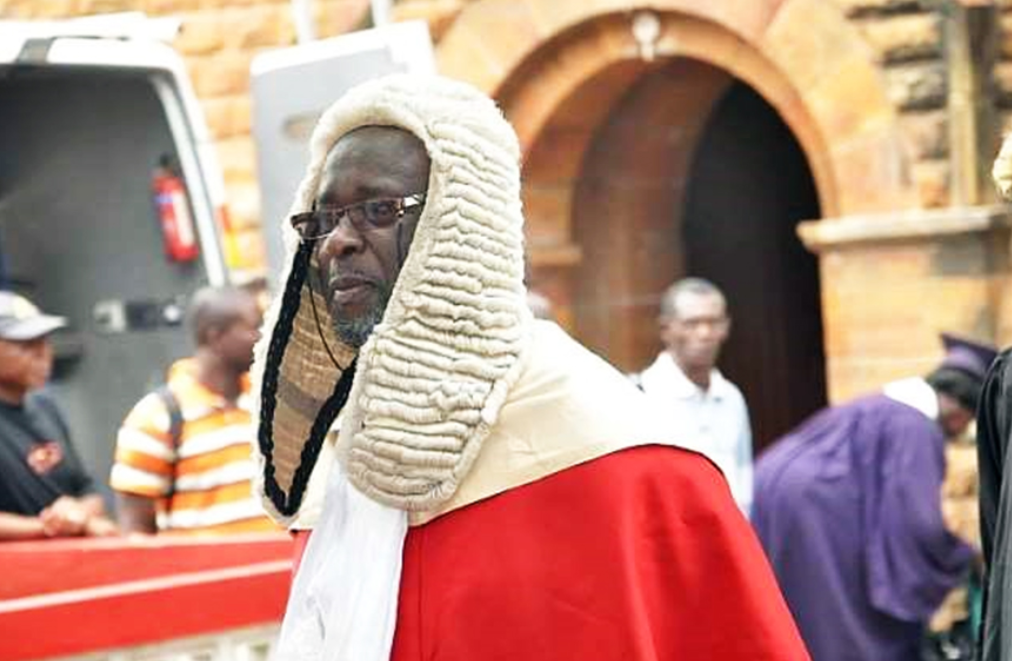
Arthur Kennedy: Chief Justice Baffoe-Bonnie SOE Comments Question Suitability
Summary
- Political activist Dr. Arthur Kobina Kennedy has questioned Chief Justice Paul Baffoe-Bonnie's fitness for office.
- Kennedy's concern stems from whether the Chief Justice requires formal ethical rules to understand the impropriety of his recent remarks on state-owned institutions.
- Dr. Kennedy argues that the Chief Justice, by virtue of his position, should possess an innate understanding of such ethical boundaries.
- This critique raises questions about the Chief Justice's inherent judgment and suitability for his high judicial role.
The Controversy Surrounding Judicial Remarks
If the Chief Justice indeed needs to consult formal ethical statutes to determine the impropriety of his "SOE comments," it raises fundamental doubts about his capacity to lead the judiciary effectively and maintain public confidence.
Dr. Arthur Kobina Kennedy, a prominent figure known for his roles as a political activist, physician, and social commentator, has publicly questioned the qualifications of Chief Justice Paul Baffoe-Bonnie for his esteemed judicial position. This pointed critique arises from the Chief Justice's recent remarks concerning state-owned institutions. Kennedy's contention is that if the Chief Justice requires explicit, formal ethical regulations to discern that these specific comments were unsuitable, then his fitness for the high office he holds becomes a matter of serious concern. The core of this Ghana Chief Justice ethics criticism centers on the expectation of inherent ethical judgment from the judiciary's top leader.
The controversy highlights a significant debate regarding Paul Baffoe-Bonnie judicial conduct and the standards expected from Ghana's highest judicial authority. Dr. Kennedy's intervention brings into sharp focus the perceived need for a Chief Justice to possess an intrinsic understanding of appropriate public discourse, particularly when addressing matters that could impact public perception of judicial impartiality. The Arthur Kennedy Chief Justice Baffoe-Bonnie SOE comments have thus become a flashpoint for discussions on judicial propriety.
The Imperative of Innate Ethical Understanding
According to Dr. Kennedy, the very nature of the Chief Justice's office demands an intuitive grasp of ethical boundaries, rendering the need for codified rules redundant in such fundamental instances. He posits that a person occupying such a pivotal role in the nation's legal framework should instinctively recognize when their pronouncements, especially those touching upon sensitive areas like Ghana state-owned institutions judiciary, cross a line of appropriateness. This perspective underscores a belief that ethical conduct for a Chief Justice should stem from an internal moral compass rather than solely from external guidelines.
This argument suggests that the Chief Justice's position carries with it an inherent responsibility for exemplary conduct and judgment, far beyond what might be expected from other public officials. The expectation is that the individual holding this office would possess a deep-seated understanding of the implications of their words and actions, particularly concerning the integrity and perceived neutrality of the judiciary. The Ghana Chief Justice ethics criticism articulated by Kennedy is therefore not just about a specific comment, but about the underlying ethical discernment of the officeholder.
Suitability for Office and Public Trust
The central question posed by Dr. Kennedy directly challenges Arthur Kennedy judicial suitability Ghana for Chief Justice Baffoe-Bonnie. If the Chief Justice indeed needs to consult formal ethical statutes to determine the impropriety of his "SOE comments," it raises fundamental doubts about his capacity to lead the judiciary effectively and maintain public confidence. The implication is that such a requirement would signify a lack of the inherent judgment essential for the role.
This discussion is critical because the integrity of the judiciary, and by extension, public trust in the legal system, relies heavily on the perceived ethical fortitude and independent judgment of its leaders. A Chief Justice who is seen as lacking an instinctive understanding of ethical boundaries could inadvertently erode confidence in the institution. Dr. Kennedy's remarks serve as a potent reminder of the high ethical bar set for those who preside over justice in Ghana, particularly concerning their engagement with and comments on entities like state-owned institutions.
Practical Implications
This discussion underscores the heightened public and professional scrutiny of judicial ethics and the Chief Justice's conduct in Ghana, particularly concerning comments on state-owned institutions. Lawyers should be aware of this ongoing debate as it may impact public perception of judicial impartiality and the broader legal environment.
Source
Source: Reporting on public commentary
How does this affect you?
Get an AI analysis of this article grounded in your jurisdictions, practice areas, and any policy documents you've uploaded to Wansom.
Finish Reading the Full Story and the Expert Analysis.
Wansom is AI and can make mistakes.