
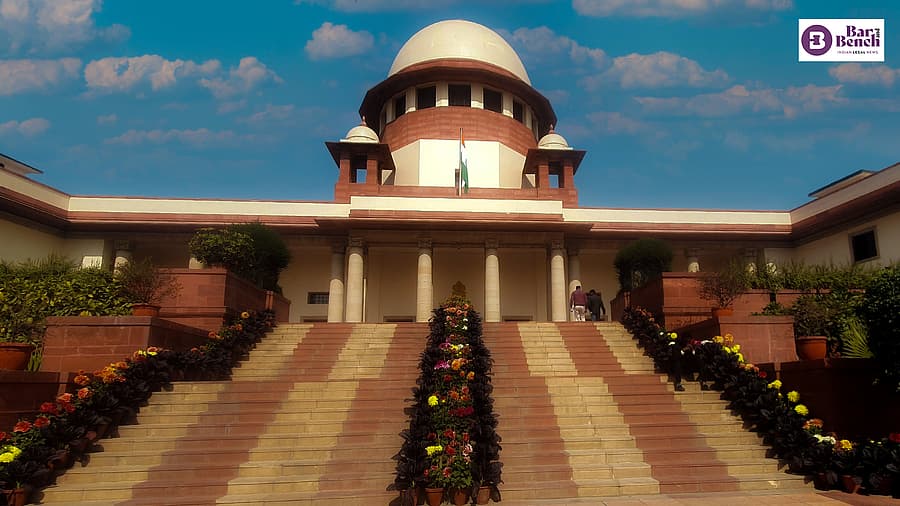
Supreme Court: States Resist Anurag Srivastava v Union of India Cancer Notifiable
Summary
- The Supreme Court of India is hearing a plea for uniform cancer reporting across the country.
- Petitioner Dr. Anurag Srivastava seeks to declare cancer a notifiable disease and establish a centralized digital registry.
- Some North Indian states are reportedly unwilling to declare cancer as notifiable, despite high tobacco and alcohol consumption.
- Advocate Gaurav Bansal argued that nationwide data is crucial for the National Cancer Registry to plan treatment and screening.
- A Parliamentary Standing Committee on Health and Family Welfare previously recommended declaring cancer a notifiable disease.
Supreme Court Addresses Cancer Reporting Disparity
The lack of a unified approach to cancer reporting across India creates substantial challenges for national health planning.
The Supreme Court of India recently convened to address a critical public health matter concerning the uniform reporting of cancer cases across the nation. During a hearing in the case of *Anurag Srivastava v. Union of India and Ors.*, the bench, comprising Chief Justice of India Surya Kant, Justice Joymalya Bagchi, and Justice V Mohana, was informed about significant disparities in how different states approach cancer data collection.
A key point of contention highlighted during the proceedings was the reluctance of several North Indian states to officially declare cancer as a notifiable disease. This unwillingness was presented to the Court on a Monday, with Advocate Gaurav Bansal, representing the petitioner, emphasizing that these particular states are known for high rates of tobacco and alcohol consumption, factors often linked to increased cancer incidence.
The lack of a unified approach to cancer reporting across India creates substantial challenges for national health planning. Without comprehensive and standardized data, efforts to combat the disease are hampered, particularly in regions where the public health burden might be most acute but least documented.
The Push for Mandatory Reporting and Data Centralization
The ongoing litigation stems from a plea filed by Dr. Anurag Srivastava, a former AIIMS doctor, who is seeking judicial directives for both the central government and individual states. Dr. Srivastava's petition specifically calls for cancer to be designated as a notifiable disease nationwide, alongside the establishment of a centralized, real-time digital cancer registry. This initiative aims to standardize `mandatory cancer reporting India`, ensuring that all cases are systematically recorded.
Advocate Bansal underscored the vital necessity of nationwide data for the National Cancer Registry. He explained that such comprehensive information is indispensable for effective treatment planning and for pinpointing specific geographical areas that require intensified screening efforts. The current fragmented reporting system, particularly the resistance from some North Indian states, directly impedes the National Cancer Registry's ability to fulfill its mandate.
The petitioner's broader objective is to leverage more complete cancer data for several critical public health functions, including facilitating earlier detection of the disease, optimizing treatment strategies, and ensuring the equitable allocation of healthcare resources across the country. This legal challenge aligns with previous recommendations, as a Parliamentary Standing Committee on Health and Family Welfare had previously advised that cancer should be declared a notifiable disease, highlighting the long-standing recognition of this issue.
Implications for Public Health and National Strategy
The outcome of `Anurag Srivastava v Union of India cancer notifiable` holds significant implications for `public health litigation India` and the future of `notifiable disease law India`. Should the Supreme Court rule in favor of the petitioner, it could fundamentally alter how cancer data is collected and utilized, particularly impacting `North Indian states health policy`. A mandate for uniform reporting would necessitate new compliance frameworks for healthcare providers and public health organizations.
The current situation, where some states do not declare cancer as notifiable, creates critical gaps in `National Cancer Registry data`. This fragmented data landscape makes it challenging to accurately assess the true burden of cancer, identify regional hotspots, or measure the effectiveness of public health interventions. A centralized, real-time digital registry, as proposed, would provide an invaluable tool for policymakers and medical professionals, enabling more targeted and efficient responses to the disease.
Ultimately, this case underscores the critical link between robust data collection and effective public health management. The Supreme Court's deliberations could pave the way for a more unified and data-driven approach to cancer control, ensuring that all regions, including those with high-risk populations, contribute to and benefit from a comprehensive national health strategy.
Practical Implications
Lawyers advising healthcare providers, public health organizations, or pharmaceutical companies in India should closely track the Supreme Court's proceedings in *Anurag Srivastava v. Union of India*. A ruling in this case could mandate uniform cancer reporting across all states, potentially introducing new compliance obligations for data collection and disclosure, particularly for entities operating in North Indian states currently resisting such declarations.
Source
How does this affect you?
Get an AI analysis of this article grounded in your jurisdictions, practice areas, and any policy documents you've uploaded to Wansom.
Finish Reading the Full Story and the Expert Analysis.
Get the latest legal & regulatory intelligence in India
Wansom is AI and can make mistakes.