
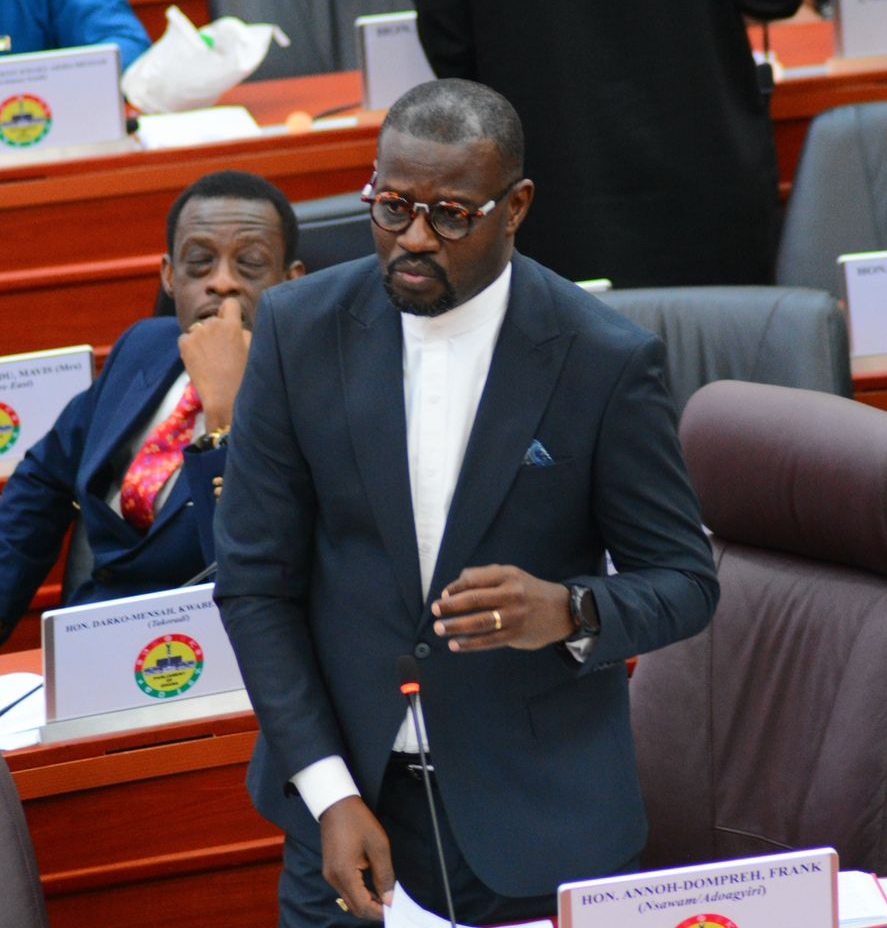
Annoh-Dompreh: Ghana Must End Partisan Political Speech Prosecution
Summary
- Frank Annoh-Dompreh has cautioned against the partisan application of law in Ghana, particularly concerning political speech cases.
- His remarks follow renewed public debate and the arrest of Senior Nursing Officer Salomey Awity Baffoe for alleged links to a TikTok account publishing false news.
- Annoh-Dompreh emphasized that Ghana's democracy relies on fairness and due process, warning against using state institutions for political score-settling.
- The government, through Felix Kwakye Ofosu, affirmed that while freedom of expression is protected, it does not cover criminal threats or unlawful conduct against public officials.
- This situation highlights ongoing concerns about potential selective prosecution and the consistent application of criminal law in Ghana's political landscape.
Heightened Scrutiny on Political Speech in Ghana
Ghana's democratic framework, built on tolerance, fairness, and due process, must not be compromised by the selective enforcement of legal statutes based on political affiliation.
Frank Annoh-Dompreh, the Minority Chief Whip and New Patriotic Party (NPP) Member of Parliament for Nsawam-Adoagyiri, has issued a strong caution against the partisan application of legal frameworks in Ghana. His remarks specifically address the arrest and prosecution of citizens for allegedly offensive or threatening comments, particularly those made in the realm of political speech in Ghana. This intervention comes amid a renewed and vigorous public debate concerning the legal repercussions faced by individuals accused of making offensive, defamatory, or threatening statements on social media platforms.
Annoh-Dompreh's concerns, voiced at the grand durbar of the Mampong Ohum/Odwira 2026 festival and further elaborated in a statement shared with the Ghana News Agency, underscore a critical issue for the nation's democratic health. He highlighted the potential for the criminal justice system to be drawn into partisan political disputes, especially when similar conduct appears to elicit different responses depending on the political affiliation of those involved. This raises questions about the fairness and impartiality of Ghana's political speech prosecution landscape.
Calls for Fairness and Due Process in Criminal Justice
The NPP legislator emphasized that Ghana’s democratic framework, built on tolerance, fairness, and due process, must not be compromised by the selective enforcement of legal statutes based on political affiliation. He explicitly warned those in positions of authority against leveraging state institutions to settle political scores, reminding them of the transient nature of power. This stance reflects a broader concern about potential criminal justice political interference in Ghana, particularly in cases involving public commentary.
Annoh-Dompreh's comments gain particular resonance in light of recent high-profile cases, such as the arrest and remand of Senior Nursing Officer Salomey Awity Baffoe. Ms. Baffoe is currently facing charges related to alleged links with the TikTok account “Ghana Jollof.” Prosecutors contend that she assisted UK-based TikToker Barbara Asantewaa Kodua in the publication and circulation of false news. Ms. Baffoe has entered a plea of not guilty to the charge, making her case a focal point in discussions surrounding Frank Annoh-Dompreh's call for an end to selective prosecution.
Defining the Boundaries of Free Expression
In contrast to Annoh-Dompreh's caution, the government maintains that while freedom of expression remains a protected right under Ghana law, this protection does not extend to criminal threats against public officials or other forms of unlawful conduct. Felix Kwakye Ofosu, the Minister of State in charge of Government Communications, articulated this position at the opening of a Steering Committee meeting of the Federation of African Journalists in Accra. He clarified that fair criticism of government officials is indeed protected speech.
However, Minister Kwakye Ofosu drew a clear distinction between legitimate criticism and actions that cross into criminal territory. He stated that direct threats of violence constitute a criminal offense, illustrating the point by contrasting legitimate criticism of a minister’s performance with calls for a public official to be killed or harmed, which he identified as criminal conduct. This highlights the ongoing challenge of balancing free speech with the need to prevent incitement to violence and the spread of false information, particularly in the context of online commentary.
Implications for Ghana's Democratic Principles
The divergent perspectives presented by Frank Annoh-Dompreh and the government underscore a critical juncture for Ghana's democratic development. The debate over the partisan application of law in cases of political speech in Ghana signals a heightened scrutiny on how criminal statutes are applied, especially concerning online commentary. The concerns raised by Annoh-Dompreh about potential selective prosecution based on political affiliation challenge the perceived impartiality of the legal system.
This ongoing discussion necessitates a careful examination of the evolving boundaries of free expression in the digital age and the consistent application of legal principles. Ensuring that the criminal justice system operates without bias, regardless of political leanings, is crucial for upholding the integrity of Ghana's democratic institutions and fostering an environment where citizens can engage in public discourse without fear of disproportionate legal repercussions.
Practical Implications
This development signals a heightened scrutiny on the application of criminal law in political speech cases in Ghana, particularly concerning online commentary. Lawyers should advise clients on the evolving boundaries of free expression and the potential for selective prosecution, while also preparing to challenge instances where the law may be applied disproportionately based on political affiliation.
Source
How does this affect you?
Get an AI analysis of this article grounded in your jurisdictions, practice areas, and any policy documents you've uploaded to Wansom.
Finish Reading the Full Story and the Expert Analysis.
Get the latest legal & regulatory intelligence in Ghana
Wansom is AI and can make mistakes.