
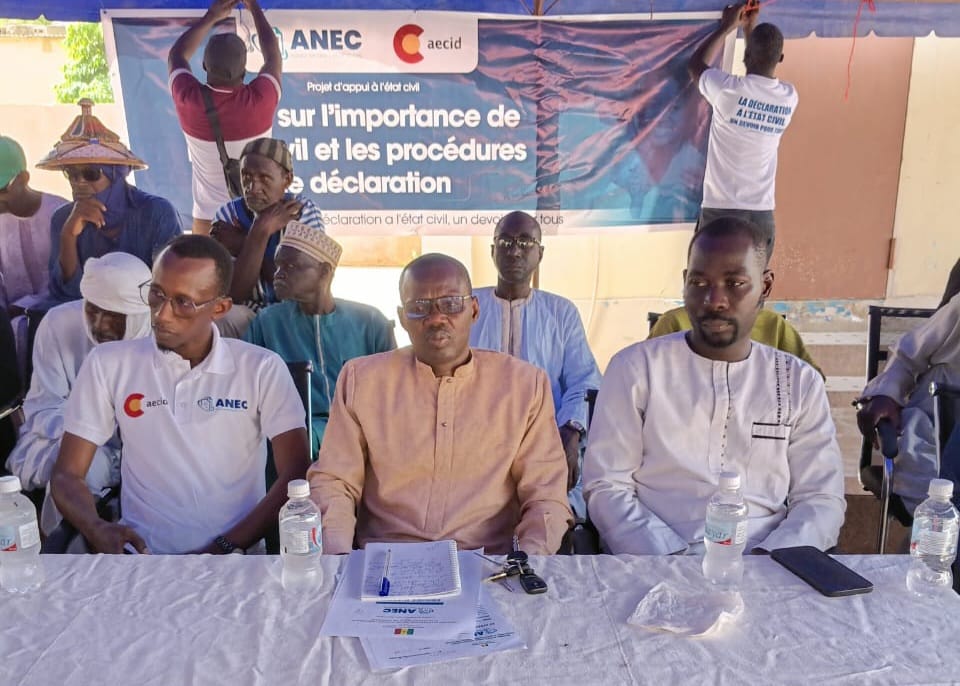
ANEC Initiates Debate on Civil Status Acts, Fraud, and Procedural Costs
The Association Nationale des Élus Locaux du Sénégal (ANEC) organized a series of awareness meetings on civil status, birth certificates, fraud, and procedure costs in the communes of Doumga Lao, Bokidiawé, and Ross Bétthio, Senegal, from October 22 to 25, 2026.
ANEC, as part of the Civil Status Support Project (PAEC) backed by the Spanish Agency for International Cooperation, conducted these awareness campaigns to enhance public understanding and compliance with civil registration processes. The initiative specifically focused on critical administrative and legal matters such as birth certificates, potential fraud associated with them, and the costs involved in related procedures. The targeted nature of these meetings in specific communes indicates a strategic effort to engage local communities and authorities directly on these fundamental issues.
This initiative is highly significant for legal practitioners, particularly those specializing in family law, administrative law, and human rights. Accurate and accessible civil status records, especially birth certificates, are foundational for establishing legal identity, nationality, and access to essential rights and services like education, healthcare, and inheritance. Issues of fraud and prohibitive costs can lead to the disenfranchisement of individuals, creating significant legal vulnerabilities and hindering their ability to assert their fundamental rights. For businesses, reliable civil status data can also have implications for workforce planning and regulatory compliance.
In Senegal, civil status is primarily governed by the Civil Code and specific laws and decrees related to civil registration, which mandate the registration of births, marriages, and deaths to establish legal identity. The court hierarchy, including local courts and tribunals, plays a crucial role in resolving disputes related to civil status, such as those concerning late registrations or corrections. The involvement of ANEC, representing local elected officials, underscores the decentralized nature of civil registration administration and the vital role of local government in ensuring its proper functioning. The PAEC's support highlights the importance of international cooperation in strengthening national legal and administrative capacities in this domain.
Attorneys should closely monitor the outcomes and recommendations stemming from these awareness campaigns, as they may lead to policy changes, simplified procedures, or increased enforcement regarding civil status registration. Practitioners should also be prepared to advise clients on the legal requirements for birth registration, the implications of unregistered births, and the available avenues for rectifying fraudulent or erroneous records. A thorough understanding of the local administrative practices in the targeted communes will be crucial for providing effective legal assistance in these areas, ensuring that clients can navigate the civil registration system efficiently and lawfully.
How does this affect you?
Get an AI analysis of this article grounded in your jurisdictions, practice areas, and any policy documents you've uploaded to Wansom.
Finish Reading the Full Story and the Expert Analysis.
Wansom is AI and can make mistakes.