
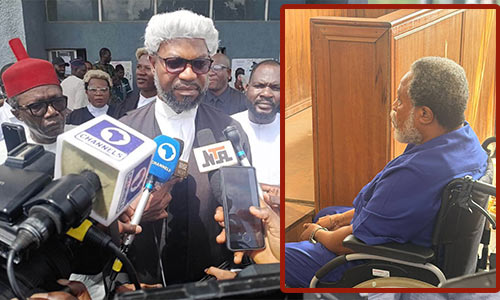
Anambra High Court Denies Bail to Pastor Facing Murder, Abduction Charges
In Nigeria, the Anambra State High Court, presided over by Justice Jude Obiora, has refused bail for Pastor Harrison Anazodo, the General Overseer of Dayspring Assembly, who is facing charges of murder, abduction, and trafficking.
The court's decision was primarily based on the finding that no life-threatening medical condition had been established that could not be managed while the pastor remained in custody. While the title suggests a concern that the accused "may interfere with witnesses," the excerpt explicitly states the medical condition as the reason for the refusal. The matter has been adjourned to October 16, 2026, indicating a potentially lengthy judicial process ahead for the accused.
This ruling underscores the stringent conditions for granting bail in serious criminal matters in Nigeria, particularly when the accused faces grave charges like murder, abduction, and trafficking. It highlights the court's balancing act between an accused person's constitutional right to liberty and the public interest in ensuring justice, preventing interference with investigations, and protecting potential witnesses. The long adjournment period also raises questions about the pace of justice delivery in such complex cases, which can have significant implications for both the accused and the victims.
The legal context for bail applications in Nigeria is primarily governed by the Constitution of the Federal Republic of Nigeria 1999 (as amended), which guarantees the right to personal liberty but allows for its restriction in certain circumstances, and the Administration of Criminal Justice Act (ACJA) or relevant state criminal procedure laws. These laws outline the factors courts consider when granting or refusing bail, including the nature of the offence, the severity of the punishment, the likelihood of the accused absconding, the possibility of witness interference, and the health of the accused. The court's emphasis on the lack of a *life-threatening* medical condition suggests a high threshold for medical bail, requiring compelling evidence.
Legal practitioners handling criminal defence cases, especially those involving serious charges, must be acutely aware of the high bar for bail applications. They should meticulously prepare arguments addressing all relevant factors, particularly providing robust and verifiable medical evidence if seeking bail on health grounds. Furthermore, while not the stated reason for refusal in the excerpt, the concern about witness interference remains a critical consideration in bail applications for serious offences. The lengthy adjournment also signals the need for defence counsel to strategize for prolonged proceedings and potential challenges in maintaining client welfare during extended custody.
How does this affect you?
Get an AI analysis of this article grounded in your jurisdictions, practice areas, and any policy documents you've uploaded to Wansom.
Finish Reading the Full Story and the Expert Analysis.
Get the latest legal & regulatory intelligence in Nigeria
Wansom is AI and can make mistakes.