
Amnesty Condemns Kano Police: Tinubu-Must-Go Blockade Violates Rights
Summary
- Amnesty International Nigeria condemned the alleged police blockade of a "Tinubu-Must-Go" event in Kano State.
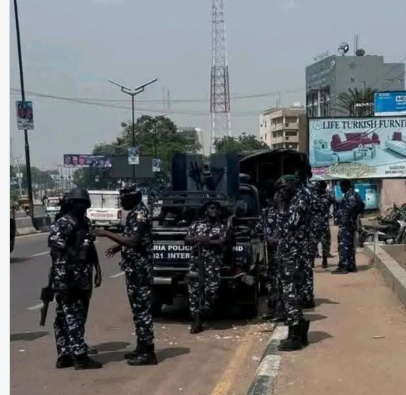
- Heavily armed police officers reportedly blocked both ends of the road where the event was to take place.
- Amnesty accused the police of violating the rights to freedom of association and peaceful assembly.
- The human rights organization announced its condemnation via a post on its X platform on Sunday.
What Happened
The core of Amnesty International's accusation against the Nigerian police conduct in Kano centers on the alleged violation of fundamental human rights.
Amnesty International Nigeria has publicly denounced actions taken by law enforcement in Kano State, where a planned "Tinubu-Must-Go" event was reportedly obstructed. The human rights organization issued its condemnation via a post on its official X platform on Sunday, detailing how heavily armed police personnel allegedly created a blockade. This intervention effectively prevented access to the gathering, raising significant concerns about the exercise of fundamental freedoms and the right to express political views.
The incident involved police officers positioning themselves at both approaches to the road where the event was scheduled to take place, using their presence to deter participants. This deployment of armed forces to block a public assembly has been characterized by Amnesty International as a direct infringement on citizens' rights. The group's statement highlighted the severe nature of this "Tinubu-Must-Go protest police interference," suggesting a deliberate effort to suppress dissent and stifle critical voices within the public sphere.
Legal Context
The core of Amnesty International's accusation against the Nigerian police conduct in Kano centers on the alleged violation of fundamental human rights. Specifically, the organization points to infringements upon the rights to freedom of association and peaceful assembly, which are enshrined in both Nigeria's constitution and various international human rights instruments to which the nation is a signatory. These rights are cornerstones of any democratic society, allowing citizens to express their views, organize, and gather without undue state interference, forming the bedrock of civic participation.
The deployment of heavily armed officers to block a public road for a peaceful gathering, as reported, directly challenges the principles underpinning "freedom of assembly Nigeria police Kano". Such actions, if confirmed, represent a serious "human rights violation Nigerian police Kano" and could set a concerning precedent for future public demonstrations across the country. The expectation is that law enforcement facilitates, rather than obstructs, the exercise of "peaceful assembly rights Nigeria", ensuring public safety while consistently upholding constitutional guarantees for all citizens.
Why It Matters
This incident in Kano carries significant weight for the state of civil liberties and democratic practice within Nigeria. When an organization like Amnesty International Nigeria condemns police actions, it signals a potential erosion of the space for public discourse and dissent, which is vital for a functioning democracy. The alleged blockade of a "Tinubu-Must-Go" event, particularly by heavily armed police, sends a chilling message to citizens contemplating peaceful protests or gatherings, potentially discouraging legitimate political expression.
The broader implications extend to the accountability of law enforcement agencies and the consistent protection of constitutional rights. The "Amnesty International Nigeria police conduct Kano" statement underscores the critical need for adherence to due process and respect for fundamental freedoms, even in the face of political expression that may be critical of the government. Ensuring that "peaceful assembly rights Nigeria" are consistently upheld is vital for maintaining a healthy democracy and preventing the normalization of state overreach in public spaces, thereby safeguarding the rights of all Nigerians.
Practical Implications
Lawyers should monitor this development as it highlights potential violations of fundamental rights to freedom of assembly and association by state actors, which could lead to future litigation against the Nigerian Police or provide grounds for advising clients on their rights during protests and public gatherings in Kano and across Nigeria.
Source
How does this affect you?
Get an AI analysis of this article grounded in your jurisdictions, practice areas, and any policy documents you've uploaded to Wansom.
Finish Reading the Full Story and the Expert Analysis.
Get the latest legal & regulatory intelligence in Nigeria
Wansom is AI and can make mistakes.