
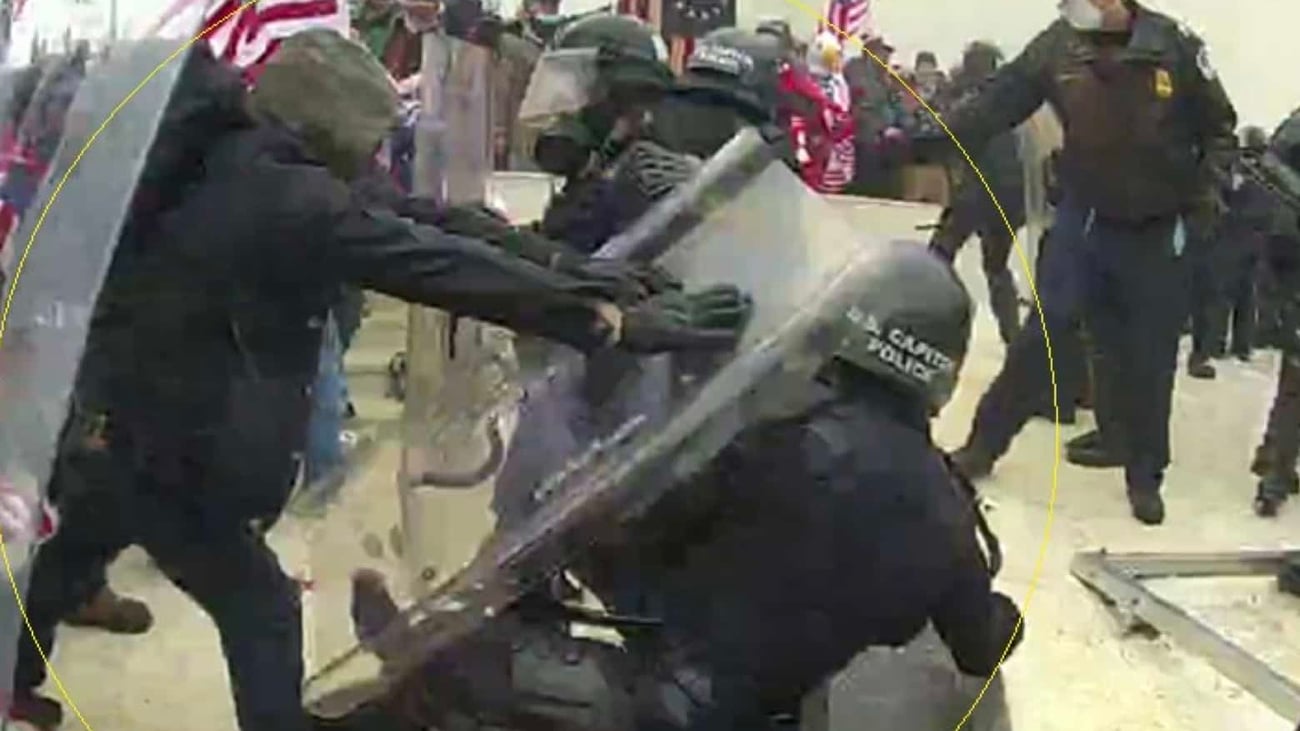
UC Davis Survey US Political Violence: Most Americans Do Not Justify It
Summary
- A UC Davis survey of over 8,600 people found that most Americans reject political violence across 17 different scenarios.
- While support for justifying political violence was higher among Republicans (35.3%-49.5%) than Democrats (24.7%-26.7%) in 2022, overall willingness to personally commit violence did not differ significantly between the parties.
- Lead author Garen Wintemute stated that most who consider violence justifiable are not willing to commit it themselves, calling the findings "hopeful."
- The study, published in PloS One, defined political violence as physical force strong enough to cause pain or injury.
- Researchers concluded that a spiral of escalating political violence is not inevitable in the U.S., and public non-acceptance can help reduce its occurrence.
Most Americans Reject Political Violence, Study Finds
Most Americans completely repudiate political violence, suggesting that entrapment in a spiral of escalating political violence is not inevitable in the United States.
A comprehensive survey conducted by researchers at the University of California, Davis, reveals that the vast majority of Americans, regardless of their political affiliation, do not endorse political violence. The study, published recently in the open access journal PloS One, analyzed responses from over 8,600 individuals surveyed between May 13 and June 2, 2022, with the research being an annual undertaking.
Lead author Garen Wintemute emphasized the hopeful nature of these findings, noting that across all years of the survey, most participants have consistently rejected political violence. Furthermore, among the smaller segment who might consider violence justifiable under certain circumstances, most are unwilling to personally engage in such acts. The survey defined political violence as "physical force strong enough that it could cause pain or injury to a person," presenting respondents with 17 specific scenarios, such as using force to stop voter fraud or to halt a protest, and asking if such actions were never, sometimes, or always justified.
Partisan Divides in Justification, Not Action
While overall rejection of political violence is high, the 2022 data uncovered some partisan differences in the *justification* of violence for political ends. Republicans showed a higher propensity to consider violence justified for at least one political objective, with percentages ranging from 35.3% to 49.5%, compared to Democrats, who ranged from 24.7% to 26.7%. This suggests that members of the political right were more likely to endorse violence for specific objectives.
However, this difference in justification did not translate into a greater willingness to commit violence personally. Although "strong" Republicans were more likely than "strong" Democrats to anticipate being armed in a future politically violent situation, Republicans as a whole were not more willing than Democrats to personally engage in political violence. The survey also delved into respondents' political alignment, categorizing them as "strong" or "not very strong" adherents to either the Republican or Democratic party, and assessed beliefs associated with extremist ideologies like QAnon or the "great replacement" theory, by asking agreement with the statement, "In America, native born white people are being replaced by immigrants."
Implications for National Discourse
Garen Wintemute concluded that the findings clearly demonstrate most Americans completely repudiate political violence, suggesting that "entrapment in a spiral of escalating political violence is not inevitable in the United States." He underscored that those who advocate for political violence do not have broad public support, and such promotion could carry a political cost. Wintemute urged those who reject violence to vocalize their stance within their social networks, believing that a public climate of non-acceptance can significantly reduce the likelihood of violent acts.
The consistency of these findings is further supported by the 2026 survey data, which, despite being published earlier this month, aligns with the basic patterns observed in the 2022 results. The researchers have also expanded their inquiries since the beginning of former President Donald Trump’s second term, including questions about respondents' affiliation with the MAGA movement. The unusual publication order, with 2026 data preceding 2022 data, was attributed by Wintemute to an "inordinate amount of time" taken for the PloS One study, which contained the 2022 data, to complete its review process after being submitted in February 2024.
Source
How does this affect you?
Get an AI analysis of this article grounded in your jurisdictions, practice areas, and any policy documents you've uploaded to Wansom.
Finish Reading the Full Story and the Expert Analysis.
Get the latest legal & regulatory intelligence in United States
Wansom is AI and can make mistakes.