
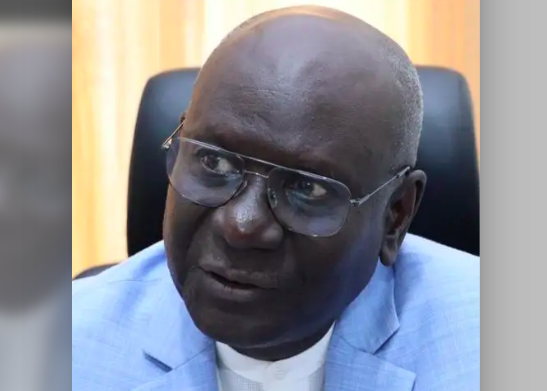
Amady Bâ: CPI Withdrawal One-Year Rule Delays African Exits
Summary
- Burkina Faso, Mali, Niger, and Chad announced their withdrawal from the International Criminal Court in June and August 2026.
- According to former magistrate Amady Bâ, these withdrawals will not take effect until 2027 due to the one-year delay stipulated in Article 127 of the Rome Statute.
- Until 2027, these four nations remain fully subject to their cooperation obligations with the ICC.
- Bâ noted that five of the ten African investigations by the ICC originated from referrals by African states themselves, countering claims of an Africa-centric bias.
- The ICC has also faced geopolitical tensions, internal strife, and challenges related to state cooperation and resources, including the dismissal of former prosecutor Karim Khan.
African Nations' ICC Withdrawals Face One-Year Delay
Lawyers advising states or clients operating in Burkina Faso, Mali, Niger, or Chad must note that these countries remain subject to ICC jurisdiction and cooperation obligations until 2027, despite their announced withdrawals, due to the one-year delay stipulated in Article 127 of the Rome Statute.
Four African nations — Burkina Faso, Mali, Niger, and Chad — have announced their intentions to withdraw from the International Criminal Court (ICC). However, these withdrawals will not take immediate effect, according to former Senegalese magistrate Amady Bâ. Speaking in an interview published on September 16, 2026, by Le Soleil.sn and reported by Seneplus, Bâ clarified the procedural timeline governing such departures.
Burkina Faso, Mali, and Niger declared their withdrawals in June 2026, with Niger formally notifying the United Nations of its decision on June 18, 2026. Chad followed suit with its announcement in August 2026. Despite these declarations, the International Criminal Court jurisdiction delay means that these countries will remain bound by their obligations to the Court until 2027, due to a specific provision within the Rome Statute.
Understanding the Rome Statute's Withdrawal Clause
The process for a state party to withdraw from the ICC is explicitly detailed in Article 127 of the Statut de Rome. This article mandates that any CPI state withdrawal notification must be addressed to the Secretary-General of the United Nations. Crucially, the withdrawal does not become effective immediately upon notification but only after a period of one year has elapsed.
Consequently, the announced departures by Burkina Faso, Mali, Niger, and Chad will not be legally binding until 2027. Until that time, all four nations, including Niger which provided official notification, are still subject to their full cooperation obligations with the International Criminal Court. This Amady Bâ CPI withdrawal one year rule ensures a transitional period, maintaining the Court's authority and the states' responsibilities during that interval.
Addressing Criticisms and Expanding Global Reach
Amady Bâ also addressed persistent criticisms that the ICC's focus is disproportionately centered on Africa. He highlighted that out of the ten investigations opened on the African continent, five originated from referrals made by African states themselves. Uganda, the Democratic Republic of Congo, and Mali each referred one situation, while the Central African Republic initiated two. Cases concerning Libya and Sudan, particularly in Darfur, were referred by the United Nations Security Council, while the prosecutor exercised independent powers to open investigations in Kenya and Burundi.
Bâ emphasized that the origin of these proceedings should be considered when evaluating critiques regarding the Court's perceived Africa-centric bias. Furthermore, the ICC has expanded its geographical scope, with investigations now opened or conducted in Venezuela, Ukraine, Georgia, Bangladesh, and Palestine, demonstrating a broader global engagement beyond the African continent.
Internal Strife and Geopolitical Pressures
The ICC has faced significant internal and external pressures, including the dismissal of former prosecutor Karim Khan. Khan was removed following accusations of sexual violence and serious misconduct, allegations which he contests. Amady Bâ, who departed the Court in 2022, refrained from commenting on the specific facts of the case but viewed Khan's dismissal as a significant precedent for an institution already vulnerable to criticism and political influence.
Khan's tenure as prosecutor notably led to the issuance of arrest warrants against high-profile figures, including Russian President Vladimir Putin, Israeli Prime Minister Benjamin Netanyahu, and a former Israeli Defense Minister. These actions have placed the Court at the heart of complex geopolitical tensions involving several major global powers. Other challenges cited by Bâ include the need for greater state cooperation in executing warrants, securing adequate financial and human resources, and addressing threats targeting judges and personnel. Sanctions announced on August 18, 2026, notably affected the ICC President and Senegal's candidate for a judicial position. Currently, two deputy prosecutors, one of whom is Senegalese Mandiaye Niang, are alternately leading the Prosecutor's Office pending the election of a new prosecutor, while the election for Senegal's judge candidate is scheduled for December in New York.
Practical Implications
Lawyers advising states or clients operating in Burkina Faso, Mali, Niger, or Chad must note that these countries remain subject to ICC jurisdiction and cooperation obligations until 2027, despite their announced withdrawals, due to the one-year delay stipulated in Article 127 of the Rome Statute. This impacts legal risk assessments and compliance strategies for entities operating within these jurisdictions.
Source
How does this affect you?
Get an AI analysis of this article grounded in your jurisdictions, practice areas, and any policy documents you've uploaded to Wansom.
Finish Reading the Full Story and the Expert Analysis.
Get the latest legal & regulatory intelligence in Senegal
Wansom is AI and can make mistakes.