
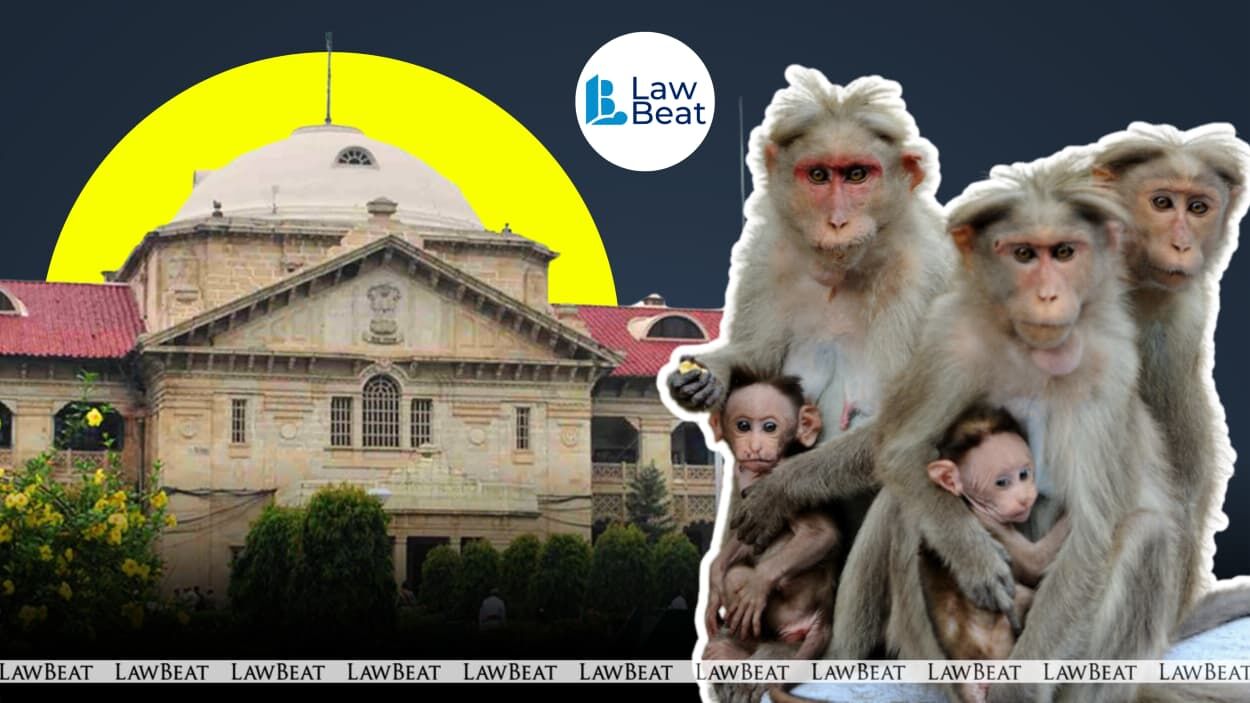
Allahabad HC Orders UP Monkey Committee Weekly Meetings
Summary
- The Allahabad High Court has ordered a 13-member Uttar Pradesh government committee to hold weekly meetings to address the monkey menace.
- The committee must record minutes and make a concrete decision by October 12, 2026, or its two Principal Secretary joint chairpersons will face personal appearance.
- The court, monitoring the issue for nearly 15 months, criticized the committee's August 21, 2026 meeting, noting only an attendance sheet was produced and no minutes were kept.
- Chief Justice Arun Bhansali's bench expressed concern that the committee was formed primarily to secure an adjournment, demonstrating a lack of seriousness from state officials in the Vineet Sharma v State of Uttar Pradesh case.
Court Mandates Weekly Meetings for UP Monkey Committee
The court underscored that such conduct by committee members and the state's general attitude towards its directives were unacceptable, particularly given the issue's status as a persistent human problem for residents.
The Allahabad High Court has issued a stringent directive to a 13-member Uttar Pradesh government committee tasked with addressing the widespread monkey menace, ordering it to convene weekly. This decisive action, aimed at ensuring accountability and progress, requires the committee to meticulously record minutes from each session and arrive at a concrete resolution before the next court hearing scheduled for October 12, 2026. The court explicitly warned that failure to comply with these instructions would necessitate the personal appearance of the two Principal Secretaries who jointly chair the panel.
The bench, comprising Chief Justice Arun Bhansali and Justice Kshitij Shailendra, has been closely monitoring the persistent issue for nearly 15 months. Their latest order underscores a growing frustration with the state's perceived inaction and procedural delays. The court's directive for weekly meetings and documented decisions reflects a firm stance against what it views as a lack of serious engagement from the Uttar Pradesh government committee oversight, particularly in a matter affecting public welfare.
Judicial Scrutiny Reveals Lack of Seriousness
The court's recent order stems from a critical assessment of the committee's performance, which it found to be severely lacking. The 13-member committee was initially established on July 15 (implied 2026) to review an action plan proposed by petitioners and suggest solutions to the monkey problem. Following this, on July 16 (implied 2026), the court had directed the committee to hold regular meetings and submit progress reports along with minutes.
However, during the September 1, 2026 hearing for the Public Interest Litigation (PIL) titled Vineet Sharma v State of Uttar Pradesh, the state's report failed to reference the July 16 order. The court specifically scrutinized a committee meeting held on August 21 (implied 2026), where the state claimed it needed an additional four weeks to make headway. The only document presented from this meeting was an attendance sheet, with no minutes recorded. Furthermore, both Principal Secretaries, designated as Joint Chairpersons, were conspicuously absent from the proceedings, leading the court to conclude that effectively nothing substantive occurred beyond signing the attendance register.
Accountability and Compliance Under Spotlight
The Allahabad High Court expressed profound dissatisfaction, observing that the formation of the committee itself appeared to be a mere formality designed to secure an adjournment rather than to genuinely address the problem. The court stated unequivocally that such conduct by committee members, coupled with the state's general posture towards its judicial directives, could not be tolerated. This highlights the court's strict stance on governmental accountability and Allahabad High Court PIL compliance.
To enforce its mandate, the court has made the Principal Secretary, Environment, Forest and Climate Change, and the Principal Secretary, Urban Development, personally accountable for ensuring the committee's adherence to the new directives. Should the committee fail to hold its weekly meetings and produce a concrete decision by October 12, 2026, these two high-ranking officials will be compelled to appear before the court. Chief Justice Arun Bhansali's bench emphasized that officials and committee members were not demonstrating adequate seriousness regarding an issue that constitutes a constant human problem for residents, despite the court's prolonged engagement with the matter.
Practical Implications
This ruling demonstrates the Allahabad High Court's strict stance on governmental accountability and compliance with judicial orders, particularly in Public Interest Litigations (PILs) addressing public issues. Lawyers advising government bodies or involved in public interest litigation should note the court's willingness to impose personal accountability on officials for non-compliance and its demand for concrete action over mere procedural formalities.
Source
Source: Original reporting via Live Law
How does this affect you?
Get an AI analysis of this article grounded in your jurisdictions, practice areas, and any policy documents you've uploaded to Wansom.
Finish Reading the Full Story and the Expert Analysis.
Wansom is AI and can make mistakes.