
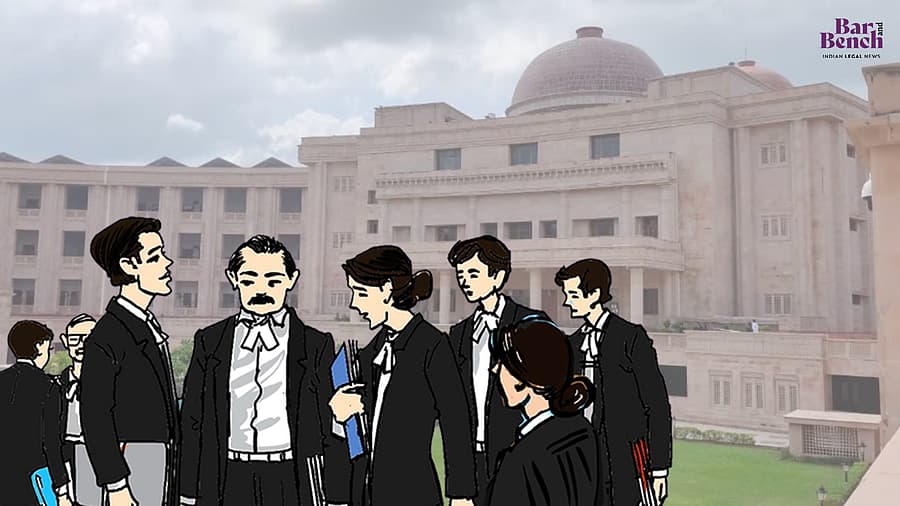
Allahabad High Court: Demolishes Lucknow Lawyers' Chambers Over Encroachment
Summary
- The Allahabad High Court has ordered the demolition of around 72 illegal lawyers' chambers near the District and Sessions Court in Lucknow.
- Lawyers who obstruct the removal of encroachments on court property may face action, including further demolition or other penalties.
- The court had given lawyers working from these chambers an opportunity to vacate them or make a valid claim of possession before the demolition took place.
- The order is aimed at ensuring that the court's property is used for its intended purpose and that the rule of law is upheld.
What Happened
The specific date of demolition may be apprised to those encroachers so that they could cooperate in such demolition drive. It is made clear that if on the date of demolition, any encroachers or their associates adopt any illegal device or involve in any illegal activity, the needful action may be taken against them, which is permissible under the law.
The Allahabad High Court has ordered the demolition of around 72 illegal lawyers' chambers near the District and Sessions Court in Lucknow. The court's Division Bench, comprising Justices Rajesh Singh Chauhan and Rajeev Bharti, issued the order in response to a petition filed by Anuradha Singh and others against the State of UP and others. The court has warned lawyers that they will face action if they obstruct the removal of encroachments on court property.
The demolition exercise took place on a Sunday to minimize disruptions to judicial work. However, before the demolition, the court had given the lawyers working from these chambers an opportunity to vacate them or make a valid claim of possession.
Legal Context
The Allahabad High Court's order is the latest development in a long-standing issue of encroachments on court property. In May, district court lawyers clashed with Uttar Pradesh Police personnel to prevent the demolition of illegal chambers in Lucknow's Qaiserbagh area. The action being taken now is in accordance with an order passed by the High Court in April, which observed that people were squatting on court land and that the situation needed to be addressed.
The court had ordered the issuance of a fresh notice to all 72 encroachers within a week, giving them another chance to vacate the premises or make a valid claim of possession. The court's decision is aimed at ensuring that its property is used for its intended purpose and that the rule of law is upheld.
Why It Matters
The Allahabad High Court's order has significant implications for lawyers practicing in Lucknow. They should be aware of the potential for further action against them if they obstruct the removal of encroachments on court property. This development may also require lawyers to advise their clients on the implications of this decision and how it may affect their cases.
The court's decision is a reminder that the rule of law must be upheld, even in situations where there are competing interests at play. The order demonstrates the court's commitment to ensuring that its property is used for its intended purpose and that the rights of all parties involved are respected.
Practical Implications
Lawyers practicing in Lucknow should be aware of the potential for further action against them if they obstruct the removal of encroachments on court property, and may need to advise clients on the implications of this development.
Source
How does this affect your business?
Get an AI analysis of this article grounded in your jurisdictions, practice areas, and any policy documents you've uploaded to Wansom.
Wansom is AI and can make mistakes.