
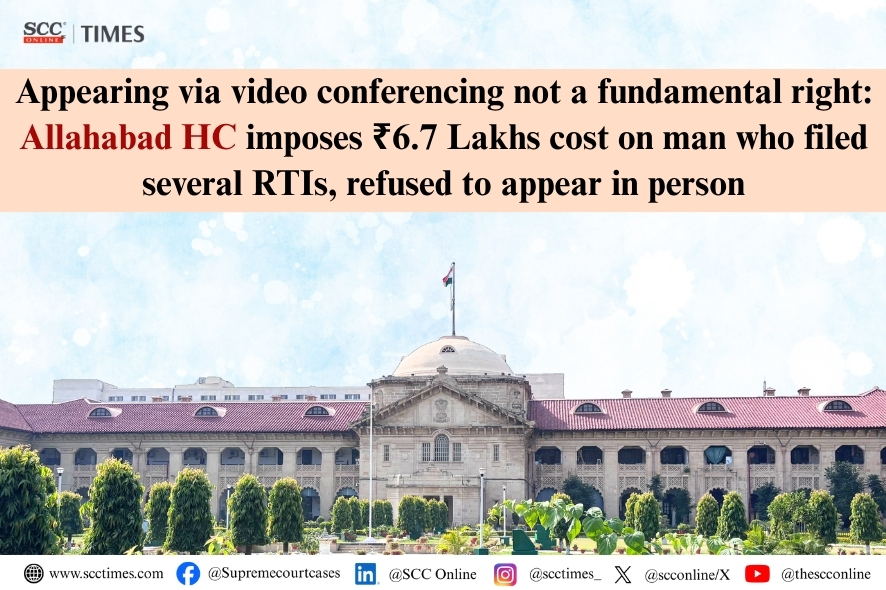
Allahabad High Court: ₹6.7 Lakhs Costs for Refusing In-Person Appearance
Summary
- The Allahabad High Court imposed costs of ₹6.7 Lakhs on a petitioner who refused to appear in person despite being summoned.
- The court emphasized the importance of in-person appearances, citing instances of hasty and unruly behavior by petitioners-in-person.
- This ruling may set a precedent for courts to impose costs on individuals who refuse to appear in person, potentially impacting clients who rely on video conferencing.
What Happened
The court emphasized the importance of in-person appearances, citing instances of hasty and unruly behavior by petitioners-in-person.
A recent case before the Allahabad High Court has highlighted the importance of in-person court appearances. The petitioner, who had filed several Right to Information (RTI) applications, refused to appear in person despite being summoned by the court. Instead, he opted for video conferencing, citing it as a fundamental right. However, the court disagreed, imposing costs of ₹6.7 Lakhs on him for his refusal.
The petitioner's actions were seen as a breach of court decorum, with instances of hasty and unruly behavior reported in the past. The court has taken a firm stance against such conduct, emphasizing the need for individuals to respect the sanctity of the legal process.
Legal Context
The Allahabad High Court's decision is significant, as it sets a precedent for courts to impose costs on individuals who refuse to appear in person. This ruling may impact clients who have been relying on video conferencing for court appearances, potentially limiting their options in future cases. The court's emphasis on the importance of in-person appearances also raises questions about the role of technology in the legal process.
While video conferencing has become increasingly popular, its use is not without controversy. Some argue that it can compromise the integrity of the legal process, while others see it as a necessary accommodation for those with mobility issues or other constraints. The Allahabad High Court's decision highlights the need for courts to balance competing interests and ensure that justice is served.
Why It Matters
The Allahabad High Court's ruling has far-reaching implications for individuals and lawyers alike. As technology continues to shape the legal landscape, it is essential to consider the potential consequences of relying on video conferencing for court appearances. By imposing costs on those who refuse to appear in person, the court is sending a clear message about the importance of respecting the legal process.
Lawyers should take note of this ruling and advise their clients accordingly. As the use of technology in the legal process continues to evolve, it is crucial to stay informed about the latest developments and ensure that clients are aware of their options and obligations.
Practical Implications
Lawyers should note that this ruling may set a precedent for courts to impose costs on individuals who refuse to appear in person, potentially impacting clients who have been relying on video conferencing for court appearances.
Source
Source: Original reporting via SCC Times
How does this affect you?
Get an AI analysis of this article grounded in your jurisdictions, practice areas, and any policy documents you've uploaded to Wansom.
Wansom is AI and can make mistakes.