
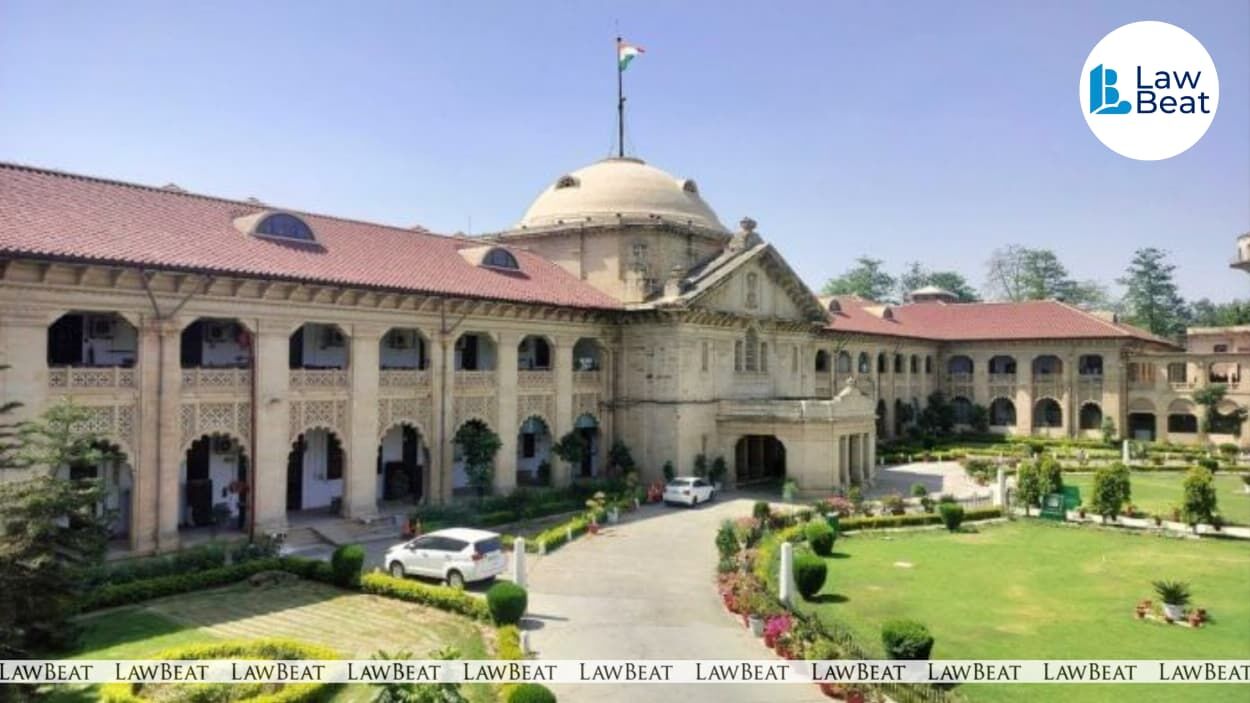
Allahabad HC: CJ Recuses From Prayagraj NLU Caste Bias Appeal
Summary
- Allahabad High Court Chief Justice Arun Bhansali recused himself from a special appeal concerning caste discrimination allegations at Dr Rajendra Prasad National Law University, Prayagraj.
- The special appeal challenged a single judge's order for judicial officers to inquire into complaints against Dr. Deepak Sharma, a university official.
- An earlier division bench had stayed the students' petition, observing that the university's Equal Opportunity Cell was the appropriate body for the inquiry.
- Students alleged Dr. Sharma used his authority for caste-based humiliation and retaliation, including stricter academic evaluation.
- The court emphasized that universities should utilize their internal mechanisms to address such serious allegations, preserving institutional autonomy.
Judicial Recusal and Initial Directives
The court emphasized that the university's inherent authority to examine such allegations through its appropriately constituted Equal Opportunity Cell should not be circumvented, as it falls squarely within the institution's purview to ensure student welfare and manage internal situations.
The Chief Justice of the Allahabad High Court, Arun Bhansali, has recused himself from a special appeal concerning allegations of caste-based discrimination at the Dr Rajendra Prasad National Law University (Prayagraj NLU). This decision came after the special appeal, which challenged a single judge's directive for two judicial officers in Prayagraj to investigate the claims, was placed before a division bench including Chief Justice Bhansali and Justice Kshitij Shailendra. Following the recusal, the Chief Justice-led bench ordered the matter to be listed on October 7 before an alternative bench that would not include him.
Previously, a division bench comprising Justices Siddhartha Varma and Kunal Ravi Singh had, on September 23, 2026, stayed further proceedings on the original petition filed by two students from the university. These students, a PhD research scholar and a fifth-semester BA LL.B. student, had sought an inquiry into their complaint against Dr. Deepak Sharma, who was serving as both the Head of the Department of Law and the warden of the boys' hostel at the Prayagraj NLU. This earlier bench had expressed a preliminary view that the university's internal mechanisms, specifically its Equal Opportunity Cell, would be the more appropriate forum for such an investigation, rather than external judicial officers.
Upholding University Autonomy in Grievance Redressal
The division bench of Justices Varma and Singh underscored the importance of internal university processes in addressing serious allegations of discrimination. Their September 23 order highlighted that the Dr Rajendra Prasad National Law University possessed an Equal Opportunity Cell (EOC), and notably, the petitioning students themselves had initially requested that this EOC conduct the inquiry, with the specific exclusion of Dr. Deepak Sharma. Consequently, the bench concluded that there was no compelling reason for judicial officers to undertake the investigation.
The court emphasized that the university's inherent authority to examine such allegations through its appropriately constituted Equal Opportunity Cell should not be circumvented, as it falls squarely within the institution's purview to ensure student welfare and manage internal situations. While the bench refused to stay the single judge's direction to relieve Dr. Sharma of his administrative responsibilities until the inquiries were complete, it did instruct that if the judicial officers' inquiry report, due by September 24, had been prepared, it should be submitted in a sealed cover to the bench hearing the case. The court clarified that the question of Dr. Sharma's administrative duties would be revisited at a subsequent hearing, having primarily focused on the scope of the inquiry and relevant regulations.
Allegations of Caste-Based Discrimination
The core of the legal dispute stems from serious allegations of caste-based humiliation and retaliation leveled against Dr. Deepak Sharma, the Head of the Department of Law and warden of the boys' hostel at Dr Rajendra Prasad National Law University. The students, who are the petitioners in this case, contend that Dr. Sharma exploited his academic and administrative authority as a tool for such discriminatory practices.
One of the students involved had lodged a formal complaint with the Vice-Chancellor on August 20, detailing claims of being subjected to stricter academic evaluation due to their caste identity. This student pointed out their achievement of securing the highest marks in Constitutional Law-I, a subject designated for a gold medal, and alleged that a remark made by Dr. Sharma at the commencement of the fourth semester was an indirect reference to their academic performance. The complaint further included accusations that Dr. Sharma had made various public remarks contributing to the alleged discriminatory environment.
Why It Matters
The recusal of the Allahabad High Court Chief Justice from the special appeal concerning the Prayagraj NLU caste discrimination inquiry highlights the judiciary's preference for internal institutional mechanisms in addressing such sensitive matters. The division bench's observations strongly advocate for educational institutions to utilize their established Equal Opportunity Cells (EOCs) as the primary forum for investigating discrimination complaints. This approach underscores a judicial inclination to allow universities to manage internal welfare and disciplinary issues through their own robust systems before external intervention becomes necessary.
This case serves as a crucial reminder for compliance officers and administrators in educational institutions to ensure their internal grievance redressal systems, particularly EOCs, are not only well-constituted but also effectively utilized and perceived as credible by students. The court's stance suggests that a well-functioning EOC can prevent the escalation of internal disputes to judicial proceedings, thereby preserving institutional autonomy and streamlining the resolution process for allegations of caste discrimination or other forms of bias. The ongoing proceedings, now before a different bench, will continue to shape the legal landscape regarding the handling of such serious allegations within academic settings.
Practical Implications
This case underscores the judiciary's preference for internal university mechanisms, specifically Equal Opportunity Cells, to address discrimination complaints before judicial intervention. Compliance officers in educational institutions should ensure their internal grievance redressal systems are robust and effectively utilized to manage such allegations, as courts may defer to these internal processes.
Source
How does this affect you?
Get an AI analysis of this article grounded in your jurisdictions, practice areas, and any policy documents you've uploaded to Wansom.
Finish Reading the Full Story and the Expert Analysis.
Get the latest legal & regulatory intelligence in India
Wansom is AI and can make mistakes.