
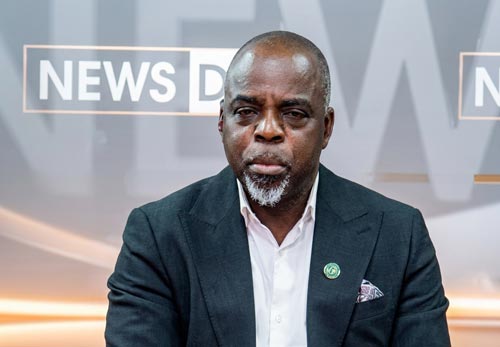
John Aikpokpo-Martins: Lagos-Calabar Highway Allegations of Racketeering
Summary
- John Aikpokpo-Martins, former First Vice President of the Nigerian Bar Association (2020-2022) and current Chairman of the NBA Section on Public Interest and Development Law (NBA-SPIDEL), made serious allegations about the Lagos-Calabar Coastal Highway.
- He claimed the project was never intended for completion and was designed solely to develop the Lagos corridor.
- Aikpokpo-Martins characterized the project's inception as "racketeering from the very first day."
- He also raised questions regarding the process of awarding the Lagos-Calabar Coastal Highway contract.
What Happened
John Aikpokpo-Martins, a prominent legal figure, former First Vice President of the Nigerian Bar Association (2020-2022), and current Chairman of the Nigerian Bar Association Section on Public Interest and Development Law (NBA-SPIDEL), has leveled serious accusations concerning the Lagos to Calabar Coastal Highway project.
John Aikpokpo-Martins, a prominent legal figure, former First Vice President of the Nigerian Bar Association (2020-2022), and current Chairman of the Nigerian Bar Association Section on Public Interest and Development Law (NBA-SPIDEL), has leveled serious accusations concerning the Lagos to Calabar Coastal Highway project. He asserted that the ambitious infrastructure initiative was never genuinely intended for full completion. These John Aikpokpo-Martins Lagos-Calabar Highway allegations suggest a fundamental flaw in the project's design and purpose from its very inception.
According to Aikpokpo-Martins, the primary objective behind the Lagos-Calabar Coastal Highway contract was not to establish a comprehensive coastal link, but rather to exclusively develop and open up the Lagos corridor. This narrow focus, he contended, indicates a misdirection of resources and intent for a project presented as a national infrastructure endeavor. His statements cast a shadow over the transparency and integrity of the planning stages.
Furthermore, the former Nigerian Bar Association former VP did not mince words, describing the entire undertaking as an act of "racketeering from the very first day." This strong condemnation implies a deliberate scheme rather than a mere oversight or mismanagement. He also explicitly questioned the process through which the Lagos-Calabar Coastal Highway contract was awarded, suggesting irregularities in its procurement.
Legal and Regulatory Context
The allegations of "project racketeering Nigeria" made by John Aikpokpo-Martins carry significant weight, particularly given his background as a former First Vice President of the Nigerian Bar Association. Such claims, when emanating from a respected legal professional, inherently demand rigorous scrutiny from regulatory bodies and anti-corruption agencies. The accusation that the Lagos-Calabar Coastal Highway was never intended for completion, but rather for a specific regional benefit, raises fundamental questions about adherence to public procurement laws and ethical governance in large-scale infrastructure projects.
These John Aikpokpo-Martins coastal road allegations highlight potential breaches of public trust and financial impropriety, which could lead to legal challenges or investigations into the awarding of the Lagos-Calabar Coastal Highway contract. Lawyers advising on public procurement, infrastructure projects, or government contracts in Nigeria should be aware of these allegations of racketeering and project mismanagement, as they may indicate increased scrutiny, potential legal challenges, or a need for enhanced due diligence in similar large-scale government initiatives. The legal framework governing public contracts in Nigeria emphasizes transparency, competitiveness, and value for money, principles that appear to be directly challenged by Aikpokpo-Martins's assertions.
The broader context of Nigeria infrastructure project controversy often involves concerns about contract inflation, project abandonment, and lack of accountability. Aikpokpo-Martins's specific claims about the Lagos-Calabar Highway project fit into this pattern, suggesting a systemic issue that requires robust legal and regulatory responses to restore confidence in government-led development initiatives.
Broader Implications
The John Aikpokpo-Martins Lagos-Calabar Highway allegations have far-reaching implications for public confidence in government-led development projects across Nigeria. When a project of the magnitude of the Lagos-Calabar Coastal Highway is accused of being a vehicle for "racketeering" and not designed for its stated purpose, it erodes trust between the populace and the government responsible for allocating public funds and resources. This could lead to increased public skepticism regarding future infrastructure proposals.
Such serious claims, particularly from a former Nigerian Bar Association former VP, also underscore the critical need for enhanced accountability and transparency mechanisms in the execution of major national projects. The questioning of the Lagos-Calabar Coastal Highway contract award process suggests that existing oversight might be insufficient or compromised. Ensuring that contracts are awarded fairly and that projects are executed as planned is crucial for sustainable development and preventing further Nigeria infrastructure project controversy.
Ultimately, the assertions made by John Aikpokpo-Martins regarding the Lagos-Calabar Coastal Highway project call for a thorough and independent review of its planning, procurement, and intended outcomes. The integrity of future infrastructure development and the government's commitment to national progress depend on addressing these allegations comprehensively and demonstrating a clear commitment to ethical governance and the judicious use of public resources.
Practical Implications
Lawyers advising on public procurement, infrastructure projects, or government contracts in Nigeria should be aware of these allegations of racketeering and project mismanagement, as they may indicate increased scrutiny, potential legal challenges, or a need for enhanced due diligence in similar large-scale government initiatives.
Source
How does this affect you?
Get an AI analysis of this article grounded in your jurisdictions, practice areas, and any policy documents you've uploaded to Wansom.
Finish Reading the Full Story and the Expert Analysis.
Get the latest legal & regulatory intelligence in Nigeria
Wansom is AI and can make mistakes.