
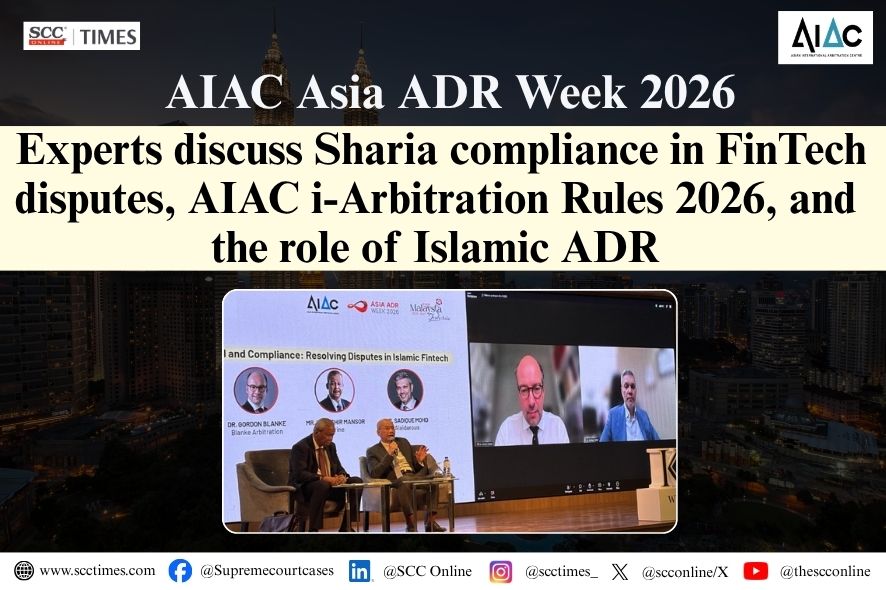
AIAC: New i-Arbitration Rules 2026 Address Sharia FinTech Disputes
Summary
- The AIAC Asia ADR Week 2026 featured a panel on resolving disputes in Islamic FinTech.
- Experts discussed smart contracts, Sharia compliance, interim relief, and third-party funding.
- The panel also covered FinTech products and cross-border Islamic FinTech disputes.
- Discussions included the newly implemented AIAC i-Arbitration Rules 2026 and the role of Islamic ADR.
- The event highlighted the importance of Sharia compliance in smart contracts for dispute resolution.
Overview of Key Discussions
Lawyers advising clients in the Islamic FinTech sector must familiarize themselves with the evolving landscape of dispute resolution, particularly the implications of Sharia compliance in smart contracts and the newly implemented AIAC i-Arbitration Rules 2026, to effectively manage and resolve potential cross-border disputes.
During the recent AIAC Asia ADR Week 2026, a significant panel discussion titled "Code, Capital and Compliance: Resolving Disputes in Islamic Fintech" brought together experts to explore the intricate landscape of dispute resolution within the rapidly expanding Islamic FinTech sector. This session served as a crucial platform for delving into the unique challenges and opportunities presented by this specialized financial domain.
The discussions encompassed a broad spectrum of critical subjects, including the complexities surrounding smart contracts, the imperative of Sharia compliance in FinTech products, and the mechanisms for obtaining interim relief in disputes. Furthermore, panelists addressed the evolving role of third-party funding in Islamic finance disputes and the specific considerations for resolving cross-border Islamic FinTech disputes, highlighting the global nature of these financial innovations. The event also featured expert insights into the newly implemented AIAC i-Arbitration Rules 2026 and the broader role of Islamic Alternative Dispute Resolution (ADR) in shaping the future of the industry.
Navigating Sharia Compliance and Technological Innovation
A central theme of the panel discussion revolved around the intersection of technological advancements, particularly smart contracts, with the stringent requirements of Sharia law. Experts underscored the necessity of ensuring that FinTech products and their underlying contractual frameworks are not only technologically robust but also fully compliant with Islamic principles. This dual imperative introduces unique legal and operational challenges, especially when disputes arise concerning the validity or execution of Sharia compliant smart contracts.
The dialogue extended to the practicalities of dispute resolution, including the application of interim relief measures within an Islamic legal framework and the growing relevance of third-party funding Islamic finance. These elements are vital for providing effective recourse and support to parties involved in complex FinTech disagreements. The discussions emphasized that the unique characteristics of Islamic FinTech necessitate specialized approaches to dispute resolution, moving beyond conventional methods to embrace solutions tailored to its specific ethical and legal foundations.
The Evolving Landscape for Islamic FinTech Dispute Resolution
The insights shared during the AIAC Asia ADR Week 2026 are particularly pertinent for legal professionals advising clients in the Islamic FinTech sector. The evolving landscape of dispute resolution, particularly the implications of Sharia compliance in smart contracts and the newly implemented AIAC i-Arbitration Rules 2026, demands careful attention to effectively manage and resolve potential cross-border disputes. The focus on Islamic ADR mechanisms signals a growing recognition of the need for culturally and legally appropriate avenues for conflict resolution.
Lawyers must familiarize themselves with these developments, including the nuances of cross-border Islamic FinTech arbitration and the role that the newly implemented AIAC i-Arbitration Rules 2026 will play in providing a structured framework for such proceedings. Understanding these specialized dispute resolution tools is crucial for safeguarding client interests and fostering confidence in the burgeoning Islamic FinTech market. The discussions highlighted that the integration of Sharia principles into modern financial technology requires a sophisticated and adaptable legal and arbitral infrastructure.
Practical Implications
Lawyers advising clients in the Islamic FinTech sector must familiarize themselves with the evolving landscape of dispute resolution, particularly the implications of Sharia compliance in smart contracts and the upcoming AIAC i-Arbitration Rules 2026, to effectively manage and resolve potential cross-border disputes.
Source
How does this affect you?
Get an AI analysis of this article grounded in your jurisdictions, practice areas, and any policy documents you've uploaded to Wansom.
Finish Reading the Full Story and the Expert Analysis.
Get the latest legal & regulatory intelligence in India
Wansom is AI and can make mistakes.