
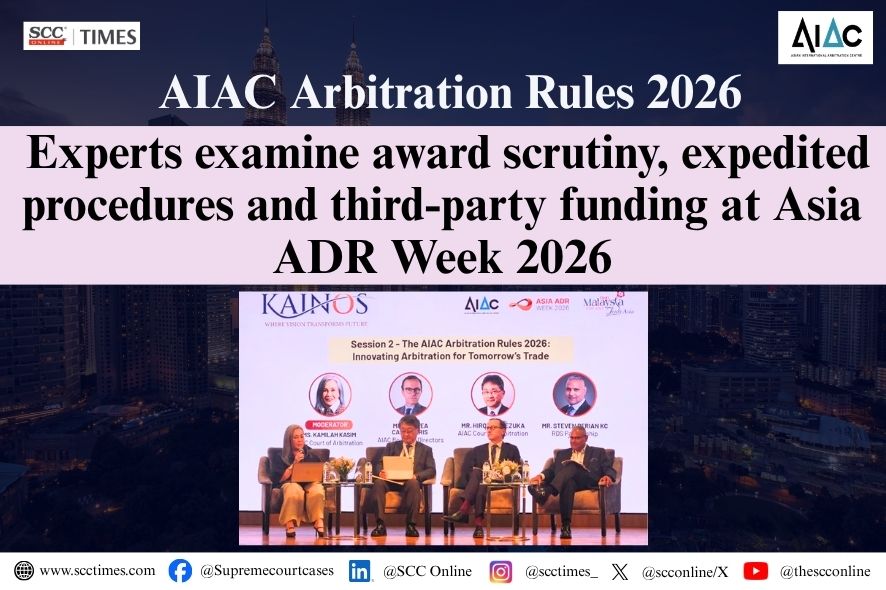
AIAC: Arbitration Rules 2026 Changes Discussed at Asia ADR Week
Summary
- Leading arbitration practitioners discussed the AIAC Arbitration Rules 2026 at Asia ADR Week 2026.
- Key topics included award scrutiny, expedited procedures, and third-party funding.
- Experts also examined summary determination, interim measures, and the role of mediation.
- The discussions highlight a comprehensive effort to modernize and enhance AIAC's arbitration framework.
Overview of Key Discussions at Asia ADR Week 2026
The breadth of these discussions signals a comprehensive overhaul designed to enhance efficiency, fairness, and accessibility in international arbitration.
Leading arbitration practitioners recently convened at Asia ADR Week 2026 to engage in comprehensive discussions surrounding the AIAC Arbitration Rules 2026, which came into effect on January 1, 2026. This significant gathering brought together experts to scrutinize various aspects of the regulatory framework, highlighting its potential impact on dispute resolution practices across the region.
The focus of these expert deliberations spanned several critical areas within the AIAC Arbitration Rules 2026. Participants delved into the intricacies of award scrutiny, fast-track arbitration procedures, and the mechanisms for summary determination. These discussions underscore a concerted effort to refine and modernize the arbitration process under the auspices of the Asian International Arbitration Centre (AIAC).
Further topics of examination included the provisions for interim measures, which are crucial for preserving rights and assets during ongoing proceedings. The experts also dedicated significant attention to the evolving landscape of third-party funding in arbitration, as well as the role and integration of mediation within the AIAC framework. The breadth of these discussions signals a comprehensive overhaul designed to enhance efficiency, fairness, and accessibility in international arbitration.
Procedural Enhancements and Efficiency Measures
A central theme of the discussions at Asia ADR Week 2026 revolved around the procedural enhancements embedded within the AIAC Arbitration Rules 2026, particularly those aimed at increasing efficiency. The concept of AIAC expedited arbitration procedures, often referred to as fast-track arbitration, was a key point of interest. These procedures are designed to offer a quicker and potentially more cost-effective resolution for certain types of disputes, reflecting a global trend towards more streamlined arbitration.
Another significant procedural innovation examined was AIAC summary determination. This mechanism allows tribunals to dispose of claims or defenses that are manifestly without legal merit or beyond the tribunal's jurisdiction at an early stage, thereby preventing unnecessary expenditure of time and resources. The introduction and refinement of such tools are vital for maintaining the attractiveness of arbitration as a dispute resolution method.
Furthermore, the experts considered the provisions for AIAC interim measures. These measures are essential for protecting the interests of parties during the arbitration process, allowing tribunals to issue orders that prevent harm or preserve evidence before a final award is rendered. The robust implementation of these procedural safeguards is expected to bolster confidence in the AIAC arbitration system.
Oversight, Funding, and Holistic Dispute Resolution
The AIAC Arbitration Rules 2026, which came into effect on January 1, 2026, also introduce or refine critical aspects related to oversight and financial mechanisms. AIAC award scrutiny, for instance, was a prominent topic. This process involves a review of draft awards by the AIAC secretariat to identify any formal errors or issues of clarity, without interfering with the tribunal's substantive decision, thereby enhancing the quality and enforceability of awards.
The evolving area of AIAC third-party funding rules also received considerable attention. As third-party funding becomes more prevalent in international arbitration, clear and comprehensive rules are necessary to address issues such as disclosure, conflicts of interest, and security for costs. The discussions aimed to ensure that the new rules provide a transparent and equitable framework for the use of external funding.
Beyond arbitration, the integration of mediation within the AIAC framework was also part of the expert dialogue. This reflects a broader understanding that a holistic approach to dispute resolution often involves a spectrum of options, from negotiation and mediation to full arbitration. The comprehensive nature of these discussions at Asia ADR Week 2026 underscores the AIAC's commitment to developing a modern, efficient, and adaptable set of rules for international commercial disputes.
Practical Implications
Lawyers and compliance officers should familiarize themselves with the upcoming AIAC Arbitration Rules 2026, particularly the provisions on expedited procedures, award scrutiny, and third-party funding, to effectively advise clients on arbitration strategy and ensure compliance with the new framework.
Source
Source: Original reporting via SCC Times
How does this affect you?
Get an AI analysis of this article grounded in your jurisdictions, practice areas, and any policy documents you've uploaded to Wansom.
Finish Reading the Full Story and the Expert Analysis.
Get the latest legal & regulatory intelligence in India
Wansom is AI and can make mistakes.