
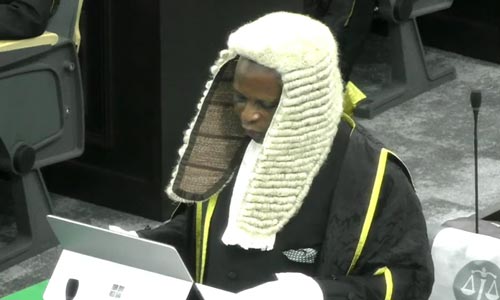
AGF Fagbemi: LPDC Delays Undermine Public Trust, Urges Swift Action
Summary
- Attorney-General of the Federation, Prince Lateef Olasunkanmi Fagbemi, SAN, addressed a special session of the Supreme Court of Nigeria.
- The session marked the start of the 2026/2027 legal year and the conferment of Senior Advocate of Nigeria ranks.
- AGF Fagbemi criticized the Legal Practitioners Disciplinary Committee (LPDC) for prolonged delays in handling complaints.
- He stated that such delays lead the public to believe the legal profession protects its own wrongdoers.
- The Attorney-General also emphasized that separation of powers should not be confused with institutional hostility.
What Happened
When professional misconduct complaints stall for extended periods, sometimes for years, it inevitably leads to a public perception that the legal profession is, in fact, shielding its own members who have engaged in wrongdoing.
Prince Lateef Olasunkanmi Fagbemi, SAN, who holds the esteemed positions of Attorney-General of the Federation and Minister of Justice, recently addressed a significant gathering at the Supreme Court of Nigeria. This special session served a dual purpose: it marked the official commencement of the 2026/2027 legal year and also celebrated the conferment of the prestigious rank of Senior Advocate of Nigeria to deserving legal practitioners. During his address, AGF Fagbemi highlighted critical issues facing the Nigerian legal profession, drawing particular attention to the operational efficiency of disciplinary bodies.
A central point of his discourse focused on the Legal Practitioners Disciplinary Committee (LPDC) and the protracted timelines often associated with its proceedings. The Attorney-General expressed concern that when professional misconduct complaints stall for extended periods, sometimes for years, it inevitably leads to a public perception that the legal profession is, in fact, shielding its own members who have engaged in wrongdoing. This observation underscores a significant challenge to the integrity and public trust placed in the Nigerian legal profession ethics.
Legal Context
The Legal Practitioners Disciplinary Committee (LPDC) plays a crucial role in upholding the standards of professional conduct within the Nigerian legal profession. It is the body responsible for investigating and adjudicating complaints of professional misconduct against legal practitioners. The AGF's remarks, delivered by Lateef Olasunkanmi Fagbemi SAN, carry substantial weight given his position as the chief law officer of the federation, signaling a high-level acknowledgment of systemic issues within the disciplinary framework.
Furthermore, during the same address, AGF Fagbemi also articulated a broader principle concerning governmental operations, stating that the "separation of powers should not be mistaken for institutional hostility." While seemingly distinct, this comment, made at the Supreme Court special session Nigeria, could be interpreted as a call for harmonious yet independent functioning among the various arms of government and legal institutions, including those responsible for professional oversight. It suggests a desire for effective checks and balances without adversarial relationships hindering progress or accountability.
Why It Matters
The Attorney-General's candid assessment of the AGF Fagbemi LPDC delays has significant implications for the future of professional misconduct complaints Nigeria. Prolonged disciplinary processes not only erode public confidence but can also undermine the deterrent effect of sanctions, potentially encouraging further ethical breaches. When the public believes that the system protects wrongdoers, it diminishes respect for the rule of law and the legal profession as a whole.
This public acknowledgment by such a senior legal figure could catalyze efforts to reform or expedite the LPDC's procedures. It places increased scrutiny on the efficiency and transparency of disciplinary actions, potentially leading to a more rigorous and timely enforcement of professional conduct standards. Ultimately, addressing these delays is vital for maintaining the credibility and integrity of the Nigerian legal profession, ensuring that justice is not only done but is also seen to be done, both for the complainants and for the accused practitioners.
Practical Implications
Lawyers and compliance officers should note the Attorney-General's public acknowledgment of LPDC delays, signaling potential future reforms or increased pressure to expedite disciplinary proceedings. This could lead to a more rigorous and timely enforcement of professional conduct standards within the Nigerian legal profession.
Source
How does this affect you?
Get an AI analysis of this article grounded in your jurisdictions, practice areas, and any policy documents you've uploaded to Wansom.
Finish Reading the Full Story and the Expert Analysis.
Get the latest legal & regulatory intelligence in Nigeria
Wansom is AI and can make mistakes.