
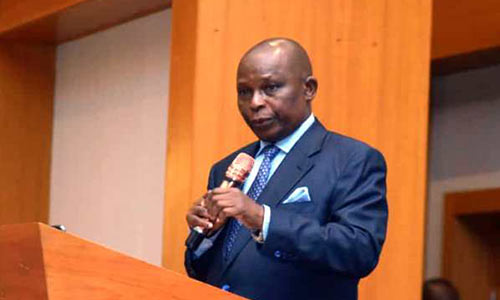
AGF Fagbemi: Nigeria's ACJA Reforms Incomplete After 11 Years
Summary
- Attorney-General Lateef Fagbemi stated that Nigeria's Administration of Criminal Justice Act of 2015 remains incompletely implemented.
- This lack of full execution persists more than eleven years after the Act's enactment.
- Fagbemi highlighted ongoing issues within the criminal justice system, including delays in criminal proceedings and poor investigations.
- Prolonged pretrial detention and overcrowded conditions also continue to plague the system.
- The Attorney-General emphasized that the primary challenge is the failure to implement existing laws, rather than a lack of legislation.
The Unfinished Business of Justice Reform
Lateef Fagbemi's observations emphasize that the core issue facing Nigeria's criminal justice system is not a deficit of appropriate laws, but rather a profound failure in their practical application.
Nigeria's Attorney-General of the Federation and Minister of Justice, Lateef Fagbemi, recently underscored a critical deficiency in the nation's legal framework: the Administration of Criminal Justice Act (ACJA) of 2015 has yet to achieve full implementation. This significant legislative reform, designed to streamline criminal proceedings and protect human rights, remains largely unfulfilled more than eleven years after its official enactment. Fagbemi's remarks highlight a persistent gap between progressive legal intent and practical execution within the country's justice system.
The AGF's assessment points to a broader pattern of incomplete reform efforts, where the existence of robust legislation does not automatically translate into tangible improvements on the ground. Despite the passage of over a decade, the transformative potential of the ACJA has not been fully realized, leaving many of the systemic issues it aimed to address still prevalent. This ongoing challenge in implementing the ACJA's provisions forms a central concern for the nation's top legal official, indicating that AGF Fagbemi ACJA reforms incomplete.
Persistent Systemic Challenges
The Attorney-General detailed several enduring problems that continue to plague Nigeria's criminal justice system, directly attributing them to the incomplete implementation of the ACJA. Among the most pressing issues are significant delays in criminal proceedings, which often prolong cases unnecessarily and undermine the principle of timely justice. These protracted timelines contribute to a backlog that strains judicial resources and impacts the rights of both victims and defendants.
Furthermore, Fagbemi identified poor investigative practices as a key impediment, suggesting that the quality of initial evidence gathering often falls short, leading to weaker prosecutions and further delays. Compounding these issues is the widespread problem of prolonged pretrial detention, where individuals are held for extended periods without trial, contributing to severe overcrowded conditions. These systemic failures collectively underscore the urgent need for effective implementation of the Administration of Criminal Justice Act 2015 to address these deep-seated Nigeria criminal justice reform challenges, highlighting the ACJA implementation failure Nigeria and the resulting AGF Nigeria criminal proceedings delays.
The Imperative of Effective Implementation
Lateef Fagbemi's observations emphasize that the core issue facing Nigeria's criminal justice system is not a deficit of appropriate laws, but rather a profound failure in their practical application. The Administration of Criminal Justice Act 2015 was conceived as a comprehensive solution to many of the identified problems, yet its potential remains untapped due to insufficient execution. This perspective shifts the focus from legislative creation to the more arduous task of ensuring compliance and enforcement across all levels of the justice apparatus.
The AGF's statement serves as a stark reminder that even well-intentioned legal reforms, such as those embodied in the ACJA, can only effect change if they are rigorously and consistently implemented. The ongoing presence of delays in criminal proceedings, poor investigations, and prolonged pretrial detention, despite the ACJA's existence, illustrates the critical importance of robust implementation strategies. Addressing these challenges requires a renewed commitment to the principles enshrined in the Act, ensuring that the vision for a more efficient and equitable justice system becomes a reality through dedicated Lateef Fagbemi ACJA implementation efforts.
Practical Implications
Lawyers should note that despite the ACJA 2015, systemic issues like delayed criminal proceedings and prolonged pretrial detention persist due to incomplete implementation, necessitating a strategic approach to client representation and advocacy for procedural rights within Nigeria's criminal justice system.
Source
How does this affect you?
Get an AI analysis of this article grounded in your jurisdictions, practice areas, and any policy documents you've uploaded to Wansom.
Finish Reading the Full Story and the Expert Analysis.
Get the latest legal & regulatory intelligence in Nigeria
Wansom is AI and can make mistakes.