
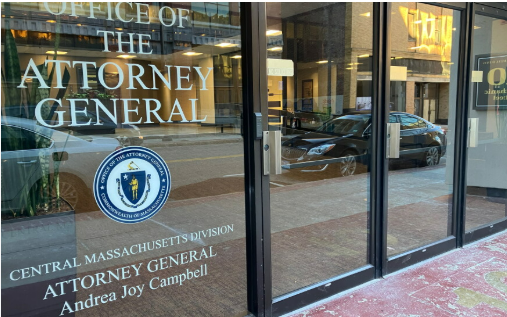
AG Campbell's 2026 Labor Day Report: Inside Massachusetts' $12.7M Wage Theft Crackdown
A Field Guide to Wage Theft: What Massachusetts Employers Got Caught Doing This Year
Labor Day became federal law on June 28, 1894, signed by President Grover Cleveland while the Pullman Strike was still tearing through Chicago, just six days before he sent federal troops in to crush it. The violence that followed killed as many as 30 people. The holiday, in other words, wasn't a reward for a fight workers won, it was a peace offering rushed through Congress in the middle of a fight the federal government was about to help crush. One hundred and thirty-two years later, Massachusetts marked the same weekend by publishing an itemized account of exactly how that fight is still being fought this time over who controls a worker's paycheck.
The Attorney General's Fair Labor Division just closed its books on Fiscal Year 2026 (FY26). The final tally: 1,292 enforcement actions, 1,183 employers, 16,410 workers, and $12.7 million clawed back. But a number that size doesn't tell you what wage theft actually looks like on the ground, so instead of a summary, here's a field guide to the five most common species investigators found this year, each one identified by its real specimen from the FY26 docket.
Specimen One: The Slow-Walk
Legal name: Failure to Make Timely Payments, under the Massachusetts Wage Act, M.G.L. c. 149, § 148
Field markings: This one doesn't deny you're owed money, it just never quite gets around to sending it. Massachusetts law requires most employees to be paid weekly or biweekly, and requires employers to pay out final wages on an employee's last day if they're fired, or by the next regular payday if they quit. Miss that window by even a single day, and the violation is already complete, no matter how small the shortfall.
Why it's everywhere: This was, by a wide margin, the most common violation FLD cited in FY26 — 474 citations, more than any other single category. It's the wage-theft equivalent of a parking ticket: unglamorous, rarely intentional-looking on paper, and still illegal every single time it happens. Under the Wage Act, a proven violation carries mandatory treble damages, three times what was owed plus attorneys' fees, regardless of whether the employer meant to shortchange anyone.
Specimen Two: The Relabel
Legal name: Independent contractor misclassification, under M.G.L. c. 149, § 148B
Field markings: The worker shows up every day, takes direction from a manager, and does work that's central to the business but their paycheck says "1099 contractor," not "employee." Massachusetts runs one of the strictest classification tests in the country: the so-called ABC test presumes every worker is an employee, and it's the employer's job to prove otherwise on all three counts that the worker is genuinely free from control, does work outside the company's usual business, and independently runs their own established trade. Fail any one prong, and the "contractor" is legally an employee, retroactively, with every benefit that comes with it.
The specimen: FLD's investigation into online grocery-delivery company Weee! found exactly this pattern, workers treated as independent contractors while functioning like employees, in violation of both the classification law and the earned sick time law. Weee! ultimately paid more than $865,000 in citations, including restitution for over 160 affected workers.
Why it matters beyond one company: Misclassification doesn't just cost a worker money, it strips them of sick time, overtime, retaliation protections, and unemployment eligibility, all in one move. FLD treated it as a top-tier priority in FY26, taking action against nearly 60 employers who misclassified roughly 1,500 workers, totaling more than $2.1 million in restitution and penalties.
Specimen Three: The Off-the-Clock Hour
Legal name: Overtime violations, under the state's overtime provisions paired with the Wage Act
Field markings: The paycheck looks normal at first glance. It's only when you count the actual hours worked that the math stops adding up time-and-a-half that never showed up, or workers pushed into contractor status specifically to make overtime obligations disappear.
The specimen: Master Millwork, a custom cabinet and millwork manufacturer in West Wareham, got caught doing both at once, failing to properly pay overtime and misclassifying workers as independent contractors in the same investigation. The company agreed to pay more than $280,000 in restitution and penalties.
Where this species clusters: Construction was the single most-cited industry in FY26, accounting for 20% of all enforcement actions, more than any other sector. FLD assessed over $2.5 million in restitution and penalties in construction alone this year, covering more than 1,300 employees.
Specimen Four: The Skim
Legal name: Tip and service-charge violations, under the Massachusetts Tips Act, M.G.L. c. 149, § 152A
Field markings: A restaurant adds an automatic service charge to the bill, the kind a customer reasonably assumes goes straight to their server, and then quietly keeps some or all of it instead of remitting it to the staff who actually did the work. Massachusetts law is unambiguous here: service charges legally belong to wait staff and service employees, must be paid out by the end of the same business day, and can never be diverted to management.
The specimen: Carrie Nation and The Dubliner, two Beacon Hill restaurants, were investigated after a complaint alleged they weren't remitting the full proceeds of service charges to the employees who earned them. The result: $422,000 in restitution and penalties.
Why this one stings differently: Tipped workers are often already earning a lower base wage on the assumption that tips make up the difference. When the tips themselves get skimmed, the shortfall isn't a rounding error — for the restaurant sector overall, FY26 enforcement touched over 3,400 workers and recovered nearly $2.5 million.
Specimen Five: The Full Combo
Legal name: Multiple simultaneous violations, the wage-theft equivalent of getting pulled over for five things at once
Field markings: This is what happens when a single employer treats every worker protection as optional at the same time: no overtime, no pay slips, workers relabeled as contractors, sick time law ignored, and payroll records that don't hold up to scrutiny.
Two specimens from FY26: Donizetti's Tile Services, Inc. was hit with five separate citations totaling more than $218,000, for failing to pay overtime, failing to furnish pay slips, misclassifying employees, blocking access to earned sick time, and keeping inaccurate payroll records, after FLD's Construction Field Team flagged the worksite during an unannounced visit. Separately, Beverly-based cleaning company Advanced Maintenance Solutions, Inc. was cited nearly $420,000 for a similar cluster: unpaid overtime, sick time law violations, and misclassification, all at once.
Who's Actually Out There Looking:
None of these five specimens got caught by accident. FLD runs a dedicated, multilingual Construction Field Team that conducts unannounced compliance visits to active job sites across the Commonwealth, not to punish first, but to catch problems while they're still small. In FY26, that team visited 37 construction sites, engaging directly with over 160 employers and nearly 400 workers to explain, in plain terms, what state wage and hour law actually requires. The Donizetti's Tile case started exactly this way — a field visit that turned into a full investigation.
Beyond the field team, the AGO hosted or joined 98 community events and conducted 141 worksite visits in FY26 — a footprint built as much around prevention and education as around citations after the fact.
The Ten-Year-Old Safety Net Most People Have Never Heard Of
Tucked inside this year's report is a quieter milestone: the AGO's Wage Theft Clinic just marked its 10th year connecting workers who've had wages stolen with free legal help from community aid partners and private attorneys. Over that decade, the clinic has directly tracked $2.4 million in recovered wages — a figure the AGO itself says is likely an undercount, since not every worker who gets help through the clinic reports back on the outcome.
That clinic sits inside a broader commitment worth stating plainly: Massachusetts enforces these protections for every worker regardless of immigration status. The AGO's Fair Labor Division does not ask about immigration status during investigations and does not voluntarily hand worker information to federal immigration authorities — a policy choice explicitly aimed at immigrant workers, who the AGO notes are disproportionately targeted by wage theft precisely because employers assume they won't report it.
If You Recognize One of These in the Wild
Massachusetts workers who think they've spotted one of these five species in their own paycheck can file a complaint directly with the AGO's Fair Labor Division at mass.gov/ago/fld, or call the Fair Labor Hotline at (617) 727-3465 — available in multiple languages. Given that the Wage Act's treble-damages provision doesn't require an employer to have meant to shortchange anyone, and that this year's most common violation was simply paying people late, the line between "our payroll process is a little sloppy" and "this is a citable violation" is thinner than most employers assume — which is exactly the point a Labor Day report like this one is designed to make.
Citations
- 1.This article is based on the Massachusetts Attorney General's Office FY2026 Labor Day Report, released by AG Andrea Joy Campbell, and independently verified Massachusetts General Laws citations (M.G.L. c. 149, §§ 148, 148B, 148C, 152A) via the Massachusetts Legislature's official statute text and the Attorney General's Fair Labor Division public guidance. It is provided for informational purposes only and does not constitute legal advice.
Finish Reading the Full Story and Expert Analysis.
Get the latest legal & regulatory intelligence in United States
Wansom is AI and can make mistakes.