
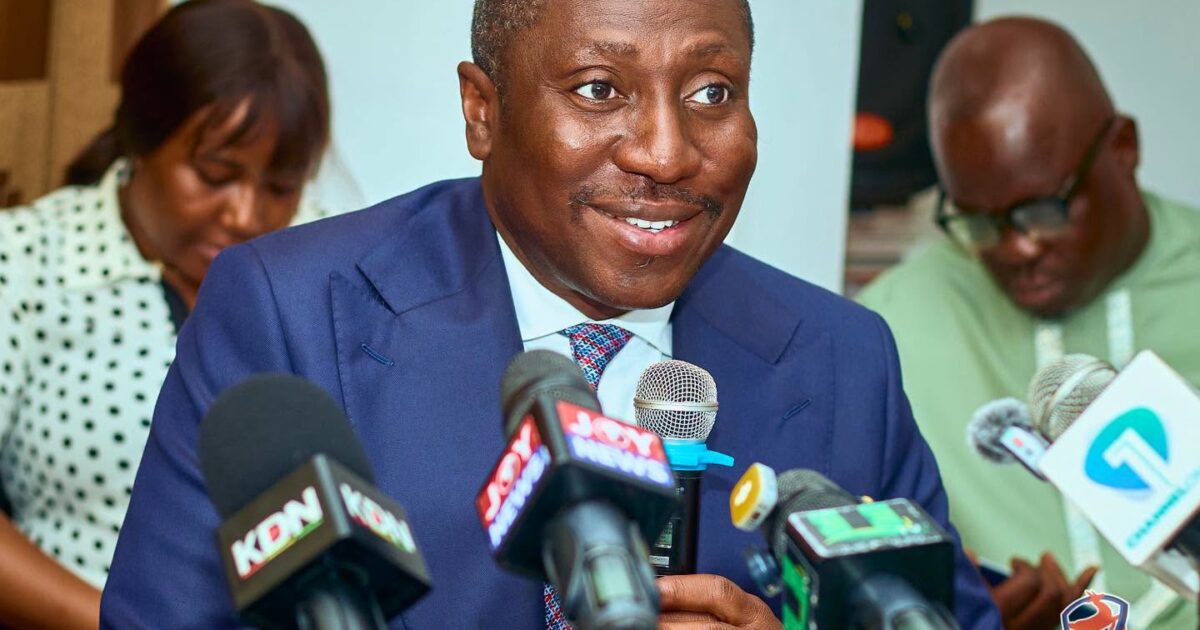
Afenyo-Markin: Urges Mahama to Pardon Jailed TikToker Camila
Summary
- Minority Leader Alexander Afenyo-Markin has urged President John Dramani Mahama to pardon TikToker Camila Alhassan.
- Camila Alhassan is serving a one-year prison sentence with hard labour for offensive conduct over a TikTok video.
- Her conviction in July 2026 by an Accra Circuit Court was for derogatory remarks about President Mahama and his family.
- Afenyo-Markin warned against using criminal punishment to discourage free expression and against fear as a political control tool.
- The appeal highlights concerns about Ghana social media free speech and the application of laws against offensive conduct.
The Call for a Pardon
The outcome of this appeal to John Dramani Mahama could set a significant precedent for how Ghana navigates the complexities of online speech and its legal boundaries.
Minority Leader Alexander Afenyo-Markin has publicly called upon President John Dramani Mahama to exercise his presidential pardon power for TikTok user Camila Alhassan, who is currently incarcerated. Speaking at the 30th Ghana Journalists Association (GJA) Media Awards in Accra, Mr. Afenyo-Markin, who also serves as the Member of Parliament for Effutu, emphasized the importance of fostering an environment where citizens feel free to express their views without fear of criminal repercussions. His appeal highlights a growing concern regarding the balance between maintaining public order and safeguarding free speech on digital platforms in Ghana.
Camila Alhassan received a one-year prison sentence with hard labour from an Accra Circuit Court in July 2026. Her conviction stemmed from a TikTok video she posted, which contained remarks deemed derogatory towards President Mahama and his family. She pleaded guilty to the charge of offensive conduct conducive to a breach of the peace, leading to her current imprisonment. The Minority Leader's intervention underscores a belief that such punitive measures, particularly for social media activity, could stifle open dialogue and create an atmosphere of apprehension among the populace.
Legal Framework and Executive Clemency
The legal basis for Camila Alhassan's conviction, "offensive conduct conducive to a breach of the peace," is a provision often invoked in cases involving public statements or actions perceived as disruptive. This charge, to which Ms. Alhassan pleaded guilty, reflects the legal system's capacity to address speech that crosses a perceived line into incitement or public disturbance. The interpretation and application of such laws are under scrutiny, especially in the context of rapidly evolving social media landscapes where expressions can quickly gain widespread traction.
President John Dramani Mahama possesses the constitutional authority to grant pardons, a power that allows the executive to commute sentences or release individuals from imprisonment. Alexander Afenyo-Markin's appeal specifically targets this executive prerogative, urging President Mahama to consider the broader implications of Ms. Alhassan's continued incarceration. The request places the President in a position to weigh the judicial outcome against the principles of free speech and the potential chilling effect on public discourse, particularly concerning political commentary on platforms like TikTok.
Free Speech and Political Discourse
The case of Camila Alhassan and the subsequent appeal by Alexander Afenyo-Markin illuminate the ongoing tension between Ghana social media free speech and existing laws against offensive conduct breach peace Ghana. Mr. Afenyo-Markin explicitly warned against the use of fear as a political tool, stating that a democratic society should not cultivate an environment where individuals are hesitant to voice their opinions. He articulated that fear and panic should not become the prevailing language of political control, suggesting that the current situation could deter citizens from engaging in critical commentary.
This incident prompts a critical examination of how judicial interpretations of "offensive conduct" impact the freedom of expression, particularly for individuals like Camila Alhassan who utilize platforms such as TikTok. The call for a pardon by Alexander Afenyo-Markin underscores the argument that while certain expressions may be deemed offensive, the response should not inadvertently suppress legitimate public discourse or create a climate of self-censorship. The outcome of this appeal to John Dramani Mahama could set a significant precedent for how Ghana navigates the complexities of online speech and its legal boundaries.
Practical Implications
This case highlights the ongoing tension between free speech on social media and laws against offensive conduct in Ghana, prompting lawyers to monitor judicial interpretations of such offenses and the potential for executive pardons in politically sensitive cases. Compliance officers should review social media policies to ensure they align with evolving free expression norms while mitigating legal risks related to public commentary.
Source
How does this affect you?
Get an AI analysis of this article grounded in your jurisdictions, practice areas, and any policy documents you've uploaded to Wansom.
Finish Reading the Full Story and the Expert Analysis.
Get the latest legal & regulatory intelligence in Ghana
Wansom is AI and can make mistakes.