
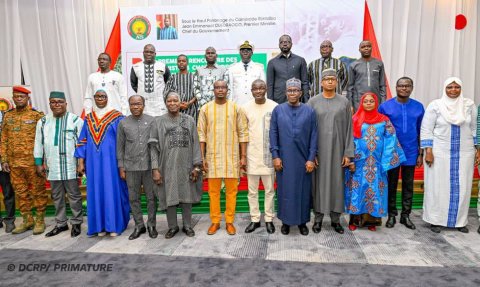
AES Sahel: Advancing Energy Mining Sovereignty at Inaugural Meeting
Summary
- The Confederation of Sahel States (AES) held its first ministerial meeting on energy and mining in Ouagadougou on August 13, 2026.
- Delegations from Burkina Faso, Mali, and Niger attended, aiming to strengthen their energy and mining sovereignty.
- The meeting was held under the patronage of Burkina Faso's Prime Minister, Rimtalba Jean Emmanuel Ouédraogo.
- This initiative signals a potential shift towards increased state control over natural resources in the region.
- Legal and compliance professionals should monitor legislative changes in Burkina Faso, Mali, and Niger.
Key Developments in Sahel Resource Policy
Lawyers and compliance officers should closely monitor legislative and regulatory developments in Burkina Faso, Mali, and Niger, as this initiative signals a potential shift towards increased state control over energy and mining resources, which could impact existing concessions, investment agreements, and future project viability in the region.
The Confederation of Sahel States (AES) recently convened its inaugural ministerial meeting, bringing together key officials responsible for Energy, Mines, Quarries, and Petroleum. This significant gathering took place on Thursday, August 13, 2026, in Ouagadougou, the capital of Burkina Faso. Delegations from all three member states – Burkina Faso, Mali, and Niger – were present, underscoring a unified approach to critical resource management within the nascent confederation.
The primary agenda of this high-level AES ministerial meeting energy discussions was to articulate and advance a shared vision for enhancing the AES Sahel energy mining sovereignty. The proceedings were held under the distinguished patronage of Rimtalba Jean Emmanuel Ouédraogo, who serves as the Prime Minister and Head of Government, signaling the strategic importance placed on these discussions by the highest levels of government. This initial meeting marks a pivotal moment, reflecting a collective determination among the Sahel states to exert greater control and derive maximum benefit from their substantial natural resource endowments.
Shifting Policy Landscape
The explicit goal of strengthening AES Sahel energy mining sovereignty suggests a fundamental reorientation of resource governance across the member states. This initiative is poised to usher in a new era for Confederation of Sahel States energy policy, potentially leading to significant legislative and regulatory reforms within Burkina Faso, Mali, and Niger. Such a strategic pivot often involves a re-evaluation of existing concession agreements, an increase in state participation in resource projects, and the introduction of more stringent local content requirements.
This concerted drive towards greater state control aligns with a broader regional trend often characterized as Sahel resource nationalism. Nations are increasingly seeking to maximize the domestic economic and strategic benefits derived from their natural wealth, moving away from models perceived as overly favorable to foreign entities. The discussions at the Ouagadougou AES ministerial meeting energy agenda likely encompassed detailed strategies for overhauling Burkina Faso Mali Niger mining law and petroleum codes, aiming to empower the states with more robust mechanisms for oversight, revenue generation, and strategic direction over the entire value chain of their energy and mineral resources.
Implications for Investors
For international companies, particularly those with existing investments or considering new ventures in the energy and mining sectors of the Sahel, these developments signal a critical juncture. The pronounced emphasis on AES Sahel energy mining sovereignty could introduce a complex and evolving legal and operational landscape. Lawyers and compliance officers should therefore closely monitor legislative and regulatory developments in Burkina Faso, Mali, and Niger with heightened vigilance.
This initiative clearly signals a potential shift towards increased state control over energy and mining resources, which could profoundly impact existing concessions, investment agreements, and the overall viability of future projects in the region. Any amendments to Burkina Faso Mali Niger mining law or broader energy policy frameworks could necessitate a comprehensive re-evaluation of risk profiles, operational strategies, and compliance protocols for all stakeholders. The long-term implications of this burgeoning Sahel resource nationalism are likely to reshape the investment environment, favoring models that align more closely with the states' renewed focus on sovereign control and domestic benefit.
Practical Implications
Lawyers and compliance officers should closely monitor legislative and regulatory developments in Burkina Faso, Mali, and Niger, as this initiative signals a potential shift towards increased state control over energy and mining resources, which could impact existing concessions, investment agreements, and future project viability in the region.
Source
How does this affect you?
Get an AI analysis of this article grounded in your jurisdictions, practice areas, and any policy documents you've uploaded to Wansom.
Wansom is AI and can make mistakes.