
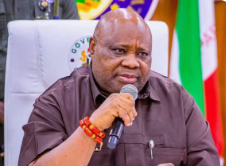
Osun State Governor Adeleke Challenges EFCC Freezing of Government Account
Summary
- Osun State Governor Ademola Adeleke has directed his Attorney-General to challenge the EFCC's freezing of a state government account.
- The move comes after the EFCC restricted access to the account, sparking concerns about the impact on government operations and financial transactions.
- Lawyers advising the state government may need to consider contesting the freezing order to protect their client's interests.
What Happened
The governor directed his Attorney-General to challenge the freezing order in court, marking a significant development in the ongoing saga between the state government and the anti-graft agency.
Osun State Governor Ademola Adeleke has taken a decisive step in response to the Economic and Financial Crimes Commission's (EFCC) decision to freeze an Osun State Government account held at First Bank. The governor directed his Attorney-General to challenge the freezing order in court, marking a significant development in the ongoing saga between the state government and the anti-graft agency. This move comes after the EFCC restricted access to the account, sparking concerns about the impact on government operations and financial transactions.
The directive from Governor Adeleke underscores the importance of protecting the state's financial interests and ensuring that its operations are not unduly disrupted by external actions.
Legal Context
The EFCC's decision to freeze the Osun State Government account is a significant development in Nigeria's anti-corruption landscape. The move is part of ongoing efforts by the agency to combat financial crimes and recover stolen funds. However, the freezing order has raised concerns among lawyers advising the state government, who may need to consider contesting the measure to protect their client's interests. This could have far-reaching implications for government operations and financial transactions.
The legal framework governing such actions is governed by various laws and regulations, including the Money Laundering (Prevention and Prohibition) Act 2022 and the Economic and Financial Crimes Commission (Establishment) Act, 2004. These statutes empower the EFCC to take measures to prevent and investigate financial crimes, but also provide for mechanisms to challenge such actions in court.
Why It Matters
The freezing of the Osun State Government account by the EFCC has significant implications for government operations and financial transactions. The move could impact the state's ability to carry out its duties, including paying salaries and executing infrastructure projects. Furthermore, the development highlights the need for lawyers advising the state government to be aware of this development and consider contesting the freezing order to protect their client's interests.
The case also underscores the importance of ensuring that anti-corruption efforts do not unduly infringe on legitimate government activities. As the legal battle between the EFCC and the Osun State Government unfolds, it will be crucial for all parties involved to navigate the complex web of laws and regulations governing financial crimes in Nigeria.
Practical Implications
Lawyers advising the Osun State Government should be aware of this development and consider contesting the freezing order, which could impact government operations and financial transactions.
Source
How does this affect your business?
Get an AI analysis of this article grounded in your jurisdictions, practice areas, and any policy documents you've uploaded to Wansom.
Wansom is AI and can make mistakes.