
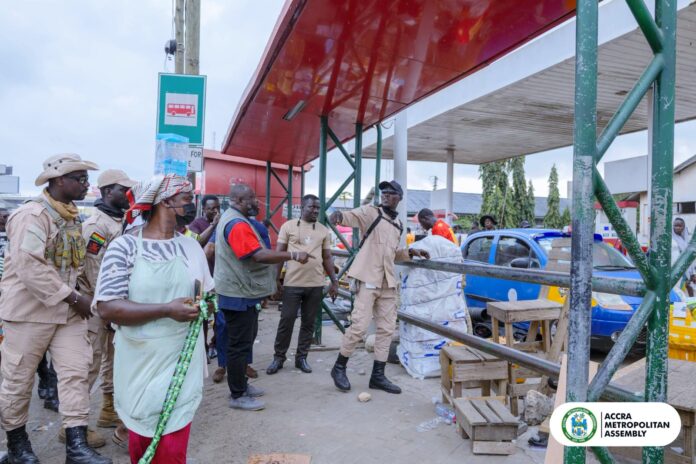
Accra AMA Intensifies Enforcement to Reclaim BRT Bus Shelters
The Accra Metropolitan Assembly (AMA) in Ghana intensified enforcement activities on Monday, 5 October 2026, to evict traders and commercial operators from Bus Rapid Transit (BRT) shelters across the city. Led by Mayor Michael Kpakpo Allotey, the operation specifically targeted the Aayalolo BRT bus shelter at the Kwame Nkrumah Interchange, where unauthorized trading activities had obstructed the facility's intended use. The exercise involved the removal of tables and other items to restore order and improve public access, with the Mayor emphasizing that the action was necessary to ensure public infrastructure served its purpose.
This enforcement action carries significant legal implications for urban planning, public space management, and the informal economy. It underscores the municipal authority's power to regulate the use of public infrastructure and enforce bylaws designed to ensure public safety, order, and the efficient functioning of urban services. For traders, it highlights the precarious nature of operating without proper permits in unauthorized locations, often leading to conflicts between livelihood needs and municipal regulations. The AMA's justification emphasizes the balance between supporting economic activity and maintaining the functional integrity of public assets.
The AMA's powers to undertake such enforcement actions are primarily derived from the Local Governance Act, 2016 (Act 936), which grants Metropolitan, Municipal, and District Assemblies (MMDAs) the authority to enact and enforce bylaws related to urban development, public health, safety, and order. Specific bylaws concerning street hawking, market operations, and the unauthorized use of public property would form the legal basis for these operations. The BRT shelters, being public infrastructure, are subject to these regulations, and their unauthorized commercial use constitutes a contravention.
Practising attorneys advising businesses or individuals operating in public spaces within Accra should be acutely aware of the AMA's intensified enforcement drive. They must review relevant local government bylaws concerning street vending, market operations, and the use of public infrastructure to ensure their clients are compliant. Businesses, particularly those in the informal sector, should be advised on the legal requirements for operating in designated areas and the potential consequences of non-compliance, including eviction, seizure of goods, and fines. Legal professionals should also monitor for any further formal notices or policy changes from the AMA regarding the management of public spaces, as such enforcement campaigns often signal a sustained effort to regularize urban commercial activities.
How does this affect you?
Get an AI analysis of this article grounded in your jurisdictions, practice areas, and any policy documents you've uploaded to Wansom.
Finish Reading the Full Story and the Expert Analysis.
Get the latest legal & regulatory intelligence in Ghana
Wansom is AI and can make mistakes.