
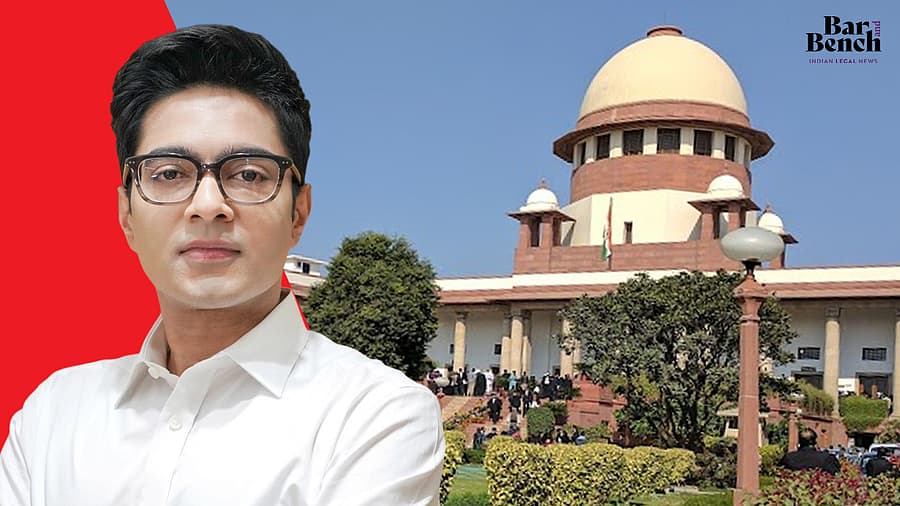
Abhishek Banerjee: SC To Hear Lok Sabha Disqualification Delay Challenge
Summary
- TMC MP Abhishek Banerjee has petitioned the Supreme Court over Lok Sabha Speaker Om Birla's delay in deciding disqualification petitions.
- The petitions concern approximately 20 rebel TMC MPs who defected to the Nationalist Citizens Party of India (NCPI) in June after the West Bengal assembly elections.
- The Supreme Court, with Chief Justice of India Surya Kant presiding, is scheduled to hear the matter on August 25.
- The case highlights the lack of a defined timeline for the Lok Sabha Speaker to rule on anti-defection petitions under the Tenth Schedule of the Constitution.
What Happened
This case holds substantial importance as it could establish crucial judicial guidance on the reasonable timeframe within which a Lok Sabha Speaker must decide disqualification petitions under the anti-defection law.
Trinamool Congress (TMC) Member of Parliament (MP) Abhishek Banerjee has approached the Supreme Court of India, challenging the protracted delay by Lok Sabha Speaker Om Birla in adjudicating disqualification petitions. These petitions, lodged by Banerjee, target approximately 20 rebel MPs who previously secured their seats under the TMC banner but have since defected.
The core of the dispute revolves around the defection of these lawmakers in June of the current year. Following their rebellion against the leadership of TMC supremo Mamata Banerjee and Abhishek Banerjee himself, these MPs transitioned to the Nationalist Citizens Party of India (NCPI), a political entity described as relatively unknown. This significant political shift occurred immediately after the TMC's defeat in the West Bengal assembly elections, a period marked by considerable internal discontent within the party ranks.
The Supreme Court is scheduled to hear this crucial matter tomorrow, August 25. A bench comprising Chief Justice of India Surya Kant, alongside Justices Joymalya Bagchi and V Mohana, will preside over the proceedings. The outcome of this hearing could have significant ramifications for the enforcement of anti-defection laws and the procedural timelines within the Lok Sabha.
Legal Context
The legal framework governing such defections in India is primarily enshrined in the Tenth Schedule of the Constitution, commonly known as the anti-defection law. This law aims to prevent political defections that could destabilize governments and undermine the mandate of the electorate. Under these provisions, the Speaker of the Lok Sabha is vested with the authority to decide on petitions seeking the disqualification of Members of Parliament who have defected from their original political parties.
However, a persistent issue in the enforcement of Indian anti-defection law has been the absence of a clear, constitutionally mandated timeline within which the Lok Sabha Speaker must render a decision on disqualification petitions. This lack of a defined period has often led to significant delays, sometimes extending for years, which critics argue can effectively nullify the intent of the anti-defection law by allowing defecting members to continue holding office and participating in legislative proceedings.
Abhishek Banerjee's petition directly confronts this procedural ambiguity, seeking judicial intervention to compel the Speaker to act within a reasonable timeframe. The Supreme Court's engagement with this issue could provide much-needed clarity on the scope of the Lok Sabha Speaker's powers regarding disqualification and establish precedents for the timely resolution of such matters under Schedule 10 of the Constitution of India.
Why It Matters
This case holds substantial importance as it could establish crucial judicial guidance on the reasonable timeframe within which a Lok Sabha Speaker must decide disqualification petitions under the anti-defection law. The Supreme Court's intervention has the potential to set a precedent that could significantly impact the operational dynamics of parliamentary democracy, particularly concerning the enforcement of political accountability and party discipline.
Should the Court issue directives or clarify expectations regarding the Supreme Court Speaker disqualification timeline, it would address a long-standing lacuna in the anti-defection law's implementation. Such a ruling would not only affect the current situation involving the TMC rebel MPs but also provide a framework for future cases, potentially limiting the discretion of Speakers to indefinitely postpone decisions on disqualification petitions. This would enhance the efficacy of the anti-defection law, ensuring that its provisions are applied promptly and fairly.
For lawyers advising political parties or individual legislators on defection issues, this case is particularly significant. Any judicial pronouncement on the Speaker's decision-making timeline could alter strategic considerations for both parties seeking disqualification and those facing it. It underscores the judiciary's role in upholding constitutional principles and ensuring that legislative processes, including the enforcement of anti-defection measures, are conducted with due diligence and within reasonable bounds.
Practical Implications
This case could establish crucial judicial guidance on the reasonable timeframe within which a Lok Sabha Speaker must decide disqualification petitions under the anti-defection law. Lawyers advising political parties or individual legislators on defection issues should monitor this for potential precedents impacting the Speaker's discretion and the enforcement of timely decisions.
Source
How does this affect you?
Get an AI analysis of this article grounded in your jurisdictions, practice areas, and any policy documents you've uploaded to Wansom.
Wansom is AI and can make mistakes.