
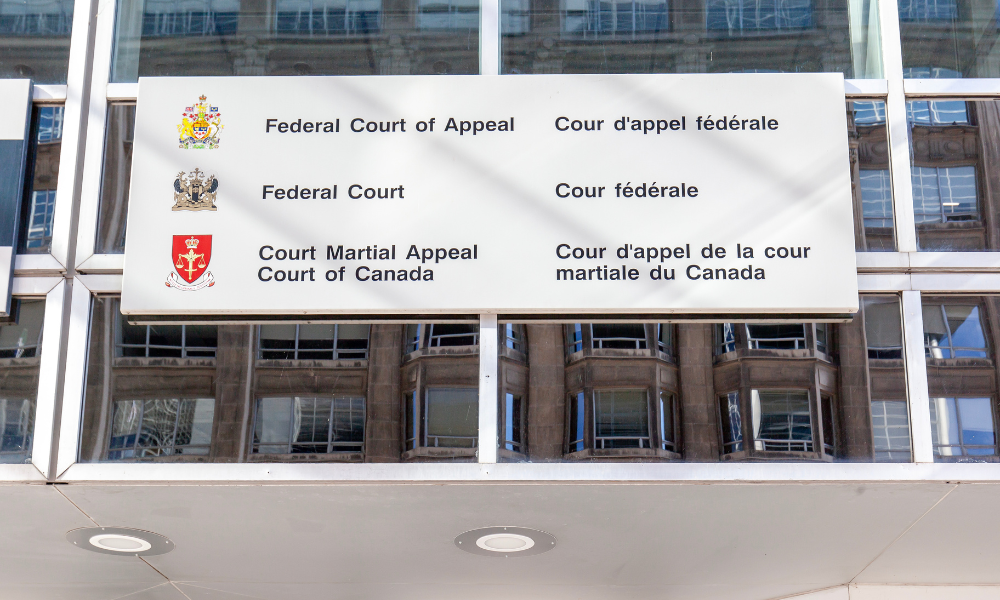
Federal Court: Abeysundara Counsel Incompetence Claim Fails Strict Test
Summary
- The Federal Court dismissed a Sri Lankan family's judicial review application, upholding a high standard for proving counsel incompetence in refugee claims.
- The court ruled that previous counsel had no duty to preemptively corroborate every detail to anticipate future credibility findings.
- The Refugee Appeal Division (RAD) had previously rejected the family's appeal, finding them not credible and their new evidence inadmissible under IRPA s. 110(4).
- The Federal Court affirmed that assessing counsel performance through the "lens of hindsight" is not permissible.
- This decision clarifies that an "impossible burden" would be placed on claimants and counsel if preemptive corroboration of every detail against potential credibility findings were required.
Federal Court Upholds High Bar for Counsel Competence
The Federal Court clarified that former counsel bore no obligation to anticipate future credibility findings against the applicants.
The Federal Court recently dismissed a judicial review application from a Sri Lankan family, affirming a stringent standard for claims of Abeysundara Federal Court counsel incompetence in refugee proceedings. The decision, rendered in Sumudu Udayakantha Abeysundara v. Canada (Citizenship and Immigration), 2026 FC 1034, underscores that courts will not assess a representative's performance with the benefit of hindsight. The applicants had alleged that their previous legal counsel provided ineffective assistance during their initial hearing before the Immigration and Refugee Board's Refugee Protection Division (RPD).
Refugee Claim Journey and Appeal Process
The case originated when the principal applicant, along with his wife and minor son, arrived in Canada on visitor visas on December 15, 2022. They subsequently filed a refugee protection claim, asserting a well-founded fear of persecution in Sri Lanka from a powerful government minister and complicit police authorities. However, on September 24, 2024, the RPD rejected their claim, concluding that the family members were not credible witnesses and therefore did not qualify as Convention refugees or persons in need of protection.
Following this initial rejection, the family, now represented by new counsel, appealed the RPD's decision to the Refugee Appeal Division (RAD) on December 2, 2024. During this appeal, they sought to introduce new evidence and simultaneously argued that their previous counsel had been incompetent, claiming refugee counsel ineffective assistance. On March 6, 2025, the RAD dismissed the appeal, upholding the RPD's findings. The RAD specifically determined that the applicants lacked credibility and that the events they described had not occurred as narrated by the principal applicant.
Legal Standards for Ineffective Assistance and New Evidence
The Federal Court found no reviewable error in the RAD's rejection of the applicants' argument concerning ineffective assistance. It reiterated that an assessment of counsel's actions cannot be made through the "lens of hindsight." The court also noted that the applicants had, in fact, submitted additional evidence when invited by the RPD to further support their claim of persecution. Furthermore, the court stated that an erroneous credibility finding by the RPD on certain issues would not automatically render the former counsel's approach unreasonable under the circumstances.
Beyond the counsel incompetence claim, the Federal Court also affirmed the RAD's conclusions regarding the proposed new evidence. The RAD had rejected this evidence because it failed to satisfy the specific criteria for new evidence outlined under section 110(4) of the Immigration and Refugee Protection Act, 2001, which is the IRPA new evidence test. The Federal Court emphasized that the RAD's dismissal of the appeal and affirmation of the RPD ruling was reasonable, primarily based on its findings that the applicants were not credible, rather than solely on the failure to prove counsel incompetence. This highlights the distinct legal tests applied to new evidence and allegations of ineffective assistance.
Implications for Future Challenges to Refugee Decisions
This ruling sets a significant precedent for Canada immigration judicial review cases involving allegations of refugee counsel ineffective assistance. It reinforces that the Federal Court maintains a high threshold for establishing such claims, particularly by rejecting arguments that rely on retrospective analysis of counsel's strategic decisions. The court's position clarifies that counsel are not expected to anticipate every potential credibility challenge and proactively provide corroboration for every detail, thereby preventing an "impossible burden" on legal representatives.
The court's consistent approach is reflected in other recent immigration law decisions. For instance, a July 16 decision found a Peruvian citizen failed to meet the test for counsel incompetence, thus failing to establish a breach of procedural fairness. Similarly, a February 9 decision in a Jordanian national's case determined that the applicant could not demonstrate a reasonable probability of a different outcome had it not been for the alleged misconduct of their former representative. These cases collectively illustrate the judiciary's reluctance to overturn refugee decisions based on claims of ineffective assistance unless a very high bar is met.
Practical Implications
This ruling clarifies the high bar for proving counsel incompetence in Canadian refugee claims, emphasizing that the Federal Court will not assess performance with hindsight or require counsel to preemptively corroborate every detail against potential credibility findings. Lawyers should note this standard when advising clients on challenging RPD/RAD decisions based on alleged ineffective assistance.
Source
How does this affect you?
Get an AI analysis of this article grounded in your jurisdictions, practice areas, and any policy documents you've uploaded to Wansom.
Finish Reading the Full Story and the Expert Analysis.
Get the latest legal & regulatory intelligence in Canada
Wansom is AI and can make mistakes.