
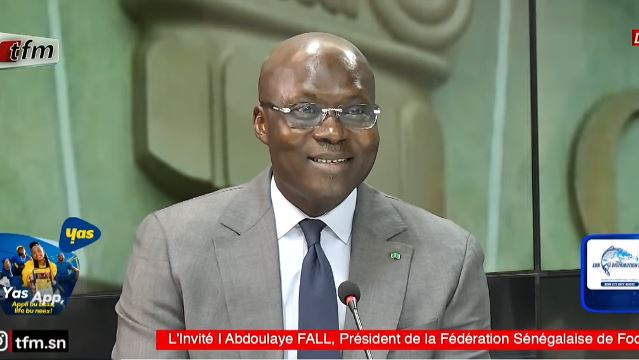
Abdoulaye Fall: FSF President Denies TAS Arbitrator Contact Allegations
Summary
- Abdoulaye Fall, president of the Fédération Sénégalaise de Football, firmly denied allegations of telephone contact with a Tribunal Arbitral du Sport arbitrator.
- The accusations relate to a dispute between Senegal and Morocco concerning the 2025 Africa Cup of Nations final, on which the Tribunal Arbitral du Sport has since issued a ruling.
- Fall stated on TFM that he had no contact with anyone involved in the arbitration procedure, calling the claims 'utterly false'.
- The Tribunal Arbitral du Sport is the ultimate body for resolving international sports disputes, emphasizing impartiality.
- Allegations of ex parte communication are serious, as they can undermine the integrity and perceived fairness of arbitration proceedings.
Fall Denies Arbitrator Contact
Allegations of improper, unilateral contact with arbitrators, like those directed at Abdoulaye Fall, fundamentally challenge the bedrock principles of integrity and fairness in international sports arbitration.
Abdoulaye Fall, who holds the prominent position of president for the Fédération Sénégalaise de Football (FSF), has issued a forceful and unambiguous denial regarding accusations of improper communication. Specifically, he rejected claims that he engaged in telephone exchanges with an arbitrator from the Tribunal Arbitral du Sport (TAS). These allegations surfaced in the context of a significant dispute between Senegal and Morocco regarding the 2025 Africa Cup of Nations (CAN 2025) final, a matter on which the Tribunal Arbitral du Sport (TAS) has since issued a ruling.
During an appearance as a guest on the media platform TFM, Mr. Fall unequivocally dismissed the accusations, characterizing them as "utterly false." He firmly stated that he had not, at any point, been in contact with any individual involved in the specific arbitration procedure concerning the CAN 2025 matter. This strong public statement from the head of the Senegalese football federation aims to dispel any suggestions of undue influence or procedural impropriety during the sensitive international sports arbitration process.
Context of the CAN 2025 Dispute
The serious allegations against the FSF president are inextricably linked to a high-stakes contention between the Senegalese and Moroccan football federations over the organization of the 2025 Africa Cup of Nations. Such inter-federation disputes, particularly those involving major continental tournaments, frequently necessitate adjudication by the Tribunal Arbitral du Sport. The TAS stands as the preeminent independent judicial body for resolving sports-related conflicts globally, and its operational framework is built upon principles of independence, fairness, and impartial decision-making.
The integrity of the TAS's arbitration process is absolutely critical, especially when dealing with high-profile international competitions like the CAN, where national pride and significant financial interests are at stake. Any perceived or actual breach of ethical conduct, such as a national federation president allegedly engaging in ex parte communications with an arbitrator, could severely compromise the perceived legitimacy and fairness of the entire arbitration. This makes the swift and firm denial by Abdoulaye Fall particularly noteworthy in the wider context of maintaining trust in sports governance.
Upholding Arbitral Integrity
Allegations of improper, unilateral contact with arbitrators, like those directed at Abdoulaye Fall, fundamentally challenge the bedrock principles of integrity and fairness in international sports arbitration. The established rules and ethical guidelines governing bodies such as the Tribunal Arbitral du Sport strictly forbid any form of communication between a party and an arbitrator outside of formal, recorded proceedings. This prohibition on ex parte communication is a cornerstone designed to guarantee impartiality, prevent any appearance of bias, and ensure transparency throughout the dispute resolution process.
Even in instances where such claims are vehemently refuted, as they have been by the FSF president, their mere emergence can cast a significant shadow over the perceived legitimacy and credibility of the arbitral proceedings. For the global sports community, maintaining unwavering public and participant trust in the fairness and objectivity of decisions rendered by institutions like the TAS is paramount for the stability and reputation of international sports governance. Consequently, any suggestion of undue influence or procedural irregularity demands a robust and transparent response to safeguard the institution's standing and the integrity of the outcomes it delivers, reinforcing the critical importance of strict adherence to ethical rules regarding ex parte communications in international sports arbitration.
Practical Implications
This story highlights the critical importance of strict adherence to ethical rules regarding ex parte communications in international sports arbitration. Lawyers and compliance officers involved in dispute resolution should ensure robust protocols are in place to prevent any perception of undue influence or impropriety, as such allegations can severely undermine the integrity and legitimacy of arbitral proceedings.
Source
Source: Original reporting via TFM
How does this affect you?
Get an AI analysis of this article grounded in your jurisdictions, practice areas, and any policy documents you've uploaded to Wansom.
Finish Reading the Full Story and the Expert Analysis.
Get the latest legal & regulatory intelligence in Senegal
Wansom is AI and can make mistakes.