

97 Senior Counsel Titles Challenged in Kenya: What the Court Decided
Abstract
Kenya’s legal profession is facing a significant test of institutional accountability. On 19 October 2026, the High Court dismissed preliminary objections seeking to stop a petition challenging the conferment of Senior Counsel status on 97 advocates across four rounds of appointments between 2013 and 2025. The decision allows the dispute to proceed to a full hearing, where the court will examine questions about the legal authority behind the appointments, the rules governing selection, and the constitutional standards that should apply to the conferment of one of the profession’s most distinguished ranks.
The petition, filed by Eliud Karanja Matindi, seeks to have the affected conferments declared unconstitutional, null and void, and the names removed from the official Roll of Senior Counsel. At the centre of the dispute is a question that reaches beyond the 97 individuals involved: can a prestigious professional rank remain secure if the legal framework and procedures through which it was awarded are successfully challenged?
The answer has not yet been determined. The court has not invalidated the titles, found that the recipients were individually unqualified, or concluded that the conferment process was unlawful. It has ruled that the objections raised against the petition do not justify terminating the case before its substantive questions are heard.
That distinction is essential. The ruling is not a verdict against the advocates. It is a decision that the legality of the system through which they received their titles is a matter the court can examine.
What the 19 October ruling actually decided
The Committee on Senior Counsel and the Law Society of Kenya (LSK) raised preliminary objections, arguing that the petition was incompetent and that the High Court lacked jurisdiction to determine it. They also challenged the petitioner’s standing and raised questions about the timing and evidential basis of the case.
Justice Gregory Mutai rejected the objections that would have prevented the petition from proceeding. He held that the issues raised were substantive constitutional questions requiring detailed consideration rather than summary disposal at the preliminary stage.
One important issue was whether the committee’s role in recommending candidates could be insulated from judicial scrutiny on the basis that its recommendations were merely advisory. The judge rejected that argument, emphasising the recommendation’s place in the statutory process.
Under section 17 of the Advocates Act, the President confers the rank upon names submitted through the Committee on Senior Counsel and the Chief Justice. The recommendation is therefore not simply an internal professional opinion with no legal consequence. It is a necessary step in the statutory route to conferment. As reported, Justice Mutai treated that role as sufficient to bring the legality of the process within the scope of judicial scrutiny.
This is the ruling’s first major implication: a decision-making step does not become immune from review merely because the final formal act is performed by another office-holder. Where legislation makes a recommendation a necessary gateway to a public decision, the legality of that gateway may itself matter.
The court also declined to strike out filings by lawyers representing the committee and the LSK, despite Matindi’s request based on alleged breaches of court orders restricting public entities from engaging private advocates. That issue did not provide a basis for ending the petition either.
The result is procedural but important. The parties must now address the legal merits of the challenge rather than have the case stopped at the threshold.
Four rounds of appointments, one challenge
The petition targets 97 advocates whose Senior Counsel titles were conferred in four rounds:
June 2013
July 2020
August 2022
December 2025
The challenge is therefore broader than a dispute about one recent list. It asks whether the legal and procedural foundations of appointments across more than a decade withstand constitutional scrutiny.
The December 2025 cohort is particularly important to the legal argument. According to reporting on the petition, 54 advocates received the rank in that round. Matindi contends that the rules governing the process had expired in January 2024 and that the committee consequently lacked the legal authority to recommend those candidates. The respondents dispute that interpretation, maintaining that the rules remained in force following amendments introduced through the Finance Act, 2023.
That disagreement is central to the case. If the governing rules remained legally effective, the argument that the committee lacked authority on that basis would be weakened. If they had ceased to operate and no valid replacement or saving provision applied, the court would have to consider the consequences for the committee’s actions and the subsequent conferments.
The point cannot be settled by repeating either side’s position. It requires an examination of the relevant legislation, the effect of the amendments, any applicable transitional provisions and the legal consequences of the decisions made under the framework.
Justice Mutai expressly left the legal status of the rules and the effect of relevant legislation and decisions for determination at the substantive hearing.
That is why the 19 October ruling should not be mistaken for a finding that the 2025 appointments were made under expired rules. The court has allowed the argument to be heard; it has not decided which interpretation is correct.
The legal question: did the committee have authority to act?
The dispute over the rules raises a foundational question of public law: what happens when a body exercises statutory functions under a legal framework whose continued validity is disputed?
The Committee on Senior Counsel plays a central role in evaluating candidates for conferment. The Judiciary’s published explanation of the process identifies the Advocates (Senior Counsel Conferment and Privileges) Rules, 2011 as the framework setting out the criteria, application process and committee arrangements. Section 17 of the Advocates Act provides for the conferment of the rank by the President.
The petitioner’s argument is that the rules ceased to operate in January 2024 and that the committee could not lawfully recommend candidates for the December 2025 round without a valid regulatory basis. The respondents’ position is that legislative amendments preserved the rules’ operation.
There are several questions the substantive hearing must therefore address.
First, what was the legal status of the 2011 Rules at the relevant time? The court will need to consider the precise provisions governing the lifespan of statutory instruments and the effect of the 2023 amendments relied upon by the respondents. The answer depends on the legislation and its legal operation, not merely the date on which the rules were originally made.
Second, what authority did the committee possess when it considered the 2025 applications? If the rules remained in force, the committee’s authority must be assessed on that basis. If they did not, the court must consider whether any other valid legal provision authorised the relevant steps.
Third, what consequences would follow if a defect were established? A finding that a rule was invalid or no longer in force would not automatically answer every question about the legal status of each conferment. The court would need to consider the nature of the defect, the statutory framework, the decisions made under it and the remedies legally available.
This final issue is especially important because the petition seeks broad relief affecting all 97 titles. A legal challenge to the process must still establish the basis for the remedy sought. The court has not yet ruled that every appointment is invalid, nor that every recipient’s title must be removed.
The litigation will turn on the law in force at the relevant times and the consequences that follow from the court’s eventual findings.
Transparency and public participation: what should a professional honour require?
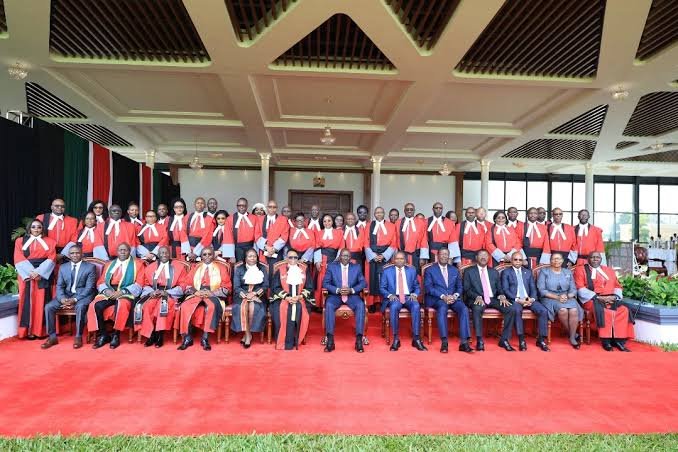
The petition also alleges that the conferment process violated Articles 10 and 232 of the Constitution, which set out national values and principles of governance, including transparency, accountability and good governance. The petitioner argues that the process lacked sufficient public participation and that the criteria used to select successful candidates were not adequately transparent. These remain allegations to be tested at the hearing.
The issue requires careful legal analysis. Senior Counsel is a professional rank, not an ordinary public-service job. The constitutional requirements applicable to a particular appointment or conferment must be analysed in light of the legal framework governing it. It would be too broad to assume that every element of a professional selection process must be conducted in exactly the same way as a recruitment exercise for a public office.
At the same time, the fact that a process concerns a professional distinction does not automatically remove it from legal scrutiny. Where legislation establishes a formal process, public authorities and statutory bodies must act within their powers and comply with the applicable constitutional and legal requirements.
The central question is therefore not simply whether the public was involved. It is what the Constitution and governing legislation required of the responsible institutions, whether those requirements were met, and whether any alleged failure is legally material to the conferments under challenge.
Transparency can matter at several stages: the publication and clarity of eligibility criteria, the integrity of the evaluation process, the lawful constitution of the body making recommendations, and the ability to explain how decisions were reached. But the precise duties owed at each stage must be grounded in the applicable law.
The court’s decision to permit a full hearing means those questions cannot be dismissed solely on the preliminary arguments advanced by the respondents. It does not mean the petitioner has already proved a constitutional violation.
Can someone outside the profession challenge the conferment process?
The respondents also questioned Matindi’s standing, arguing that he was neither an advocate nor a member of the LSK. The court rejected the attempt to end the case on that basis. It held that the question of whether the petition was sufficiently supported by evidence belonged to the substantive hearing rather than being resolved through the preliminary objection.
This matters because the petition challenges the legality of a system, not simply a private disagreement between lawyers. The court’s approach allows the constitutional and statutory questions to be examined without making membership of the profession an automatic barrier to bringing the challenge.
That does not mean anyone can obtain a favourable judgment simply by alleging that a public process was unlawful. The petitioner must still establish the legal and factual basis for the claims and demonstrate entitlement to the remedies sought. Standing to bring a case, the sufficiency of the evidence and success on the merits are separate questions.
The ruling should therefore be read narrowly. The court did not conclude that every argument in the petition was correct. It decided that the objections presented did not justify stopping the case before its core issues could be examined.
The broader principle is that legal accountability may require scrutiny of public decision-making even when the dispute concerns a specialised profession. Whether a particular challenge succeeds depends on the applicable standing rules, evidence and substantive law.
Does the age of the appointments matter?
The challenge reaches back to 2013, raising an additional question: can earlier conferments be challenged many years after they were made?
Justice Mutai reportedly observed that constitutional claims are not generally subject to limitation in the same way as ordinary claims, while also recognising that delay and prejudice may be relevant depending on the circumstances. He noted that the challenge to the 2025 conferment had been filed within weeks, whereas the earlier awards would require further consideration.
This does not amount to a ruling that every claim concerning the 2013, 2020 and 2022 rounds is necessarily timely. Nor does it mean that the passage of time is irrelevant to constitutional litigation.
The legal issue is more nuanced. The court may need to distinguish the nature of each claim, the date of the relevant decision, when the alleged defect arose or became actionable, the explanation for delay, and any prejudice that might result from reopening long-settled decisions.
The four rounds may share a common challenge to the conferment framework, but they do not necessarily present identical factual or temporal questions. A defect alleged in the 2025 process may depend on the status of rules at that time; a challenge to an earlier round may require a different examination of the law then in force and the circumstances of that conferment.
The court has not finally resolved these issues. The full hearing will have to determine which claims can proceed on their merits and what legal consequences, if any, follow from the timing of the challenges.
What is at stake for the 97 advocates?

Senior Counsel is a distinguished rank under Kenya’s legal framework. The Judiciary explains that section 17 of the Advocates Act permits the President to confer the rank and dignity on a person of irreproachable professional conduct who has rendered exemplary service to the legal and public service in Kenya. The official process includes evaluation under the governing rules and entry of the names on the Roll of Senior Counsel.
The petition targets prominent advocates from across Kenya’s legal and public life. But the presence of well-known names should not distract from the actual legal issue: the lawfulness of the process through which the rank was conferred.
No adverse conclusion about an individual recipient follows merely because their title is listed in the petition. The current proceedings do not establish that the affected advocates lack professional merit, failed to meet the eligibility criteria, or personally participated in any wrongdoing.
The immediate uncertainty concerns the legal status of the conferment process and the remedies that might follow if the court finds a defect. If the petition ultimately succeeds in whole or in part, the court would need to determine the scope of any declaration or consequential order. If the petition fails, the challenged conferments would not be invalidated on the grounds advanced in this case.
Either outcome would carry institutional significance. A judgment upholding the process could clarify the legal basis for the appointments and address the challenge to the rules. A judgment finding a material legal defect could require a more difficult examination of the consequences for the affected conferments and the future operation of the system.
For now, neither result should be presumed.
The institutional stakes: professional prestige depends on a credible process
The wider significance of the case lies in the relationship between professional recognition and institutional legitimacy.
A senior professional rank is valuable not only because of the individuals who hold it, but because the system conferring it is trusted to apply lawful standards consistently. If the legal framework is clear, the responsible committee acts within its authority, and decisions are reached according to the required criteria, the rank has a stronger institutional foundation.
If, on the other hand, the rules governing conferment are uncertain or the process is found to have departed from mandatory legal requirements, the consequences may extend beyond the applicants whose titles are challenged. The dispute could expose gaps in the regulatory framework and create pressure for clearer procedures, better records and greater certainty about the authority responsible for recommendations.
That is an institutional risk, not a finding that such defects have already been proved.
The case also highlights the importance of separating professional merit from procedural legality. An advocate may have a distinguished career, but the legal question in this petition is whether the statutory and constitutional process was valid. Conversely, a challenge to the process does not by itself establish that the recipients lack merit.
Both propositions can be true at once: the individuals’ professional achievements may be substantial, and the legality of the mechanism through which a public rank was conferred may still be open to scrutiny.
The court’s role is to determine the latter according to law, without substituting speculation about the recipients for evidence about the process.
What happens next?
The petition will now proceed to a substantive hearing. The central issues to watch are:
The 2011 Rules: Whether they remained legally effective for the December 2025 conferment, taking account of the amendments relied upon by the respondents.
The committee’s authority: Whether the Committee on Senior Counsel was lawfully constituted and authorised to perform the relevant functions at the material times.
Constitutional compliance: Whether the process met the applicable requirements of transparency, accountability, public participation and good governance.
The earlier conferments: Whether the challenges to the 2013, 2020 and 2022 rounds can be sustained, including in light of the passage of time.
The appropriate remedies: If any legal defect is established, whether and how it affects the conferments and what orders the court can properly make.
These questions are related, but they are not interchangeable. A finding about the status of the rules would not necessarily resolve every constitutional argument. A conclusion that a particular step was unlawful would still require analysis of its effect on the final decisions and the remedy sought.
The respondents will have the opportunity to defend the process, including their position that the governing rules remained in force. The petitioner will need to substantiate the allegations and establish the legal basis for the requested declarations and removal of names from the Roll of Senior Counsel.
The 19 October decision has opened that debate. The substantive judgment will determine what the law requires and whether the challenged conferments meet those requirements.
Conclusion: scrutiny is not cancellation
The High Court’s decision to reject the preliminary objections is an important step in a case with potential consequences for the regulation and recognition of Kenya’s legal profession. By allowing the petition to proceed, the court has accepted that the legal basis for conferring Senior Counsel status on 97 advocates raises questions that warrant full examination.
But the decision is not a finding that the titles are invalid. It does not establish that the 97 advocates were unqualified, that the committee acted unlawfully, or that the 2011 Rules had expired. Those issues remain contested and must be resolved through the substantive hearing.
The central test is whether the legal framework and procedures governing the conferment of Senior Counsel status complied with the law at the relevant times. The outcome may clarify the authority of the committee, the effect of the disputed rules, the application of constitutional standards and the remedies available when a conferment process is challenged.
For Kenya’s legal institutions, the stakes extend beyond the names on the Roll. Professional distinction carries its greatest authority when the process behind it is legally sound, transparent where the law requires, and capable of withstanding scrutiny.
The court has now cleared the way for that scrutiny. Whether the challenge succeeds remains to be decided.
Citations
- 1.The Eastleigh Voice, “Court clears way for challenge to Senior Counsel titles awarded since 2013,” 22 October 2026. Read the report.
- 2.Capital FM, “High Court rejects bid to stop challenge to Senior Counsel awards,” 23 October 2026. Read the report.
- 3.The Judiciary of Kenya, “Advocates — Senior Counsel.” Read the official explanation of the conferment framework.
- 4.The Daily Nation, “Why Wetang’ula, Havi, Karua and others may lose their Senior Counsel titles,” 8 January 2026. Read the report.
- 5.The Eastleigh Voice, “Petition challenges conferment of senior counsel status to 97 advocates,” 9 January 2026. Read the report.
Finish Reading the Full Story and Expert Analysis.
Get the latest legal & regulatory intelligence in Kenya
Wansom is AI and can make mistakes.