
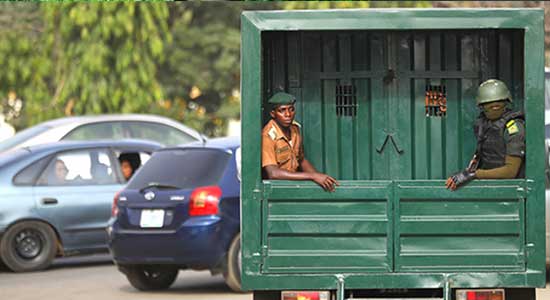
46 Inmates Miss Court Hearings Due to Vehicle Shortage in Akwa Ibom
Forty-six awaiting-trial inmates at the Medium Security Correctional Centre in Eket, Akwa Ibom State, are reportedly unable to attend court hearings because the facility lacks functional vehicles to transport them.
This situation is profoundly significant as it represents a systemic breakdown in the administration of criminal justice, directly infringing upon the fundamental right to a fair trial and access to justice for these inmates. The inability to convey awaiting-trial detainees (ATDs) to court hearings contributes significantly to prison congestion, prolonged pre-trial detention, and delays in justice delivery, which are persistent challenges within Nigeria's correctional system. It highlights a critical operational deficiency that undermines the efficiency and fairness of the judicial process, potentially leading to wrongful prolonged incarceration and a loss of public confidence in the justice system.
The legal context for this issue is rooted in Section 36 of the 1999 Constitution of the Federal Republic of Nigeria (as amended), which guarantees the right to a fair hearing, including the right of an accused person to be present at their trial. The Administration of Criminal Justice Act (ACJA) 2015 also emphasizes speedy trials and aims to reduce the number of ATDs. Furthermore, the Nigerian Correctional Service Act 2019 mandates the Correctional Service to ensure the safe custody and production of inmates in court. The reported lack of functional vehicles directly contravenes these constitutional and statutory provisions, creating a bottleneck that prevents the judicial process from advancing for these 46 individuals.
The key parties involved are the 46 awaiting-trial inmates whose rights are being affected; the Medium Security Correctional Centre in Eket, Akwa Ibom State, which is experiencing the logistical challenge; and Chief Superintendent of Corrections Samuel Bassey, the Officer-in-Charge, who disclosed the situation. While not explicitly named, the courts where these inmates are meant to appear are also indirectly impacted by this operational failure.
Legal practitioners, particularly those in criminal defence, human rights advocacy, and public interest litigation, must take note of such systemic failures. Attorneys representing these inmates or others similarly affected should consider filing applications for accelerated hearings, bringing the issue to the attention of the presiding judges, or even initiating public interest litigation to compel the relevant authorities to provide adequate transportation. This situation also presents an opportunity for the Nigerian Bar Association and civil society organizations to advocate for improved funding and infrastructure for the Nigerian Correctional Service to ensure that the rights of awaiting-trial inmates are protected and that justice is not unduly delayed.
How does this affect you?
Get an AI analysis of this article grounded in your jurisdictions, practice areas, and any policy documents you've uploaded to Wansom.
Finish Reading the Full Story and the Expert Analysis.
Wansom is AI and can make mistakes.