
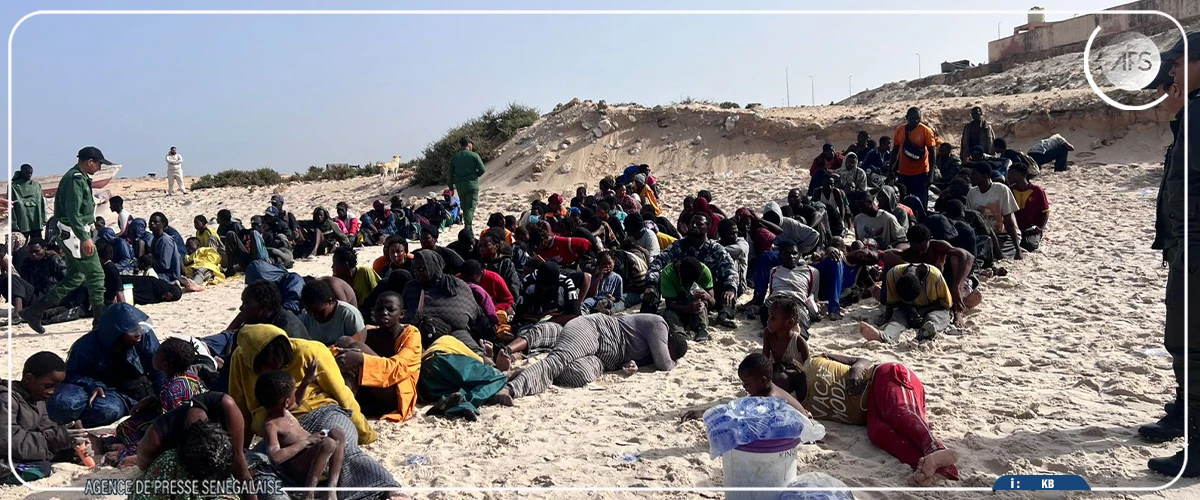
Royal Moroccan Navy: Senegalese Migrants Intercepted Off Dakhla, Morocco
Summary
- The Royal Moroccan Navy intercepted 201 sub-Saharan migrants off Dakhla, southern Morocco, on Saturday, August 28.
- Among those intercepted were 18 Senegalese nationals, including two women and one child.
- The vessel carrying the migrants had departed from Gambia, according to information released by Moroccan authorities.
- This incident highlights the ongoing enforcement efforts against irregular migration along West African maritime routes.
Incident Details Emerge
Interceptions such as the one carried out by the Royal Moroccan Navy near Dakhla raise important considerations under international law, particularly concerning maritime migrant rights in Africa.
The Royal Moroccan Navy recently intercepted a vessel carrying 201 sub-Saharan migrants off the coast of Dakhla, a city situated in southern Morocco. This interdiction, which occurred on Saturday, August 28, brought to light the continued challenges of irregular migration across maritime routes in the region.
Among those rescued were 18 individuals identified as Senegalese nationals. The group of Senegalese migrants included two women and one child, underscoring the diverse demographics of those undertaking perilous journeys by sea.
Information released by Moroccan authorities confirmed that the intercepted vessel had departed from Gambia. This detail highlights the complex network of departure points and transit routes utilized by migrants seeking to reach Europe or other destinations, often involving multiple West African nations. The swift action by the Royal Moroccan Navy in the waters near Dakhla underscores the ongoing efforts to patrol and secure these maritime pathways.
Persistent Challenges on West African Migration Routes
The interception of Senegalese migrants near Dakhla, Morocco, is indicative of the persistent challenges associated with irregular migration from West Africa. Maritime routes, particularly those extending from the Senegalese and Gambian coasts, remain a significant pathway for individuals attempting to reach new shores. These journeys are frequently fraught with danger, often involving overcrowded and unseaworthy vessels.
Moroccan authorities, through the Royal Moroccan Navy, have consistently engaged in efforts to interdict such crossings. The waters surrounding Dakhla have become a focal point for these operations, given their strategic location along the Atlantic coast. This incident further illustrates the critical role played by Morocco in managing and responding to the flows of irregular migration originating from various sub-Saharan countries.
The incident on August 28 underscores the continued use of the Senegal-Gambia migration route, a well-established corridor for those seeking to leave the region. The presence of individuals from multiple sub-Saharan nations on a single vessel departing from Gambia points to the collaborative and often clandestine nature of these migration attempts, involving individuals from diverse backgrounds converging at common departure points.
International Law and Migrant Interception
Interceptions such as the one carried out by the Royal Moroccan Navy near Dakhla raise important considerations under international law, particularly concerning maritime migrant rights in Africa. While states have sovereign rights to control their borders, international conventions also mandate the protection of life at sea and the humane treatment of all individuals, regardless of their migratory status.
The presence of vulnerable individuals, including women and a child, among the intercepted Senegalese migrants, further emphasizes the humanitarian dimensions of these operations. Authorities involved in migrant interception are often tasked with balancing national security concerns with obligations to provide assistance and ensure the safety and dignity of those found at sea.
These ongoing interdictions by Moroccan authorities highlight the complex legal and ethical landscape surrounding irregular migration. They serve as a reminder of the continuous enforcement efforts aimed at curbing unauthorized maritime crossings, while simultaneously bringing to the forefront the need for adherence to international standards for search and rescue and the subsequent processing of migrants.
Broader Implications for Regional Migration Dynamics
The recent interception of 201 sub-Saharan migrants, including 18 Senegalese nationals, off Dakhla, Morocco, holds significant implications for understanding regional migration dynamics. It reinforces the reality that despite various deterrents and dangers, maritime routes from West Africa continue to be utilized by a substantial number of individuals seeking to migrate.
The consistent efforts of the Royal Moroccan Navy in conducting these interdictions underscore the country's pivotal role in managing irregular migration flows in the Atlantic. Such actions contribute to the broader enforcement strategy across the region, impacting the viability and safety of these perilous journeys.
This event, reported on August 30, serves as a clear indicator of the enduring pressure on these migration corridors and the ongoing challenges faced by both migrants and authorities. The Dakhla migrant interdiction specifically highlights a key operational zone for such activities, reflecting a broader pattern of enforcement and humanitarian response along the West African coast.
Practical Implications
This incident highlights the continued enforcement efforts by Moroccan authorities against irregular migration, particularly impacting those using maritime routes from West Africa. Lawyers advising clients on immigration, human rights, or maritime law should note these ongoing interdictions as a significant factor in regional migration dynamics.
Source
Source: Original reporting via APS
How does this affect you?
Get an AI analysis of this article grounded in your jurisdictions, practice areas, and any policy documents you've uploaded to Wansom.
Finish Reading the Full Story and the Expert Analysis.
Wansom is AI and can make mistakes.