
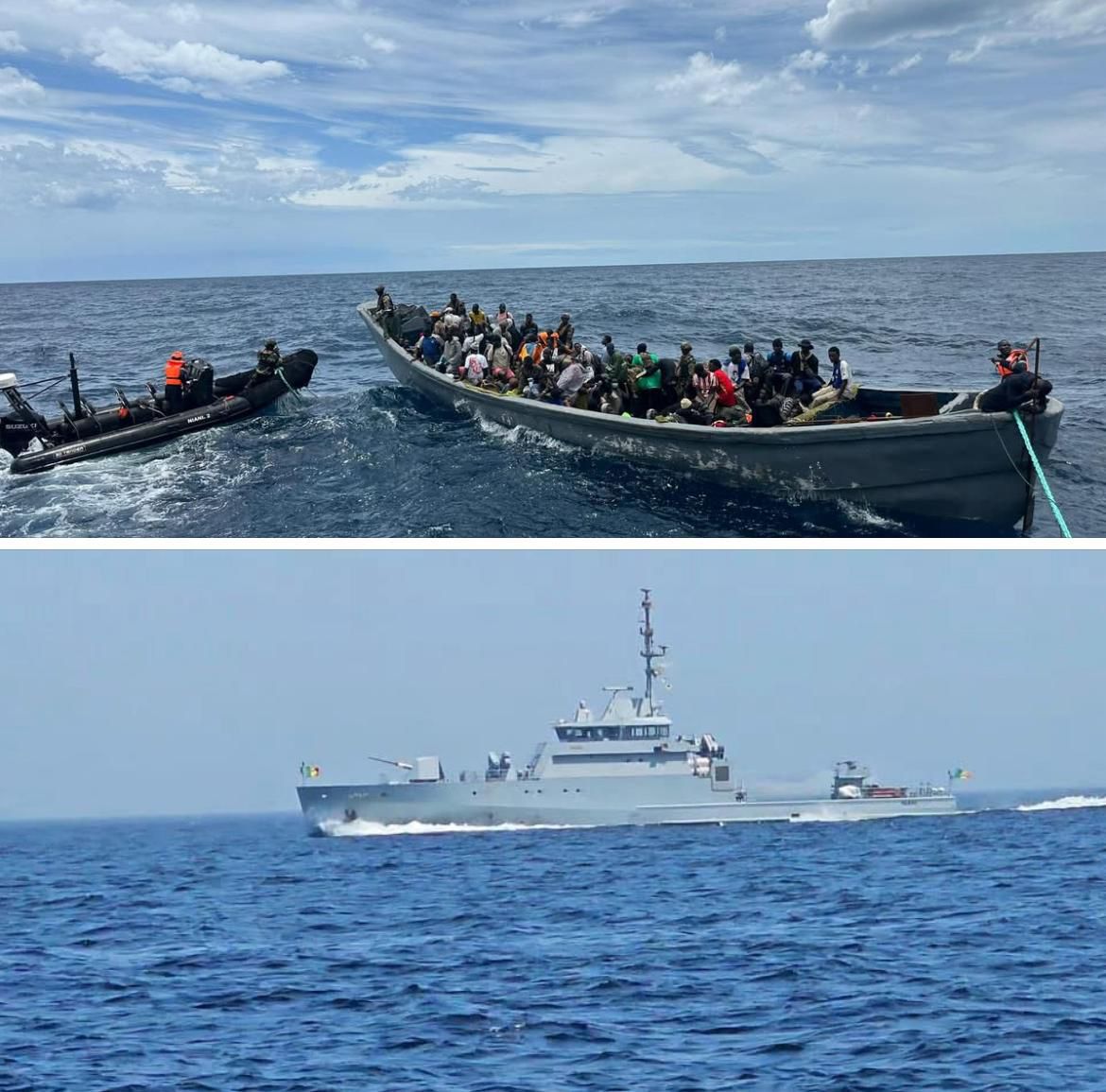
Dakhla: 201 Migrants Intercepted From Gambia; Senegal Consulate Acts
Summary
- 201 migrants were intercepted by the Marine Royale Marocaine off Dakhla while attempting to reach the Canary Islands.
- The pirogue had departed from Gambia and carried individuals including women and minors.
- Nationalities included 144 Guineans, 21 Gambians, 18 Senegalese, 11 Ivorians, and 5 Malians.
- The Consulate of Senegal in Dakhla plans to send a mission to identify its 18 nationals, including two women and one child.
- This incident follows another interception of 193 migrants, including 75 Senegalese, from Gambia just days earlier.
Interception Off Dakhla
The Consulate of Senegal in Dakhla announced plans to dispatch a dedicated mission for the formal identification of its nationals among the intercepted group at the Bir-Guindouz reception center.
Units of the Marine Royale Marocaine successfully intercepted a vessel carrying 201 migrants off the coast of Dakhla on a Saturday. The pirogue, which had embarked from Gambia, was attempting to reach the Canary Islands when it was interdicted approximately 185 kilometers southwest of Dakhla. This operation highlights the ongoing efforts to monitor and control the illegal migration Atlantic route.
Among those rescued were women and minors, all of whom were safely transported to the fishing village of Roc-Chico, situated 190 kilometers southwest of Dakhla. This immediate care for vulnerable individuals is a critical component of maritime rescue operations.
Upon arrival, the individuals received necessary medical attention while still aboard the interception vessel before being handed over to the Gendarmerie Royale for standard administrative processing. This transfer initiates the formal procedures for identification and potential repatriation, underscoring the complex logistical and legal challenges posed by such large-scale interceptions.
Nationalities and Consular Response
A detailed breakdown of the 201 migrants revealed a diverse group of nationalities. The majority comprised 144 Guineans, followed by 21 Gambians, 18 Senegalese, 11 Ivorians, and 5 Malians.
Notably, the contingent of 18 Senegalese migrants included two women and one child, underscoring the vulnerability of those undertaking such perilous journeys. This demographic data is crucial for the subsequent administrative and consular processes.
In response to the presence of its citizens, the Consulate of Senegal in Dakhla announced plans to dispatch a dedicated mission. This mission's primary objective is the formal identification of the Senegalese nationals among the intercepted group at the Bir-Guindouz reception center. Consul General Babou Sène is slated to lead this crucial consular effort, demonstrating the diplomatic engagement required in such large-scale interception events involving Senegalese migrants.
Broader Context of the Atlantic Route
This interception is not an isolated event but rather indicative of persistent attempts to traverse the dangerous Atlantic route towards the Canary Islands. Just days prior, on a Wednesday, another pirogue originating from Gambia was intercepted carrying 193 aspiring migrants, including 75 Senegalese. Both incidents underscore the increasing pressure on the Dakhla Canaries route for migrants seeking to reach European shores.
The repeated interceptions of vessels departing from Gambia, carrying significant numbers of Senegalese migrants, point to a well-established, albeit perilous, segment of the illegal migration network. The involvement of the Marine Royale Marocaine in these operations, followed by the transfer to the Gendarmerie Royale for administrative procedures, highlights the multi-faceted response required to manage illegal migration.
These processes often involve complex identification, care, and potential repatriation efforts, placing a significant burden on regional authorities and consular services, such as the consulat Sénégal Dakhla migrants mission. The consistent flow of migrants from countries like Senegal and Gambia along this route continues to present substantial challenges for maritime security and humanitarian aid.
Practical Implications
This incident illustrates the administrative and consular processes triggered by large-scale migrant interceptions, including identification and potential repatriation. Lawyers advising on immigration, human rights, or international maritime law should note these ongoing challenges and the specific procedures involved for nationals from countries like Senegal.
Source
How does this affect you?
Get an AI analysis of this article grounded in your jurisdictions, practice areas, and any policy documents you've uploaded to Wansom.
Finish Reading the Full Story and the Expert Analysis.
Wansom is AI and can make mistakes.