
11th Circuit Sends City's Mercury Pollution Suit Back to Federal Court
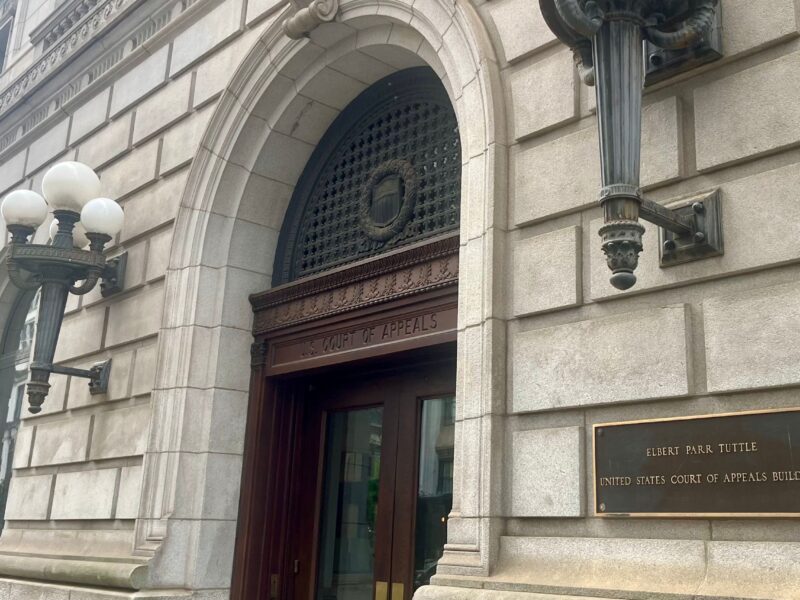
The decision is a victory for Georgia Power and Honeywell International in their fight against a lawsuit filed by the city of Brunswick, Georgia, accusing them of failing to keep hazardous waste from escaping a Superfund site. The 11th Circuit Court of Appeals building in Atlanta, Georgia on April 3, 2026 (Megan Butler/Courthouse News) ATLANTA (CN) — An 11th Circuit panel on Monday unanimously ruled a lawsuit accusing the Georgia Power Company and Honeywell International Inc. of continuing to contaminate coastal marshlands with hazardous waste should be heard in federal — not state — court. The panel of three Trump-appointed judges overturned a Georgia federal judge’s decision to remand the lawsuit filed by the city of Brunswick, Georgia, to state court. The federal appellate court ruled the companies satisfied a legal test to show they are entitled to have the case heard in federal court under the federal officer removal statute, which gives federal officials a forum to raise defenses arising from their official duties. “Federal officer removal was proper in this case because the defendants’ alleged liability arises out of their obligations under an [Environmental Protection Agency]-mandated consent decree to remediate the plant site, an action that EPA would otherwise have to perform itself,” U.S. Circuit Judge Elizabeth Branch wrote on behalf of the panel. The 2016 consent decree requires Georgia Power and Honeywell International to conduct a $29 million cleanup effort at a 760-acre saltwater marsh site. The city claims the defendants have not done enough to permanently remove their pollution from city property, which is outside the Superfund site, or prevent more waste from being spilled. The defendants released approximately 1 million pounds of mercury and dumped hundreds of tons of PCBs into the environment from a now-defunct chemical plant and a coal-fired electric plant beginning in the 1950s, according to the city. The U.S. Environmental Protection Agency classifies PCBs as probable human carcinogens. The city has argued no federal claims are raised in its lawsuit for continuing nuisance and trespass. Attorneys for the city suggested in a legal brief filed with the 11th Circuit that the defendants sought federal jurisdiction because they hope the consent decree will provide them a federal defense to liability in damages for harm to property outside the Superfund site. In a 2023 order sending the case to Glynn County, U.S. District Judge J. Randal Hall ruled although the EPA supervised the companies’ remediation efforts, the companies were not “acting under” a federal officer when they released pollutants into the marshlands around the city’s property. Attorneys for the companies argued in 2024 that the case should not be heard in state court because the environmental remediation work is directed by the EPA, a federal agency. The 11th Circuit agreed. The panel found the consent decree shows the EPA maintained “considerable authority” over the Superfund site cleanup efforts. Not only does the agency maintain a high degree of general oversight over the work, the panel found the EPA can designate a project coordinator, direct emergency response actions, require the companies to conduct “community involvement activities” and even halt the work entirely. The companies are not just complying with federal rules and regulations when they clean the polluted site on the EPA’s behalf, the panel ruled, they are helping federal officers fulfill a governmental task. “EPA has tasked the defendants with the responsibilities EPA would otherwise have had to accomplish itself,” Branch explained. “Rather than ‘clean th[e] site[] itself,’ EPA chose to compel the defendants ‘to perform the cleanup.’” A spokesperson for the city did not immediately respond to a request for comment Monday afternoon. Georgia Power spokesperson Matthew Kent said the company was “pleased” with the decision, adding that the “safety of our communities and surround
How does this affect your business?
Get an AI analysis of this article grounded in your jurisdictions, practice areas, and any policy documents you've uploaded to Wansom.
Wansom is AI and can make mistakes.