
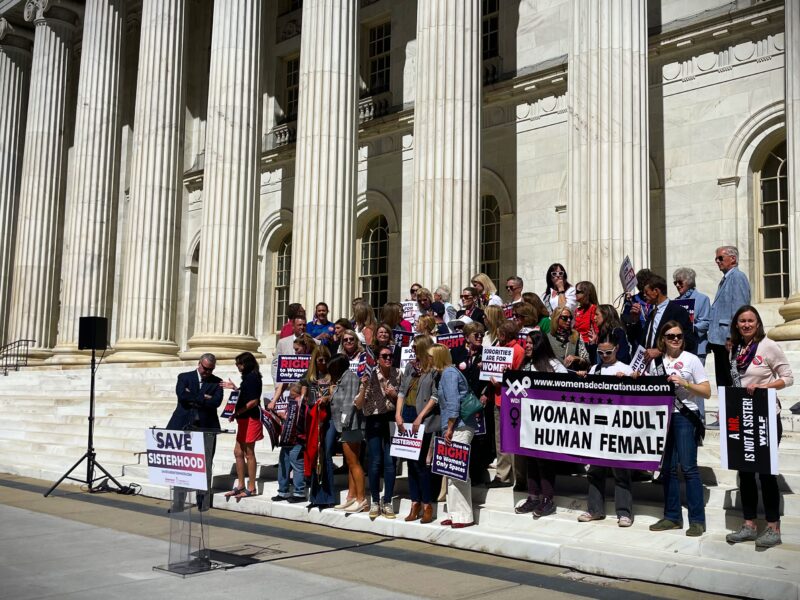
10th Circuit: Kappa Kappa Gamma 'Woman' Definition Appeal Heard
Summary
- The 10th Circuit Court of Appeals heard arguments in a lawsuit challenging Kappa Kappa Gamma's expanded definition of "woman" to include transgender members.
- Six sorority sisters, including Hannah Holtmeier, are seeking to revive their case, arguing the change fundamentally altered the organization's nature without a proper vote to amend bylaws.
- Kappa Kappa Gamma's leadership adopted a position in 2015 stating membership includes "women and individuals who identify as women," leading to the induction of a transgender member in 2022.
- Judges questioned the court's authority to intervene in the internal governance of a voluntary organization, suggesting the council may have reasonably exercised its interpretive powers.
- Attorneys for the sorority argued that Ohio law, where KKG is incorporated, discourages judicial interference in internal disputes, provided interpretations are not unreasonable.
Appellate Court Considers Sorority Membership Dispute
This 10th Circuit Kappa Kappa Gamma 'woman' definition case offers significant insight into the judiciary's approach to internal organizational disputes, particularly concerning bylaw interpretation and membership criteria.
The 10th Circuit Court of Appeals recently heard arguments in a case challenging Kappa Kappa Gamma's (KKG) updated definition of "woman," which now permits transgender students identifying as women to join the sorority. On September 14, 2026, at the Byron White U.S. Courthouse in Denver, six sorority sisters sought to revive their lawsuit opposing the induction of a transgender woman into the organization in 2022. This legal action stems from a March 2023 complaint filed by Hannah Holtmeier and five other University of Wyoming members against KKG and its president.
The plaintiffs contend that KKG leadership improperly expanded its membership criteria without a proper vote to amend the bylaws, thereby fundamentally altering the organization's long-standing identity. For over 150 years, since its founding in 1870, Kappa Kappa Gamma has presented itself as an exclusively "all-women" fraternity, with policies historically prohibiting men from participating in its activities. The core of the dispute centers on the 2015 decision by the Kappa Fraternity Council to issue a position statement clarifying that membership includes "women and individuals who identify as women," a change that paved the way for the first transgender sorority sister at the University of Wyoming seven years later.
Conflicting Interpretations of 'Woman'
Representing the dissenting sorority sisters, attorney Angela Lavin argued before the 10th Circuit that the leadership's reinterpretation of "woman" fundamentally changed KKG's nature. Lavin, from Wegman Hessler in Cleveland, Ohio, asserted that for a century and a half, the term "woman" within the sorority was unambiguous and required no redefinition. She further highlighted that, under what her clients consider the traditional understanding, transgender men—individuals assigned female at birth who identify as male—would not be barred from membership.
Conversely, Natalie McLaughlin, counsel for Kappa Kappa Gamma from Vorys Sater in Columbus, Ohio, maintained that including individuals who identify as women constitutes a reasonable interpretation of the organization's bylaws. McLaughlin argued that such an interpretation did not necessitate a general membership vote or judicial approval. She pointed out that KKG is incorporated under Ohio law, which generally discourages courts from intervening in the internal affairs of voluntary organizations, provided their interpretations are not unreasonable.
Judges Question Intervention Authority
During the appellate hearing, U.S. Circuit Judges Nancy Moritz and Chief U.S. Circuit Judge Jerome Holmes critically examined the extent of judicial authority in internal organizational disputes. Judge Holmes, a Bush appointee, questioned whether KKG's board members, elected to interpret undefined terms like "women," had acted improperly. He challenged the legal relevance of the sisters' claims if the council legitimately exercised its interpretive authority, asking, "Why is that legally relevant? If the council can exercise interpretation and they exercised their authority, who cares?"
Judge Moritz, an Obama appointee, echoed this sentiment, asking whether the court possessed the power to interfere with the sorority's decisions. She queried whether the fraternity council had simply fulfilled its responsibility to define the term "woman" in a reasonable manner. When pressed by Judge Holmes on how individual sorority sisters could influence admissions, McLaughlin responded that members retain the ability to propose their own amendments to define "women" or elect new board members who might interpret the bylaws differently, suggesting internal democratic processes as the appropriate avenue for change.
Broader Implications for Voluntary Organizations
This 10th Circuit Kappa Kappa Gamma 'woman' definition case offers significant insight into the judiciary's approach to internal organizational disputes, particularly concerning bylaw interpretation and membership criteria. The court's deliberations highlight the delicate balance between protecting the autonomy of voluntary associations and addressing challenges from members who believe organizational leadership has overstepped its bounds. The arguments presented underscore the importance of clear governance structures and the potential for internal disagreements to escalate into legal battles when fundamental definitions are reinterpreted.
The outcome of this appeal could set a precedent for how courts handle similar challenges to membership policies in other voluntary organizations. It emphasizes that while judicial intervention in such matters is generally disfavored, there are limits to an organization's interpretive latitude, especially if an interpretation is deemed unreasonable or fundamentally alters the group's established character without appropriate internal processes. The case serves as a crucial reminder for lawyers advising associations on governance and the limits of judicial intervention, particularly when navigating evolving social norms and the definition of membership.
Practical Implications
This case offers insight into the judiciary's approach to internal organizational disputes, particularly regarding bylaw interpretation and membership criteria, which is crucial for lawyers advising associations on governance and the limits of judicial intervention.
Source
How does this affect you?
Get an AI analysis of this article grounded in your jurisdictions, practice areas, and any policy documents you've uploaded to Wansom.
Finish Reading the Full Story and the Expert Analysis.
Get the latest legal & regulatory intelligence in United States
Wansom is AI and can make mistakes.