
Zambia–UAE’s US$2.14 Billion MoUs: What They Mean for the 3-Million-Tonne Copper Ambition
Indicator | Reported position |
|---|---|
Forum date | September 29, 2026 |
Total announced MoUs | US$2.14 billion |
Number of agreements reported | Six |
Largest reported agreement | US$2 billion medical city proposed for Lusaka |
Existing IRH–Mopani investment | Approximately US$1.1 billion associated with the 2024 investment |
Copper production ambition | 3 million tonnes annually by 2031 |
Power requirement cited by Hichilema | Approximately 8,000 MW for copper production alone |
Gold VAT policy | Government considering a reduction to the existing 16% VAT treatment |
Important qualification | MoU values are not the same as disbursed investment or completed projects |
What was announced in Abu Dhabi?
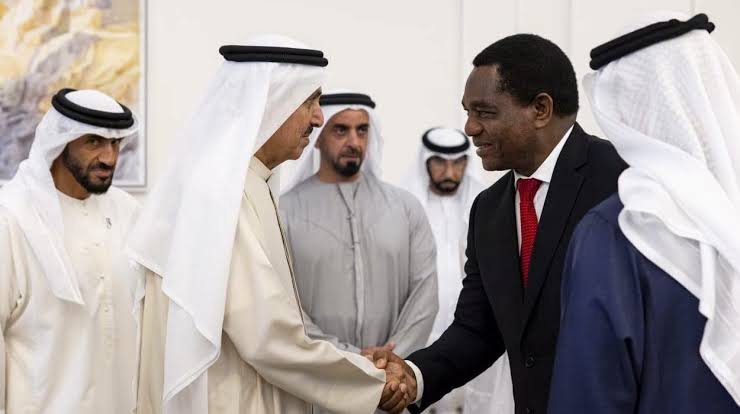
The Zambia–UAE Business Forum formed part of Hichilema’s two-day working visit to Abu Dhabi on September 29–30. The visit focused on attracting investment, strengthening bilateral trade and expanding cooperation under Zambia’s Grow Zambia Agenda.
According to reporting by Times of Zambia and the Zambia National Broadcasting Corporation, six agreements worth more than US$2.1 billion were signed during the forum. The reported sectors included healthcare, renewable energy, logistics, technology and biotechnology.
The largest announcement was an MoU between the Zambian government and DIHAD Sustainable Project Management LLC for a proposed medical city near Kenneth Kaunda International Airport.
Announced initiative | Reported value or status | Relevance to Zambia |
|---|---|---|
Proposed Lusaka Medical City | US$2 billion MoU | Specialised healthcare infrastructure and potential medical-tourism development |
Renewable energy and related infrastructure | Included in the forum’s wider investment agenda; detailed project values not fully disclosed in the reviewed reporting | Potential additional electricity supply |
Logistics and transport | Included among the areas of cooperation | Infrastructure supporting trade and industrial activity |
Technology and biotechnology | Included among the reported sectors | Potential diversification beyond mining |
Mining and mineral value addition | Part of the broader bilateral investment agenda | Potential support for production expansion and domestic processing |
The US$2.14 billion total should not be interpreted as a confirmed package of new mining capital. Public reporting available for this article does not provide a complete, independently verifiable project-by-project breakdown of the full amount. Nor does the aggregate figure establish how much funding has been disbursed, how much financing is secured, or which projects have reached financial close.
That distinction is central to understanding the announcement. An MoU can establish a framework for cooperation or express an intention to develop a project. It does not necessarily constitute a final investment decision, a binding financing agreement or evidence that construction has begun.
Mopani is strategically important but the US$1.1 billion is not a new forum pledge
Mopani Copper Mines is one of the most important connections between UAE-linked investment and Zambia’s copper strategy.
IRH acquired a 51% stake in Mopani in 2024, with state-owned ZCCM Investments Holdings retaining 49%. The transaction unlocked approximately US$1.1 billion in capital for the mine, according to previous government and company-related reporting.
That investment predates the September 2026 forum. It should therefore not be added to the US$2.14 billion as though it were a newly signed Mopani expansion agreement announced in Abu Dhabi.
The distinction does not diminish Mopani’s importance. Rather, it clarifies where the existing investment fits into Zambia’s production strategy and what needs to happen next.
What Hichilema wants from Mopani
During meetings in Abu Dhabi, Hichilema challenged Mopani to increase copper production and unlock more resources across its mining tenements. He pointed to the size of the company’s licence area and the potential to identify additional mineral resources through further exploration and other techniques.
IRH has indicated its commitment to supporting Zambia’s three-million-tonne production ambition. ZCCM-IH has also reported progress at Mopani, including increased ore mining and the reopening of areas that had been inactive for several years.
The next stage is to establish how that progress translates into sustained production growth.
For Mopani, this could involve several complementary activities:
Developing deeper underground mining areas.
Increasing exploration to identify and define additional resources.
Improving production from existing operations.
Maintaining and upgrading processing and smelting infrastructure.
Improving operational efficiency and equipment availability.
Developing the workforce and local supplier base needed to support expansion.
These are the types of activities that can support higher production, but their contribution depends on the mine’s technical plans, investment schedule, available resources and operating performance.
What remains unverified?
The public reporting reviewed for this article does not establish that a new US$1.1 billion Mopani expansion MoU was signed on September 29. Nor does it provide a complete new funding package, construction schedule or production forecast tied to such an agreement.
The defensible conclusion is that Mopani remains a major existing UAE-linked mining investment, and that the September discussions reinforced expectations for further production growth. Any new expansion commitment should be reported separately only when its value, scope and terms are documented.
The 3-million-tonne target depends on more than mining investment
Zambia’s National 3 Million Metric Tonnes Copper Production Strategy by 2031 aims to raise annual output from approximately 800,000 tonnes when the strategy was introduced to three million tonnes.
The strategy is broader than simply expanding existing mines. Its objectives include improving conditions for brownfield projects, developing greenfield operations, recovering minerals from tailings and slag dumps, supporting artisanal and small-scale mining, improving regulation and promoting investment in exploration, processing and value addition.
That breadth matters because national output is the combined result of many projects, not the performance of one company or one investment announcement.
What has to grow together?
Requirement | Why it matters |
|---|---|
Exploration and resource development | Mines need sufficient economically recoverable resources to support long-term production |
Underground and open-pit development | New mining areas must be prepared before they can contribute sustained output |
Electricity generation | Mining, pumping, ventilation, crushing, milling and processing all require power |
Transmission and distribution | Electricity must reach mines and industrial facilities reliably |
Smelting and refining | Additional production needs suitable downstream capacity to process copper-bearing material |
Transport and logistics | Concentrates, cathodes, equipment and inputs must move efficiently |
Skilled labour and suppliers | Expanded operations require trained workers, maintenance capability and reliable local services |
Regulatory certainty | Long-term projects depend on predictable rules, permits and fiscal arrangements |
A shortfall in any of these areas can delay production even when financing is available.
For example, a mine may have adequate ore resources but lack sufficient power to operate at planned capacity. Alternatively, mining output could increase faster than local processing capacity, creating additional demand for concentrate handling, smelting or export arrangements.
The production target therefore needs to be assessed through actual annual output and the delivery of supporting infrastructure, not simply the value of memoranda announced.
Why electricity is central to the UAE investment discussions
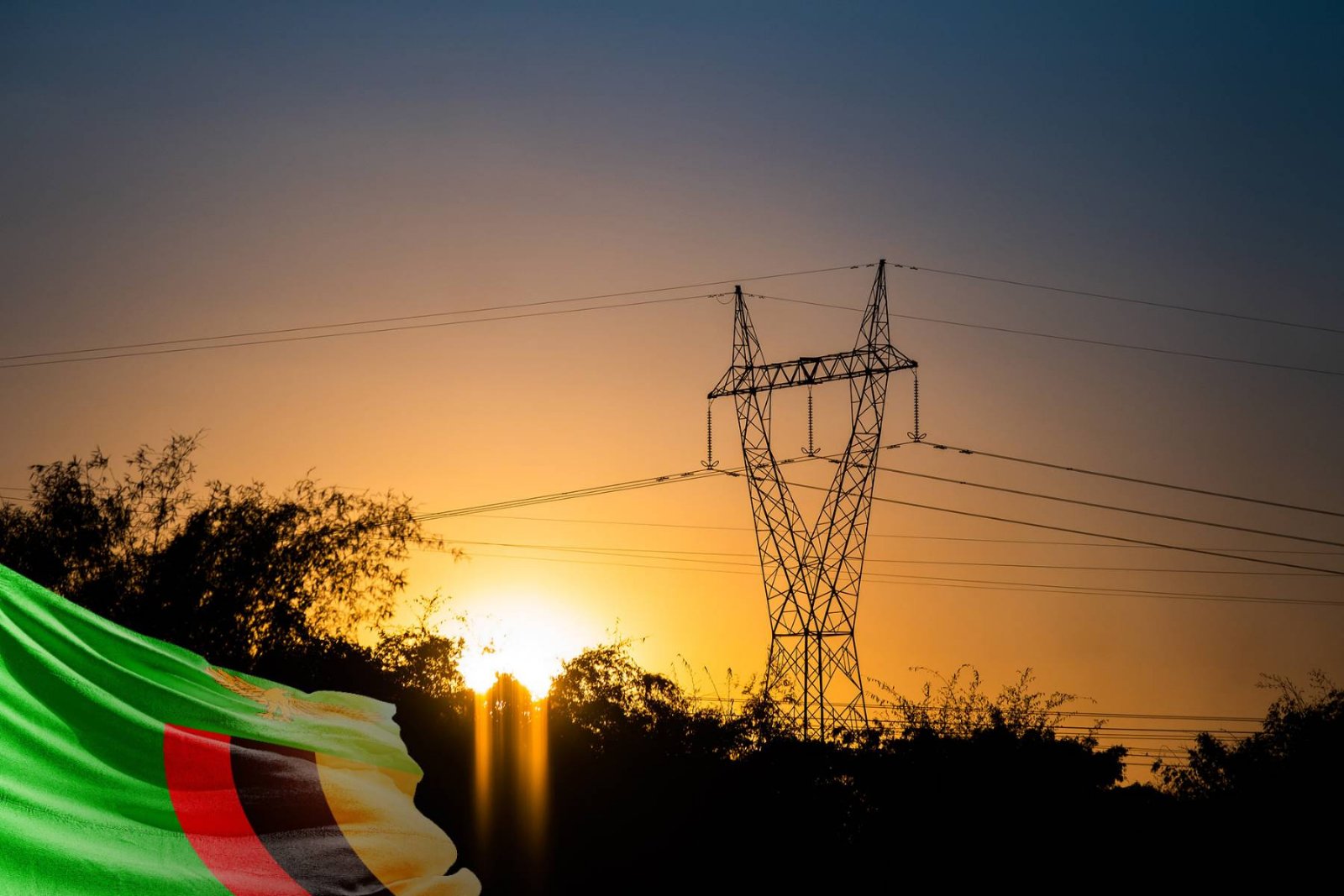
At the forum, Hichilema said Zambia would require approximately 8,000 MW of electricity to support its three-million-tonne copper production ambition. He clarified that this figure referred to copper production and excluded the wider economy’s electricity needs.
The statement places power generation and transmission at the centre of the investment proposition.
Mining operations consume electricity throughout the production chain. Underground mines require ventilation, pumping, hoisting and other equipment. Processing plants need power for crushing, grinding and concentration. Smelters and refineries have their own substantial energy requirements.
A larger copper industry will therefore require not only more electricity, but also reliable delivery to industrial sites.
Generation is only part of the solution
Zambia has been encouraging private-sector participation in the energy market, including independent power producers, electricity trading and private investment in transmission and distribution infrastructure.
Hichilema highlighted long-term power purchase agreements of approximately 20–25 years as a potential attraction for investors. Such arrangements can provide a contractual framework for selling electricity over time, subject to the terms, creditworthiness of counterparties and relevant regulatory requirements.
The opportunity for UAE investors could include renewable energy generation, transmission infrastructure and other power projects. However, the 8,000 MW figure is a stated requirement, not evidence that 8,000 MW of new capacity has already been financed or contracted through the forum.
Similarly, the existence of investment discussions does not confirm that particular transmission corridors, renewable plants or joint ventures have reached financial close.
What a credible energy investment programme would need to show
To assess whether the discussions are likely to support the copper target, future disclosures should establish:
Generation capacity: The number of megawatts proposed, the technology to be used and the expected commissioning dates.
Transmission infrastructure: The routes, substations and network upgrades needed to deliver power to mines and processing facilities.
Financing: The investors, lenders, equity commitments and debt arrangements supporting each project.
Offtake agreements: Which mines or utilities will purchase the electricity, under what terms and for how long.
Implementation responsibilities: Which parties will develop, operate and maintain each asset.
Delivery milestones: The permits, construction stages and operational targets that can be independently monitored.
Without these details, the 8,000 MW figure explains the scale of the challenge but does not demonstrate that the investment gap is being closed.
The copper price strengthens the investment case, but does not guarantee returns
The forum took place during a period of elevated copper prices. Reports around the time placed prices in the vicinity of US$14,500–15,000 per tonne, although the precise figure depends on the date, exchange and benchmark being referenced.
Higher copper prices can improve the potential economics of mining projects. They can increase expected revenue from a given quantity of saleable copper and strengthen the case for exploration, mine development and investment in existing operations.
But prices alone do not determine whether a project is commercially viable.
A mine’s economics depend on its grade, recoverable resources, operating costs, capital requirements, infrastructure access, taxes, royalties, financing costs and the time needed to bring new production online. Underground expansion, in particular, may require substantial investment before additional copper reaches the market.
Prices can also move sharply during the development period. A project assessed at one copper price may face a different market when it begins producing.
For Zambia, elevated prices provide an opportunity to attract capital, but the long-term test is whether investment results in reliable production, competitive operating costs and sustainable returns across market cycles.
What the proposed gold VAT reduction means
Separate from the UAE forum, Zambia’s Ministry of Mines has been considering a reduction in the existing 16% VAT treatment applied to domestic gold transactions.
On September 17, 2026, Permanent Secretary Hapenga Kabeta said the government was examining the issue following discussions with the World Gold Council. The stated objective was to make formal gold trading more accessible to artisanal and small-scale miners.
The proposal reflects a different problem from copper production: how to encourage gold producers and traders to use formal purchasing channels rather than selling through informal or unrecorded routes.
Why the tax treatment matters
If the tax cost of selling gold through formal channels is perceived as too high, some small-scale producers may have an incentive to sell outside the regulated market. A lower VAT burden could make formal transactions more attractive, depending on the final design of the measure and the wider costs of compliance.
The World Gold Council’s representative also raised concerns about the revenue Zambia may be missing because of informal trading. Reports cited an estimate of between US$80 million and US$240 million in potentially lost mineral royalty revenue. This is an attributed estimate, not an audited government revenue figure.
The VAT question should also be distinguished from mineral royalties and export taxes. They are separate fiscal mechanisms, and reducing VAT would not automatically eliminate royalty obligations.
Most importantly, no VAT reduction should be described as implemented unless the government formally adopts and publishes the change. The September reporting established that the policy was under consideration, not that the rate had already been reduced.
The proposal is relevant to Zambia’s broader mineral-governance agenda because formalisation can improve traceability and revenue collection. However, it is not evidence of a new tax concession agreed with UAE investors at the September forum.
From MoUs to investment: what must happen next?
The headline value of an MoU package attracts attention, but its economic significance depends on the stage each project reaches after signing.
A project may move through several stages before it produces measurable benefits:
Memorandum of understanding: The parties record an intention to cooperate or develop a proposal.
Feasibility and due diligence: Technical, financial, environmental and commercial assessments establish whether the project is viable.
Definitive agreements: The parties agree on binding responsibilities, financing and delivery terms.
Financial close: Required equity and debt financing become committed under the applicable agreements.
Permitting and construction: Regulatory approvals are obtained and physical development begins.
Commissioning and operation: The asset begins delivering its intended service or production.
Economic impact: Jobs, production, services, tax revenue and other measurable benefits emerge.
Not every project follows precisely the same sequence, and some MoUs may not proceed. That is why the US$2.14 billion should be treated as the announced value of the memoranda rather than as capital already invested in operating assets.
For the medical city, the next questions include its final scope, financing structure, construction timetable, clinical capabilities and operating model.
For energy projects, the priorities include generation capacity, transmission routes, offtake arrangements, financing and commissioning dates.
For Mopani, the key evidence is different: confirmed expansion capital, mine-development milestones, annual production figures, processing capacity and the timing of additional output.
The value of the forum will become clearer as these project-specific details are published.
What to watch
The following developments will help establish whether the UAE–Zambia engagement is translating into tangible economic outcomes.
Project-level disclosure: Will the governments or participating companies publish the full list of MoUs, their values, and the scope of each project?
Mopani’s expansion plans: Will IRH and Mopani disclose new funding commitments, production milestones and a schedule for underground development?
Energy investment: Will any proposed renewable generation or transmission projects reach financial close, and how much capacity will they add?
Power availability: Will Zambia be able to provide reliable electricity to existing mines and new projects as output expands?
Medical city implementation: Will the US$2 billion proposal advance to definitive agreements, financing and construction?
Copper production: How does annual national output compare with the trajectory required to reach three million tonnes by 2031?
Domestic processing: Is new mine production matched by investment in concentration, smelting and refining?
Gold VAT policy: Will the government formally change the tax treatment, and what evidence will show that the measure increases formal gold sales?
Local economic benefits: What employment, training, supplier contracts and tax contributions can be attributed to completed projects?
These indicators provide a more meaningful basis for assessing the agreements than the headline MoU total alone.
Conclusion
Zambia’s September 2026 forum with the UAE produced memoranda valued at US$2.14 billion, opening a new chapter in bilateral investment discussions. But the package should not be portrayed as US$2.14 billion of new mining investment: the largest reported agreement is a proposed medical city, while the approximately US$1.1 billion associated with IRH and Mopani predates the forum.
The copper sector remains a major part of the relationship. Mopani is an important existing investment, and Hichilema’s call for higher output underscores the mine’s role in the national target of three million tonnes annually by 2031.
Yet production growth depends on more than capital. The approximately 8,000 MW power requirement cited by the president highlights the need to expand generation and transmission alongside mining, processing and transport infrastructure.
Meanwhile, the proposed reduction in gold VAT illustrates a separate effort to improve formal participation in another part of the mineral economy. That proposal remains under consideration and should not be confused with an implemented tax change.
Ultimately, the forum’s impact will be measured by what follows the announcements: financing secured, infrastructure delivered, mines expanded, power supplied and additional copper produced. The MoUs establish a framework for potential cooperation; the next stage is to demonstrate delivery.
Citations
- 1.Times of Zambia — “Zambia inks $2.14bn deals in UAE,” September 30, 2026. Reports six investment agreements, the proposed US$2 billion Lusaka medical city and the sectors covered.
- 2.https://times.co.zm/zambia-inks-2-14bn-deals-in-uae/
- 3.ZNBC — “Zambia Seals $2.1Bn Investment Agreements Abu Dhabi,” September 29, 2026. Reports the forum and the proposed medical city agreement.
- 4.https://znbc.co.zm/?p=15905
- 5.Lusaka Times — “Zambia-UAE sign MoU worth over US$2.1 billion,” September 29, 2026. Reports the aggregate value and official statements at the forum.
- 6.https://www.lusakatimes.com/2026/09/29/zambia-uae-sign-mou-worth-over-us2-1-billion/
- 7.Lusaka Times — “Hichilema Presses Mopani On Local Content Law And 3 Million Tonne Copper Target,” September 29, 2026. Reports Hichilema’s discussions with IRH, Mopani’s ownership structure and the production ambition.
- 8.https://www.lusakatimes.com/2026/09/29/hichilema-presses-mopani-on-local-content-law-and-3-million-tonne-copper-target/
- 9.International Energy Agency — “National 3 Million Tonnes Copper Production Strategy by 2031.” Summarises the government strategy, its baseline and its production and investment objectives.
- 10.https://www.iea.org/policies/29665-national-3-million-tonnes-copper-production-strategy-by-2031
- 11.ZNBC — “Zambia Needs 8,000 MW of Power to Produce 3MT of Copper,” September 29, 2026. Reports Hichilema’s stated power requirement and the proposed role of private investment.
- 12.https://znbc.co.zm/?p=15902
- 13.Reuters — “Zambia seeking global investors to help triple copper output by 2031,” March 10, 2026. Provides background on Zambia’s production ambition and international investment outreach.
- 14.https://www.reuters.com/sustainability/climate-energy/zambia-seeking-global-investors-help-triple-copper-output-by-2031-2026-03-10/
- 15.Lusaka Times — “HH Seals US$2.14 Billion in Pledges as Abu Dhabi Opens Its Doors to Zambia,” September 29, 2026. Reports the wider bilateral visit and the distinction between the forum’s aggregate agreements and the existing IRH–Mopani investment.
- 16.https://www.lusakatimes.com/2026/09/29/hh-seals-us2-14-billion-in-pledges-as-abu-dhabi-opens-its-doors-to-zambia/
- 17.News Diggers! — “Govt ponders reducing VAT on gold to boost trade,” September 17, 2026. Reports the government’s consideration of reducing the 16% VAT treatment and the World Gold Council’s concerns about formalisation.
- 18.https://diggers.news/business/2026/09/17/govt-ponders-reducing-vat-on-gold-to-boost-trade/
- 19.The Zambian Economist — “Hichilema Returns From Abu Dhabi as Musokotwane Sets the Real Test for US$2.14bn UAE Deals,” October 2, 2026. Provides additional analysis of the MoU package, the lack of a complete public project-by-project breakdown and the need for projects to reach financial close.
- 20.https://zambianeconomist.com/zambia-uae-mous-musokotwane-bankable-projects/
Finish Reading the Full Story and Expert Analysis.
Get the latest legal & regulatory intelligence in Zambia
Wansom is AI and can make mistakes.