
Zambia's Three Expiring Tax Reliefs: Copper Concentrate, Fuel and Wheat After 30 September
Summary
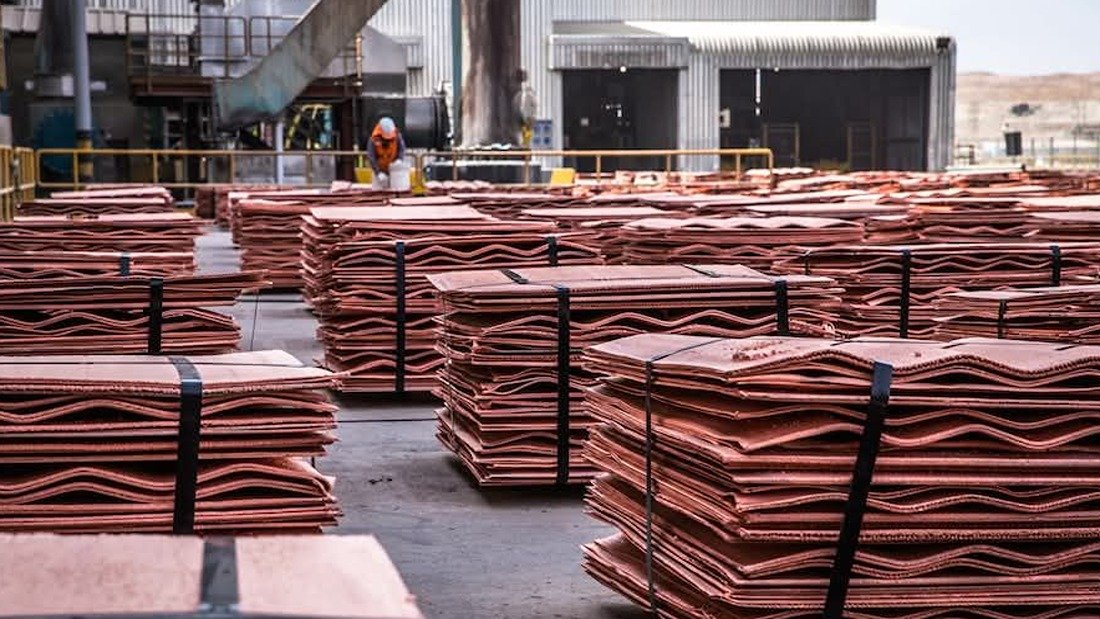
Copper concentrate (SI 43 of 2026): the waiver of the 10% export duty on 271,742 tonnes for six producers, led by Mopani with 100,000 tonnes, lapsed on 30 September. No extension had been announced by 2 October, so the 10% duty applies unless a new SI is gazetted.
Fuel (reported as SI 56 and SI 61 of 2026): excise duty on petrol and diesel was reinstated from 1 October. Petrol rose from K25.29 to K31.46 and diesel from K26.86 to K33.27 a litre. VAT stays zero-rated until 1 December 2026, when 16% returns.
Wheat (SI 65 of 2026): zero duty for 26 named importers on 300,000 tonnes ended on 30 September. Ordinary customs duty now applies.
The legal mechanism: suspension SIs expire automatically. Ordinary rates return without any new announcement, and only a new SI can extend relief.
The policy test: letting the copper waiver lapse signals confidence that local smelters can absorb concentrate, putting Zambia's beneficiation policy back in force.
For traders: higher freight costs now, a second fuel-price step in December, and refunds and transitional consignments to settle.
Three Reliefs, One Expiry Date
Three temporary tax measures, each made by statutory instrument, were all set to expire on 30 September 2026. They worked through the same legal mechanism: a suspension regulation that switches off a duty for a fixed period and then falls away, leaving the ordinary rate to apply again without any new legislation.
Measure | Legal instrument | What it did | Position after 30 September |
|---|---|---|---|
Copper concentrate export duty waiver | SI 43 of 2026, Customs and Excise (Suspension) (Copper Concentrates) (No. 2) Regulations | Zero export duty on a fixed quota of 271,742 tonnes for six named producers, from 1 June 2026 | Lapsed automatically on 30 September. No extension had been announced by 2 October, so the 10% duty applies unless a new SI is gazetted |
Fuel tax relief | Customs and Excise suspension SI (reported by ZNBC as SI 56 of 2026) and VAT SI 61 of 2026 | Excise duty suspended and VAT zero-rated on petrol and diesel, from 1 April 2026 | Excise reinstated from 1 October; VAT zero-rating continues until VAT returns on 1 December 2026 |
Wheat import duty suspension | SI 65 of 2026, Customs and Excise (Suspension) (Wheat) (No. 2) Regulations | Zero import duty on 300,000 tonnes of wheat for 26 named importers, from 1 to 30 September | Lapsed automatically on 30 September |
What lapse means legally. A suspension SI does not amend the tariff schedule. When it expires, the duty rate in the Customs and Excise Act's schedules applies again from the next day, without any announcement. Any extension requires a new statutory instrument. A press statement is not enough. Businesses should therefore check the Government Gazette or ZRA notices before assuming either outcome.
Why it matters for trade. Each measure affected a different link in the trade chain: copper exports, the cost of moving goods, and imports of a staple input. Their simultaneous expiry changes costs for exporters, transporters and importers at the same time, just as the 2027 Budget process gets under way.
Copper Concentrate: A Beneficiation Policy on Hold
The baseline. Zambia charges a 10% export duty on copper concentrate to encourage miners to smelt and refine copper locally, exporting higher-value cathode instead of semi-processed ore. Zambia exports mostly refined cathode: 890,346 tonnes of copper in 2025, with a national target of 3 million tonnes a year by 2031.
Why it was suspended. In August 2025, the government first suspended the duty because major smelters were down for extended maintenance and repairs, leaving concentrate with nowhere to go locally. The waiver was renewed in 2026 through SI 43 of 2026, the Customs and Excise (Suspension) (Copper Concentrates) (No. 2) Regulations, 2026. It cut the export duty to zero on specified copper ore and concentrate tariff lines (including 2603.00.21 to 2603.00.23), with effect from 1 June 2026 until it lapsed on 30 September 2026.
A capped, named quota. The relief covered only 271,742 tonnes, shared among six producers:
Producer | Duty-free quota (tonnes) |
|---|---|
Mopani Copper Mines (International Resources Holding / ZCCM-IH) | 100,000 |
Lumwana Mining Company (Barrick) | 56,986 |
First Quantum Minerals | about 43,000 |
Nkana Mining and Minerals Processing | about 43,000 |
Lubambe Copper Mine (70% JCHX Mining) | 15,000 |
Konkola Copper Mines (Vedanta) | 12,541 |
Concentrate exported beyond a company's quota, or by producers not on the list, remained subject to the 10% duty throughout.
The fiscal cost. The Zambian Business Times estimated that the copper concentrate duty holiday could cost Zambia around $100 million.
Why 30 September was a test. Analysts treated the expiry as a signal:
Lapse would show the government believes local smelters can now absorb the concentrate being produced, putting the beneficiation policy back in force.
Another extension would show that operational constraints still outweigh the policy goal.
No extension had been announced by 2 October. Unless a new suspension SI is gazetted, concentrate exports from 1 October attract the full 10% duty. Because Zambia mainly exports cathode, the direct trade effect is limited. But the outcome is the clearest test of whether smelting capacity is keeping pace with rising mine output.
Fuel Tax Relief: Excise Back Now, VAT Back in December
How the relief worked. In response to the oil-price surge linked to the Middle East conflict, Cabinet approved two measures on petrol and diesel from 1 April 2026:
suspension of excise duty, reported as about K2.34 a litre on petrol and K0.75 a litre on diesel; and
zero-rating of VAT, removing the 16% standard rate.
The measures were first set for three months, then extended from 1 July to 30 September 2026. ZNBC reported the extension as made through Statutory Instrument No. 56 of 2026 under the Customs and Excise Act and SI No. 61 of 2026 under the Value Added Tax Act. Some secondary reports cite SI 60 for the excise measure, so the Gazette is the place to confirm the numbering.
The cost. In April the government estimated it would lose about $200 million in revenue over the first three months. Commentary in the Zambia Daily Mail put the loss at about K1.33 billion a month.
What happened on 1 October. The Energy Regulation Board (ERB) announced October prices on 30 September, effective at midnight:
Product | September 2026 | October 2026 | Increase |
|---|---|---|---|
Petrol | K25.29/litre | K31.46/litre | K6.17 |
Diesel | K26.86/litre | K33.27/litre | K6.41 |
Paraffin | K27.02/litre | K29.76/litre | K2.74 |
ERB Chairperson James Banda attributed the rise mainly to higher international prices, kwacha depreciation and the reinstatement of excise duty. He confirmed that the government had decided to bring back excise from October to soften the immediate impact, with VAT reinstated on 1 December 2026. The ERB had held September prices flat despite rising costs, which partly explains the size of the October jump.
The December step. When 16% VAT returns on 1 December, pump prices will rise again unless oil prices fall or the relief is extended. Opposition commentary estimates around K5 a litre more at current prices. VAT-registered businesses can generally claim input VAT on fuel used in taxable supplies, but consumers and unregistered businesses bear it in full.
Why it matters for trade. Diesel moves Zambia's imports and exports by road through the Copperbelt, the Dar es Salaam corridor, Walvis Bay and Durban. A K6-plus rise in October, with more to come in December, feeds directly into freight rates, landed costs of imports and the competitiveness of exports.
Wheat: A One-Month Window Closes
The measure. SI No. 65 of 2026, the Customs and Excise (Suspension) (Wheat) (No. 2) Regulations, 2026, suspended customs duty to 0% on wheat under tariff headings 1001.19.00 and 1001.91.90. It was announced by ZRA on 11 September and deemed effective from 1 September 2026.
The conditions. Only imports meeting all three conditions qualified:
a valid import permit from the Ministry of Agriculture;
an importer named among the 26 companies in the Schedule; and
imports within each company's approved quantity, out of a total of 300,000 tonnes.
ZRA stressed that it was not a general duty waiver for all wheat importers.
Why it was needed. Zambia's 2026/27 National Food Balance shows wheat output of about 81,822 tonnes against a deficit of about 358,318 tonnes to be met by imports.
After 30 September. The Regulations stood revoked at the end of September. Unless replaced, wheat imported from 1 October pays ordinary customs duty, including by the 26 companies previously named. Qualifying importers that paid duty on eligible wheat between 1 and 11 September, before the SI was announced, may still pursue refunds.
The Trade-Law Analysis
1. Export duties as industrial policy
The 10% copper concentrate duty is an export tax used to promote beneficiation: processing minerals at home rather than shipping them raw. WTO rules restrict quantitative export restrictions such as bans and quotas, but do not generally prohibit export duties, unless a country has accepted specific commitments, which typically arise in accession protocols. Export taxes on unprocessed minerals are widespread in the region; Zimbabwe, for example, taxes unbeneficiated lithium, platinum and chrome exports.
The legal question is therefore not whether Zambia may tax concentrate exports, but how consistently it applies the policy. A duty that is suspended for more than a year, through successive temporary instruments, sends mixed signals to investors deciding whether to build smelting capacity or ship concentrate abroad.
2. Named beneficiaries and quotas
Both the copper and wheat suspensions applied only to companies named in a schedule, each with a fixed quota. That is lawful under the enabling powers in the Customs and Excise Act, which allow conditional suspensions, but it raises transparency and competition questions:
How were the beneficiaries and quantities chosen?
Can a company not on the list, or one whose needs exceed its quota, seek inclusion?
Does a named-company structure give some firms a cost advantage over competitors in the same market?
Published criteria for allocations would reduce the risk of challenge and strengthen confidence in the system.
3. Legal certainty and the use of short-term SIs
All three reliefs ran on three-month or shorter cycles, and in the case of wheat, the SI was announced 11 days after its deemed commencement. Short-cycle instruments let government respond quickly to shocks, but they also create planning uncertainty for traders who must price contracts weeks or months ahead. Retrospective instruments that benefit taxpayers are not unfair in themselves, but they create refund administration and cash-flow issues.
4. VAT zero-rating versus exemption
The fuel relief used zero-rating, not exemption, for VAT. The difference matters: under zero-rating, suppliers charge 0% VAT but can still recover input VAT on their costs, so the relief flows through the supply chain more cleanly. When the zero rate ends on 1 December, the standard 16% applies, and VAT-registered businesses buying fuel for taxable activities can claim it back as input tax. The real burden falls on consumers and unregistered businesses.
5. The 2027 Budget as the next decision point
The expiry of all three reliefs coincides with the 2027 Budget process. Structural questions, such as whether the concentrate duty remains, whether fuel taxes are rebalanced, and how food imports are treated, belong there, rather than in rolling suspensions.
What It Means for Each Stakeholder
Copper miners with concentrate to export
Mopani, Lumwana, First Quantum, Nkana, Lubambe and KCM lose their duty-free quotas once the waiver lapses. Any concentrate exported from 1 October attracts the 10% duty unless a new SI is issued. Miners should check that all shipments under SI 43 were cleared and documented before 30 September, plan smelter offtake, and price the duty into any further concentrate sales. Companies still facing smelter constraints have every reason to make their case for another suspension, ideally with data on smelter availability.
Smelter operators
The lapse, if it holds, restores the policy incentive to route concentrate through local smelters. Operators with spare capacity may see more feed, and toll-treatment terms may become more favourable. Those still under maintenance face pressure from miners and government alike.
Transporters and logistics companies
Diesel rose by K6.41 a litre on 1 October, and VAT will add more on 1 December. Hauliers should invoke fuel-adjustment clauses, reprice contracts and warn customers of the second step. Cross-border operators on the Dar es Salaam, Walvis Bay, Beira and Durban corridors face higher round-trip costs.
Importers and exporters generally
Higher freight costs raise landed costs for imports and reduce margins on exports. Importers on fixed-price contracts should check who bears fuel cost increases. Exporters should review delivered-price contracts and Incoterms.
Wheat millers and bakers
The 26 named importers no longer have duty-free access. Wheat imported from 1 October pays ordinary duty unless a new instrument is issued. Millers should secure refunds for qualifying duty paid between 1 and 11 September, and plan purchases around the local winter harvest. Bakers may see flour price pressure as duty-free stocks run down.
Consumers and households
Pump prices rose by about a quarter overnight, and VAT will add more in December. Paraffin, the cooking fuel of many poorer homes, rose from K27.02 to K29.76. Transport fares and food prices are likely to follow. Bread could also become more expensive if wheat duty is not suspended again.
VAT-registered businesses
When VAT on fuel returns on 1 December, registered businesses that use fuel for taxable supplies can generally recover it as input tax. They should make sure fuel purchases are properly invoiced, because cash flow will still be affected.
Government and ZRA
The Treasury recovers revenue: about $200 million every three months on fuel, and an estimated $100 million on the copper duty holiday. That supports the fiscal position as Zambia negotiates a successor IMF programme. ZRA will need clear guidance at borders on which rates apply from 1 October, especially for concentrate and wheat consignments in transit.
Lawyers and tax advisers
The immediate work is confirming which instruments are in force and advising on transitional consignments. Further work includes securing refunds under the expired SIs, reviewing contract clauses on fuel and duty changes, and preparing submissions for the 2027 Budget on the future of the concentrate duty and fuel taxation.
What to Watch
Date or milestone | Why it matters |
|---|---|
Government Gazette and ZRA notices in October | Any new suspension SI for copper concentrate or wheat |
ERB November price review | Whether pump prices move again before VAT returns |
1 December 2026 | VAT at 16% returns on petrol and diesel |
2027 Budget | Structural decisions on the concentrate export duty, fuel taxes and staple imports |
Smelter restart announcements | Whether domestic smelting capacity can absorb concentrate without a waiver |
Frequently Asked Questions
Did Zambia extend the copper concentrate export duty waiver beyond 30 September 2026? No extension had been announced by 2 October. SI 43 of 2026 lapsed automatically, so concentrate exports attract the 10% duty unless a new suspension instrument is gazetted.
Who benefited from the copper waiver? Six producers with quotas totalling 271,742 tonnes: Mopani (100,000), Lumwana (56,986), First Quantum (about 43,000), Nkana Mining and Minerals Processing (about 43,000), Lubambe (15,000) and Konkola Copper Mines (12,541).
Is fuel tax relief still in force in Zambia? Partly. Excise duty on petrol and diesel was reinstated from 1 October 2026. VAT remains zero-rated until 1 December 2026, when the 16% rate returns.
How much did fuel prices rise in October? Petrol rose from K25.29 to K31.46 a litre and diesel from K26.86 to K33.27, effective 1 October 2026.
Is wheat still duty-free? No. SI 65 of 2026 stood revoked after 30 September 2026. Wheat imports pay ordinary customs duty unless a new suspension is issued.
Citations
- 1.• Zambia extends duty-free copper concentrate export duty waiver amid smelter outages, Mining.com / Reuters (3 June 2026)
- 2.• Zambia extends duty-free copper concentrate export duty waiver amid smelter outages, Mining Weekly (3 June 2026)
- 3.• Zambia restricts raw copper exports to boost domestic processing, Skillings
- 4.• Zambia extends copper concentrate export-duty waiver, prioritising output over beneficiation, bne IntelliNews
- 5.• Zambia Extends Duty-Free Copper Concentrate Export Waiver in 2026, Discovery Alert
- 6.• Government Extends Fuel Tax Relief, ZNBC
- 7.• Zambia extends petrol and diesel tax exemptions until September, Reuters via CNBC Africa
- 8.• Petrol, diesel prices hit record highs as ERB hikes prices by over K6, Zambia Monitor
- 9.• Petrol Hits K31.46, Diesel K33.27 As Tax Relief Ends, Lusaka Times (1 October 2026)
- 10.• Fuel prices go up by over K6, Diggers News (30 September 2026)
- 11.• $400m: Price of fuel relief, Zambia Daily Mail via PressReader (15 September 2026)
- 12.• Relief before the vote, the bill after it, The Zambian Observer
- 13.• Suspension of Import Duty on Wheat, Zambia Revenue Authority (11 September 2026)
Finish Reading the Full Story and Expert Analysis.
Get the latest legal & regulatory intelligence in Zambia
Wansom is AI and can make mistakes.